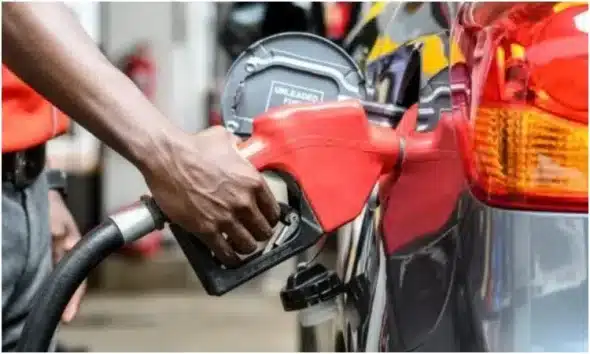
Nigeria’s downstream petroleum market is undergoing one of its most competitive phases in recent years, as an intensifying price war between the Dangote Petroleum Refinery and oil importers steadily translates into cheaper fuel for consumers.
What began as a bold price cut by the Dangote refinery in December has since evolved into a market-wide contest that is reshaping pricing behaviour, forcing efficiency, and offering short-term relief to Nigerians grappling with high living costs.
EDITOR’S PICKS
The turning point came on December 12, when the Dangote refinery slashed its ex-gantry price of Premium Motor Spirit (PMS) by ₦129, from ₦828 to ₦699 per litre. The move caught many depot owners and fuel importers off guard, instantly narrowing their margins and placing pressure on pump prices nationwide. Within days, Dangote went further, backing the reduction with a public vow to ensure that petrol would not sell above ₦740 per litre during December and January, using its retail partner, MRS Oil, as a pricing benchmark.
This intervention triggered a chain reaction across the downstream market. Faced with the prospect of losing customers, importers and independent marketers began cutting pump prices, even where such prices were below their estimated costs. Market surveys soon showed filling stations selling petrol below the Dangote-endorsed ₦739 per litre, with outlets such as NIPCO, SAO, Akiavic and AP undercutting both MRS and one another by small but significant margins.
For motorists, the impact has been immediate. Consumers are increasingly drawn to stations offering the lowest prices, forcing operators in the same locations to closely monitor competitors and adjust prices in real time. This intense competition has effectively transferred bargaining power to consumers, reversing a long-standing pattern where pump prices moved uniformly upward with little resistance.
Industry data underline the extent of the sacrifice being made by marketers. The Major Energies Marketers Association of Nigeria estimates the average landing cost of imported petrol at about ₦762.38 per litre, well above both Dangote’s ex-gantry price of ₦699 and prevailing pump prices in many areas. Despite this mismatch, importers have continued to sell at reduced rates, prioritising market presence over short-term profitability. Both Dangote and the importers are reported to be absorbing losses running into billions of naira.
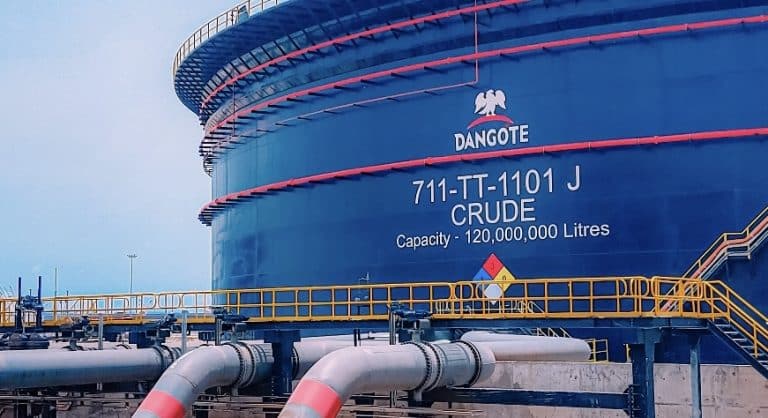
Crucially, industry players insist that the price reductions are less about the relative cost advantage of imported fuel versus locally refined petrol, and more about competitive survival. As one operator put it, the cuts reflect a strategy “to get a good share of the market”, rather than an outright confrontation between refiners and importers. This framing reinforces the idea that Nigerians are witnessing the early effects of a liberalised and genuinely competitive downstream market.
Beyond cheaper pump prices, the price war is also delivering broader structural benefits. It is compelling marketers to operate more efficiently, discouraging arbitrary pricing, and exposing consumers to the advantages of competition in a sector long criticised for opacity and price rigidity. Dangote’s aggressive stance has further demonstrated how local refining capacity can influence domestic pricing dynamics, reducing the historical dominance of import-linked pricing.
However, while consumers are clear winners in the short term, sustained losses for marketers may not be indefinitely sustainable. If margins remain compressed for too long, smaller operators could exit the market, potentially reducing competition over time. For now, though, the intensity of rivalry suggests that price discipline will remain strong in the near term.
FURTHER READING
In effect, the ongoing tussle between the Dangote refinery and oil importers has turned market rivalry into consumer gain.
Philip Ibitoye is a Special Correspondent with EKO HOT BLOG. Click here to find daily analysis and critical insight on trending issues in Lagos and other parts of Nigeria.
Click here to watch the video of the week below: