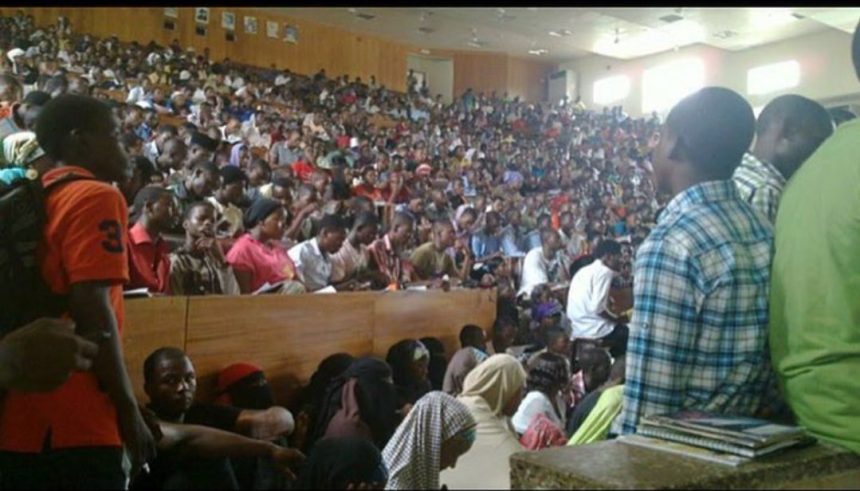
It promises what millions of Nigerian students have long been denied: access to education without immediate financial suffocation. But activism demands more than applause. It demands interrogation.
NELFUND says it has disbursed ₦161.97 billion to 864,798 students nationwide, a figure that cannot be dismissed lightly. In a country where inflation has eroded incomes and tertiary education has increasingly become a privilege of the wealthy, this intervention has offered real, immediate relief to families who would otherwise withdraw their children from school. Tuition fees paid directly to institutions and upkeep allowances sent to students have kept classrooms filled and dreams alive.
EDITOR’S PICK
- Dollar to Naira Exchange Rate Tuesday, 13 January 2026
- Lagos Assembly Approves ₦4.44 Trillion Budget for 2026
- NANS Mobilises Nationwide Protest Over Tax Reform Law
The impact of NELFUND must be judged not only by how much money is disbursed, but by the economic reality students will face when they graduate.
According to NELFUND’s Managing Director, Akintunde Sawyerr, over 1.36 million applications have been received since the launch of the loan portal.
Of the funds released, ₦89.94 billion went straight to 263 tertiary institutions to cover tuition and institutional charges, while ₦72.03 billion was paid to students as upkeep allowances. These numbers signal scale, seriousness and urgency.
But scale without structure can become dangerous.
Nigeria today is not short of graduates; it is short of jobs. Youth unemployment and underemployment remain stubbornly high, and even employed graduates are often trapped in low-paying, unstable work.
In this context, student loans, no matter how well-intentioned, risk becoming a delayed punishment if the economy does not improve fast enough to absorb those who will soon be required to repay.
Supporters of NELFUND argue, rightly, that education is an investment and that a nation cannot grow without human capital. They also point to reforms in the loan framework: removal of guarantor requirements, inclusion of upkeep allowances, and legal provisions that allow the fund to raise and invest money sustainably. These are strong policy steps that correct past failures.
However, here are the real QUESTIONS
What happens when tens of thousands of loan beneficiaries graduate into an economy where salaries cannot match inflation? What happens when repayment begins for young Nigerians still struggling to secure stable employment? Loans tied to hope but detached from economic reality can quickly morph into a system of quiet oppression.
NELFUND itself has acknowledged operational challenges. A reconciliation exercise revealed ₦927.98 million in unpaid upkeep allowances affecting 11,685 students, caused by technical failures, network issues and incorrect banking details.
While management has approved corrective measures, the episode exposes a deeper concern: if operational lapses occur now, what happens when millions more enter the system?
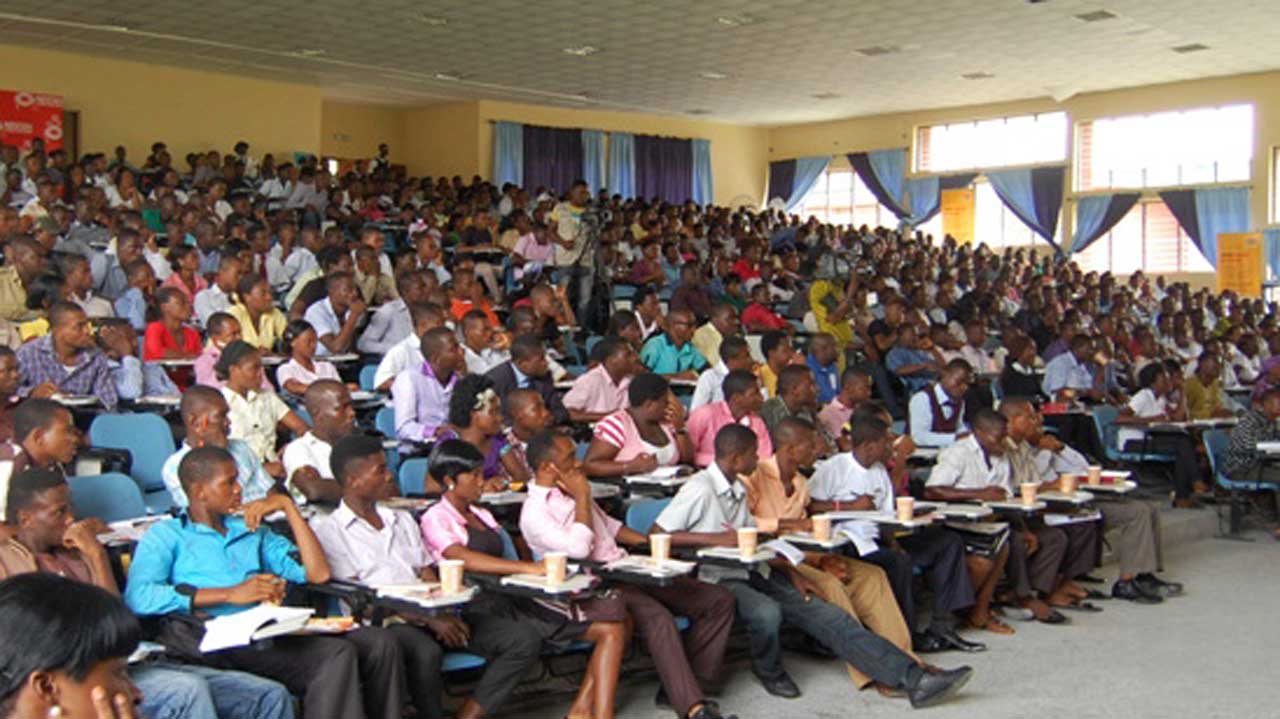
To its credit, NELFUND says it is expanding sensitisation beyond campuses to parents, traditional rulers and faith-based institutions, an admission that trust is still fragile. In a country scarred by failed social programmes and corruption scandals, trust is not given—it is earned over time through transparency and fairness.
Sustainability remains another critical issue. While NELFUND officials point to partnerships, including a ₦20 billion collaboration on Technical and Vocational Education and Training (TVET), long-term survival of the scheme depends on repayment. And repayment depends entirely on whether the Nigerian economy can generate dignified work for its youth.
This is where the government must stop pretending.
NELFUND alone cannot rescue Nigerian students. Without aggressive job creation, industrial expansion, SME support, research funding and economic stability, the loan scheme risks producing educated desperation instead of national progress. Education policy cannot be separated from economic policy; to do so is to deceive the very youth the scheme claims to empower.
NELFUND is not evil. It is not perfect. It is a tool, and like every tool, it can either build or destroy depending on how it is used.
If managed transparently, protected from political capture, tied to income-based repayment and supported by a growing economy, NELFUND could become one of Nigeria’s most meaningful social interventions. If mismanaged, it will deepen inequality and turn hope into long-term debt.
The real verdict on NELFUND will not be written in press briefings or disbursement figures. It will be written in five to ten years, when today’s beneficiaries ask a simple question:
Did this loan free me, or did it just postpone my suffering?
That is the question Nigeria must answer now, not later.
FURTHER READING