Hakeem Baba-Ahmed, a former special adviser on political affairs in the office of the vice-president, has warned that the African Democratic Congress (ADC) faces a serious risk of internal collapse if former Vic-President Atiku Abubakar becomes the party’s presidential candidate for the 2027 elections.
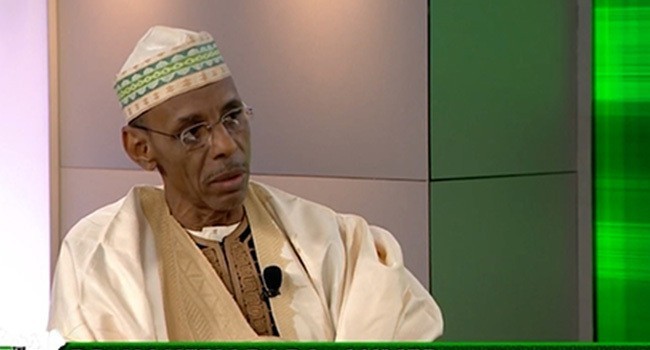
Speaking on Channels Television, Baba-Ahmed predicted that if the ADC holds a national convention, Atiku will secure the ticket, but this victory could trigger a mass exodus that would severely damage the coalition.
EDITOR’S PICKS
According to Baba-Ahmed, the problem is straightforward: too many ambitious politicians have joined the ADC with the same goal of flying the presidential flag.
“So, the ADC will bleed after its convention because almost certainly former Vice-President Atiku will win the ticket, and when he does, some people will walk out, it will be severely damaged,” he said
This assessment highlights a fundamental weakness in the opposition coalition that formed last year when Atiku, former Labour Party presidential candidate, Peter Obi, and other political heavyweights adopted the ADC as their platform to challenge President Bola Tinubu.
Clashing Ambitions
The coalition brings together politicians with vastly different approaches to securing power. Baba-Ahmed points out that Atiku thrives in conventions where delegates vote, believing he has the political machinery and resources to win such contests.
Peter Obi, on the other hand, has historically avoided competitive primaries, preferring to be adopted as a consensus candidate. As Baba-Ahmed put it, “Peter Obi doesn’t do convention. He just goes there to be anointed.”
This difference in political methodology creates an inherent conflict. Obi has publicly stated he will not be anyone’s running mate in 2027, and his supporters, the Obidients, have made it clear they will campaign against him if he accepts a secondary position.
Beyond the Atiku-Obi rivalry, the ADC houses several other prominent figures with presidential ambitions such as former Minister of Transportation, Rotimi Amaechi.
The Sacrifice Problem and Coalition Breakdown
The central challenge facing the ADC is that none of its major players appear willing to sacrifice their presidential ambitions for the coalition’s survival.
In 2023, the opposition vote was split almost evenly between Atiku (6.98 million votes) and Obi (6.10 million votes), totaling over 13 million votes that could have potentially defeated Tinubu’s 8.79 million if united behind one candidate. This mathematical reality drove the coalition effort.
However, political calculations extend beyond simple vote arithmetic. Regional and ethnic considerations complicate matters further. There is broad consensus in southern Nigeria that a southerner should remain president until 2031, which undermines Atiku’s viability as a northern Muslim candidate.
Meanwhile, Obi’s supporters argue that a South Eastern candidate should lead, citing his strong 2023 performance.
The coalition also faces structural weaknesses. Many of its prominent members lack control of their home states. Atiku’s governor in Adamawa recently stripped him of his traditional title, former Kaduna governor Nasir El-Rufai has been pushed aside by his successor, and Obi lacks control of Anambra State where Governor Charles Soludo has allied with President Tinubu.
FURTHER READING
Baba-Ahmed’s prediction appears increasingly credible: if the ADC proceeds to convention, Atiku will likely win, triggering departures that could fracture the opposition before the 2027 race truly begins. The coalition’s survival depends on whether these ambitious politicians can prioritise defeating Tinubu over their individual presidential dreams, a sacrifice that current dynamics suggest few are prepared to make.
Philip Ibitoye is a Special Correspondent with EKO HOT BLOG. Click here to find daily analysis and critical insight on trending issues in Lagos and other parts of Nigeria.
Click here to watch the video of the week below: