- He explained that the N873.78 billion estimate covers the entire cost of conducting the 2027 nationwide elections
- He criticised the envelope budgeting model, arguing that it does not suit the Commission’s time-sensitive responsibilities
- He urged the National Assembly to prevent underfunding ahead of the 2027 polls
The Independent National Electoral Commission has informed the National Assembly that it will require N873.78 billion to organise the 2027 general elections. In addition, the Commission is seeking N171 billion to run its activities in the 2026 fiscal year.
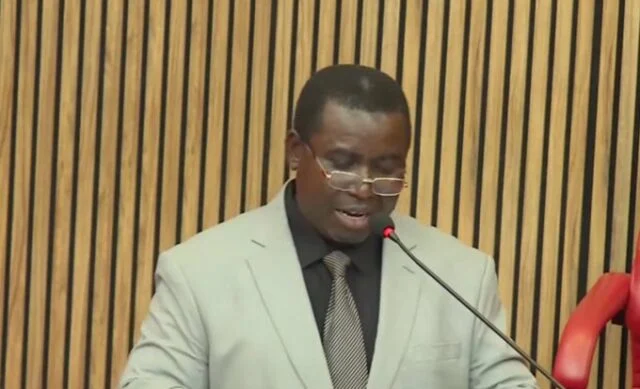
Eko Hot Blog reports that INEC Chairman, Professor Joash Amupitan, disclosed this on Thursday while defending the Commission’s 2026 budget proposal and presenting projections for the 2027 polls before the Joint Committee on Electoral Matters in Abuja.
EDITOR’S PICK
- Senate Approves Electronic Transmission of Polling Unit Results
- Nigeria Reopens Kamba, Tsamiya Borders to Boost Cross-Border Trade
- Ibeju-Lekki LG Announces ATM Card Distribution for 3rd Batch CCT Beneficiaries
He explained that the N873.78 billion estimate covers the entire cost of conducting the 2027 nationwide elections.
The separate N171 billion request for 2026 is intended to fund routine operations, including bye-elections and off-cycle governorship polls.
Amupitan noted that the projected election budget does not factor in a recent request by the National Youth Service Corps for higher allowances for corps members who serve as ad-hoc election staff.
Providing a breakdown of the proposed election expenditure, the INEC chairman said N379.75 billion is earmarked for operations, N92.32 billion for administrative expenses, N209.21 billion for technology, N154.91 billion for capital costs, and N42.61 billion for other miscellaneous items.
He added that the proposal was prepared in line with the Electoral Act 2022, which requires the Commission to submit its election budget at least one year before a general election.
On the 2026 appropriation, Amupitan revealed that the Ministry of Finance initially allocated N140 billion under the envelope budgeting system, but INEC’s actual needs amount to N171 billion.
The Commission’s proposal includes N109 billion for personnel costs, N18.7 billion for overheads, N42.63 billion for election-related activities, and N1.4 billion for capital projects.
He criticised the envelope budgeting model, arguing that it does not suit the Commission’s time-sensitive responsibilities.
He also pointed to the absence of a dedicated communications network as a key operational gap, saying an independent system would improve transparency and accountability.
Lawmakers at the session expressed support for INEC’s funding request. Senator Adams Oshiomhole said external bodies should not impose restrictive budgeting frameworks on the electoral body, given the sensitive nature of its mandate.
He urged the National Assembly to prevent underfunding ahead of the 2027 polls.
Similarly, House member Billy Osawaru advocated placing INEC’s budget on first-line charge, as provided by the Constitution, to ensure full and timely release of funds.
The Joint Committee recommended a one-time disbursement of the Commission’s annual allocation and indicated it would review the NYSC’s request for about N32 billion to raise election duty allowances for corps members.
Committee leaders in both chambers assured INEC of legislative backing but cautioned the Commission against making commitments it may struggle to fulfil.
Reference was made to the 2023 elections, when expectations surrounding the real-time upload of results generated public debate.
INEC’s proposed N873.78 billion budget for the 2027 elections represents a sharp increase compared to the N313.4 billion provided for the 2023 general elections.
FURTHER READING