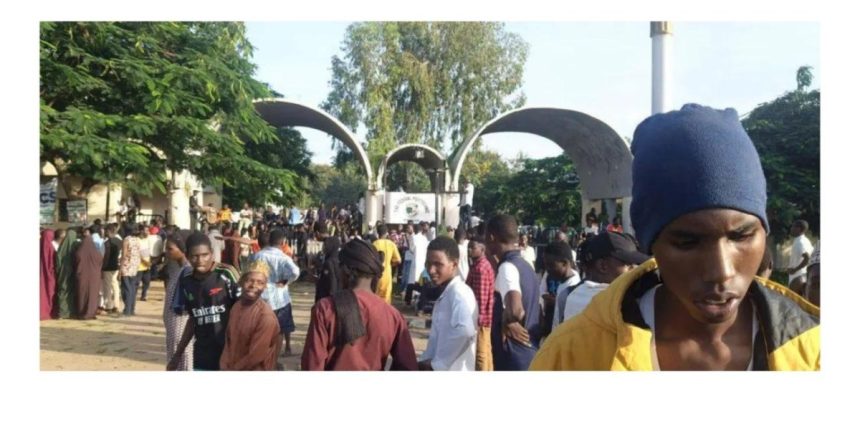
- Management prohibits male and female students from standing together as “couples” to respect the sanctity of Ramadan.
- Violators are threatened with an immediate “arranged Nikkah” (Islamic marriage) as a penalty for unnecessary closeness.
- Critics condemn the directive as an unconstitutional “Sharia-style” mandate in a secular federal academic institution.
The management of the Federal Polytechnic, Bauchi, has stirred intense national controversy following the issuance of a restrictive directive aimed at regulating the social behavior of its students during the Islamic holy month of Ramadan.
Eko Hot Blog reports that in a circular dated February 25, 2026, and signed by the Registrar and Secretary to the Council, Alh. Kamisu Salihu, the institution explicitly forbade male and female students from “standing together in couples” on campus grounds.
EDITOR’S PICK
- 540 Candidates Cleared as Lagos APC Moves to Elect LGA Executives
- Court Sentences Pastor to Death for Killing UniUyo Student
- Lagos Teacher Questions Lack of Recognition for One-Day Governor Mentors
The directive warned that any students caught in breach of this policy would be subjected to an immediate arranged Nikkah (Islamic marriage), adding that the parties involved would be responsible for funding their own wedding feast (Walima).
The notice, which urged students to “respect the sanctity of the Polytechnic and avoid unnecessary closeness,” has been met with swift and widespread condemnation from across Nigeria’s socio-political spectrum.
Human rights activists and social media commentators have slammed the policy as an overreach of religious authority within a federal institution.
Many have argued that such a mandate contradicts the secular nature of Nigeria’s educational system and infringes upon the fundamental rights of students to freedom of association.
Critics on platforms like X (formerly Twitter) have likened the policy to “Taliban-style” governance, raising alarms over the perceived “Islamization” of government-owned higher education centers.
The backlash has also tapped into broader concerns regarding religious extremism and the application of Sharia-influenced codes in Northern Nigeria.
Some commentators have called upon the Federal Ministry of Education in Abuja to immediately summon the Polytechnic’s registrar to explain the legal basis for threatening students with forced marriages.
Others have pointed to the perceived hypocrisy of the campus administration, alleging that while daylight interactions between students are strictly policed, the institution often turns a blind eye to nocturnal activities involving staff and female hostels.
International observers have also weighed in, with some noting that such directives bolster recent international reports, including those submitted to the U.S. House of Representatives, which highlight Nigeria as a volatile environment for religious freedom.
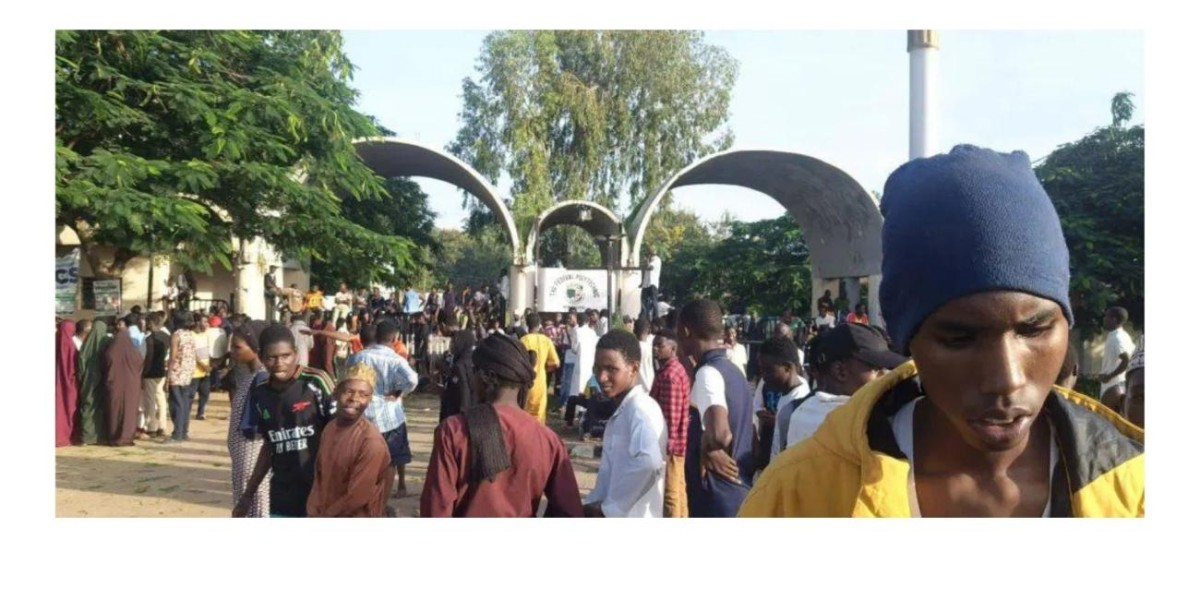
Advocacy groups like the American Veterans of Igbo Descent (AVID) have cited this development as further evidence of the need for “safe zones” to protect individuals from religious subjugation.
The debate has intensified calls for the federal government to ensure that state-run institutions remain neutral and inclusive of Nigeria’s multi-religious identity.
As the holy month of Ramadan begins, the atmosphere at the Federal Polytechnic, Bauchi remains tense.
While the school management insists the policy is intended to maintain moral standards and spiritual decorum, the legal and social implications of “forced marriages” as a disciplinary tool continue to draw fire.
Students and faculty are currently caught between traditional campus norms and a sudden, stringent enforcement of religious morality that many believe has no place in a modern academic environment.