- President Bola Tinubu signed the amendment bill into law on 18 February
- Ajuji said several sections of the revised Act raised concerns about the credibility of the 2027 general elections
- Ajuji further called for reforms within the judiciary, urging the courts to uphold impartiality
Leading opposition parties have rejected the recently amended Electoral Act 2026, calling on the National Assembly to reopen the legislation and introduce changes they say better reflect the wishes of Nigerians.
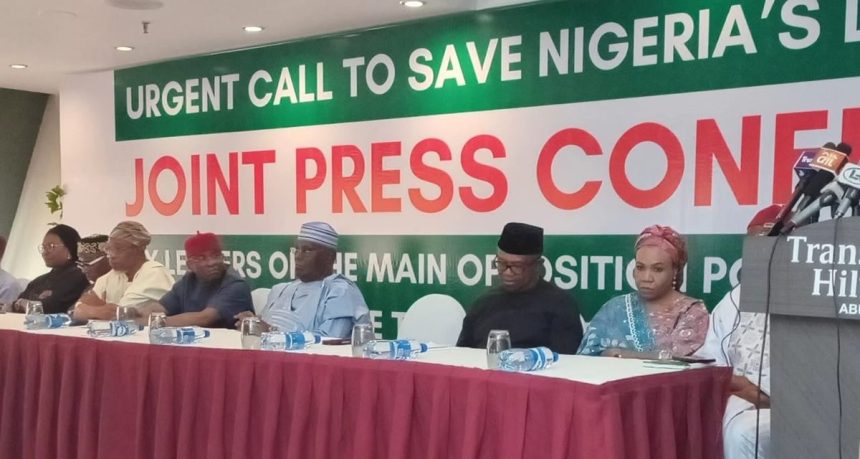
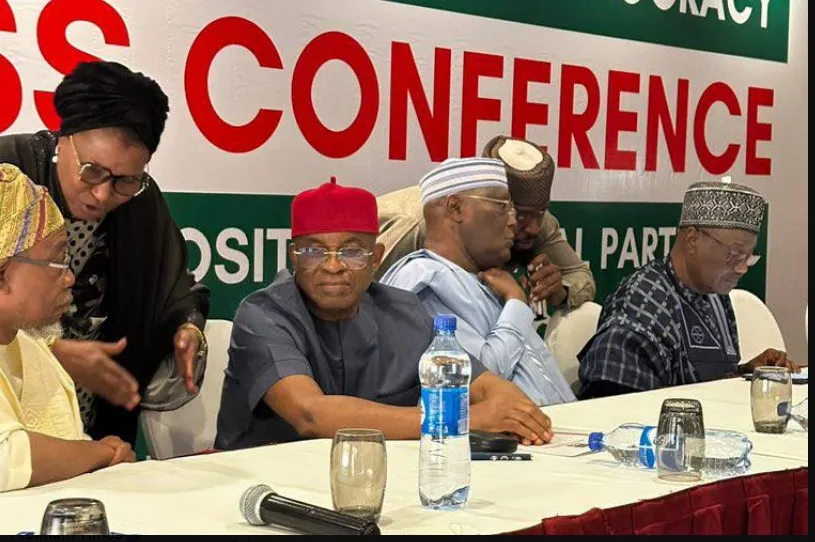
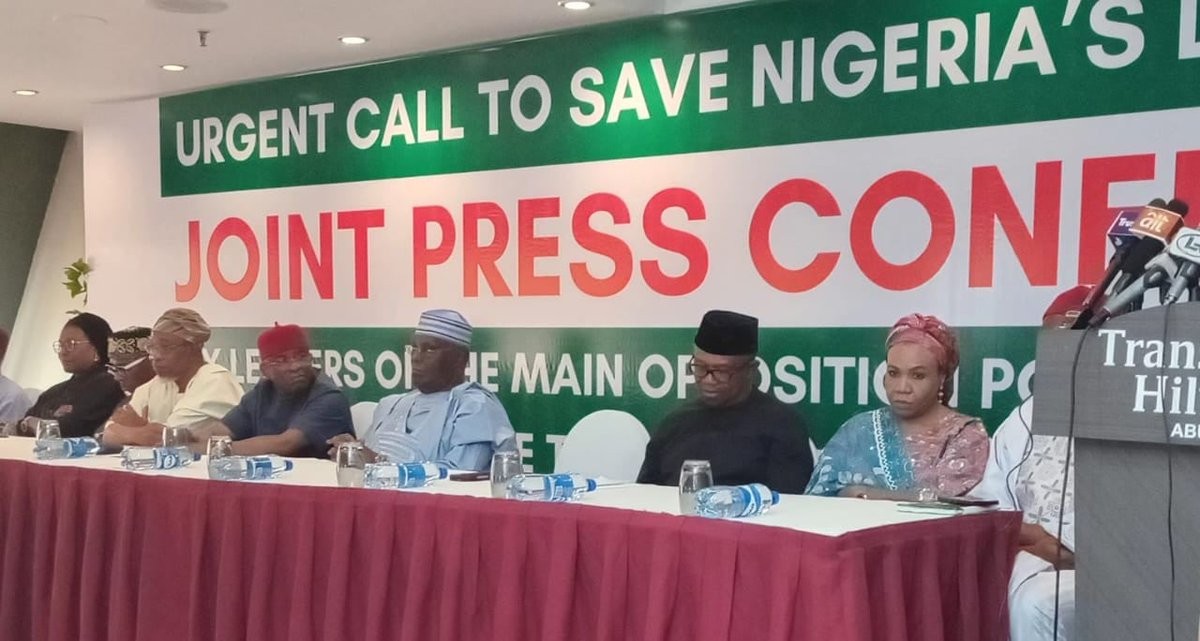
At a joint press briefing in Abuja on Thursday, Eko Hot Blog exclusively reports that opposition figures described the new law as undemocratic and warned that some of its provisions could weaken the integrity of future elections.
EDITOR’S PICK
- Grand Wedding Reception: Halimot, Saheed Mark Their Union
- Ikosi-Ejinrin LCDA Celebrates Former Chairman, Hon. Segun Adetola, on Birthday
- Sanwo-Olu Flags Off Free Eye Screening for 1,000 Lagos Police Officers
The National Chairman of the New Nigeria People’s Party (NNPP), Ahmed Ajuji, delivered a statement on behalf of the coalition.
President Bola Tinubu signed the amendment bill into law on 18 February. However, Ajuji said several sections of the revised Act raised concerns about the credibility of the 2027 general elections, alleging that aspects of the law could tilt the political landscape in favour of a dominant party.
He argued that the implementation of the Act might erode transparency in the electoral process and compromise the credibility of the ballot. According to him, the opposition parties could not accept a framework they believe threatens participatory democracy.
One of the key objections raised relates to Section 60(3), which grants presiding officers discretion over the electronic transmission of election results.
Ajuji said the wording of the section leaves room for abuse, potentially allowing delays in uploading results to the Independent National Electoral Commission’s Results Viewing Portal (IREV) under the guise of network failures.
He questioned the justification for such provisions, citing data from the Nigerian Communications Commission indicating that mobile network coverage reaches the vast majority of the country.
He also referenced previous comments by former INEC Chairman Mahmood Yakubu, who noted that the Bimodal Voter Accreditation System (BVAS) can function offline and that results could be transmitted once connectivity is restored.
The opposition also criticised Section 84 of the Act, which limits political parties to either direct primaries or consensus arrangements for selecting candidates.
Ajuji described this as an intrusion into the internal affairs of political parties, arguing that indirect primaries have historically provided an orderly and representative method of candidate selection.
He claimed that in some instances, direct primaries had produced questionable vote figures and maintained that parties should retain the freedom to determine their nomination processes.
The opposition leaders said they would pursue all lawful avenues to challenge the legislation and called on civil society organisations and citizens to support their efforts.
They also pointed to recent elections in the Federal Capital Territory area councils as an indication of broader concerns about the electoral system, linking low voter turnout to declining public trust.
Beyond electoral reforms, the coalition condemned recent political violence, including an attack involving leaders of the African Democratic Congress (ADC) in Edo State, stressing that disputes must not result in bloodshed.
Ajuji further called for reforms within the judiciary, urging the courts to uphold impartiality and ensure that electoral outcomes are decided by voters rather than litigation.
Former Vice President Atiku Abubakar, who attended the briefing, said the group’s position would be communicated to Nigerian embassies abroad and appealed to other opposition parties to join the alliance in defence of democratic principles.
ADC National Chairman David Mark also questioned the rationale behind restricting real-time result transmission and party primary options, while former Minister of Transportation Rotimi Amaechi urged opposition groups to unite and strengthen their response.
Labour Party’s 2023 presidential candidate, Peter Obi, now aligned with the ADC, echoed calls for collaboration among opposition forces to safeguard Nigeria’s democracy.
Other political figures present included former Governors Rauf Aregbesola and Liyel Imoke, Senator Ireti Kingibe, NNPP Board of Trustees Secretary Buba Galadima, and former ADC National Chairman Ralph Nwosu.
FURTHER READING