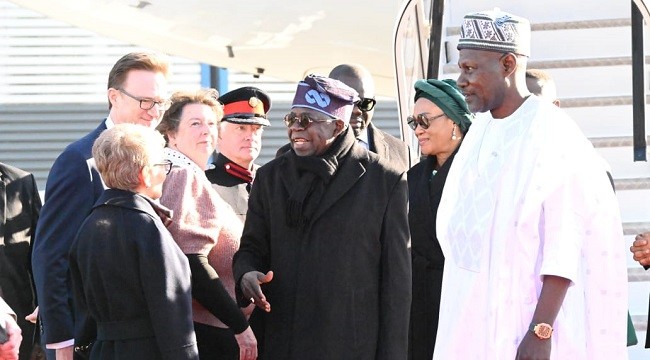
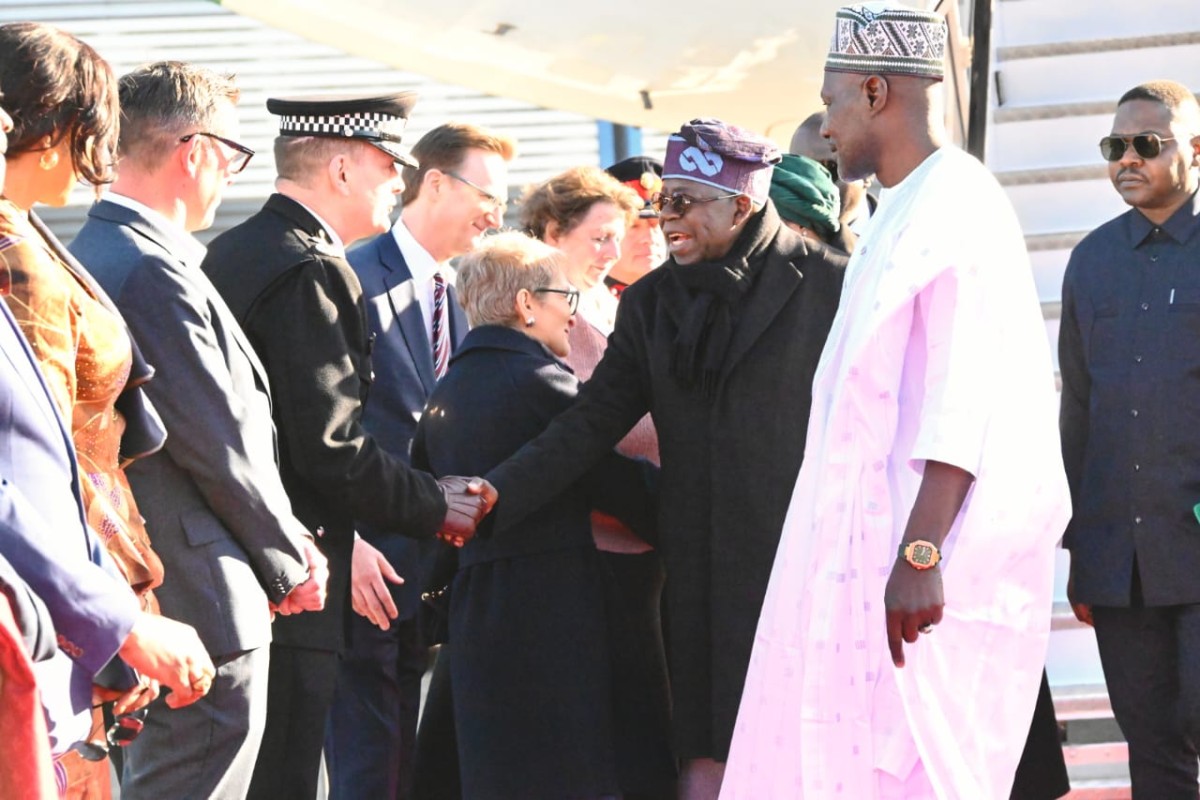
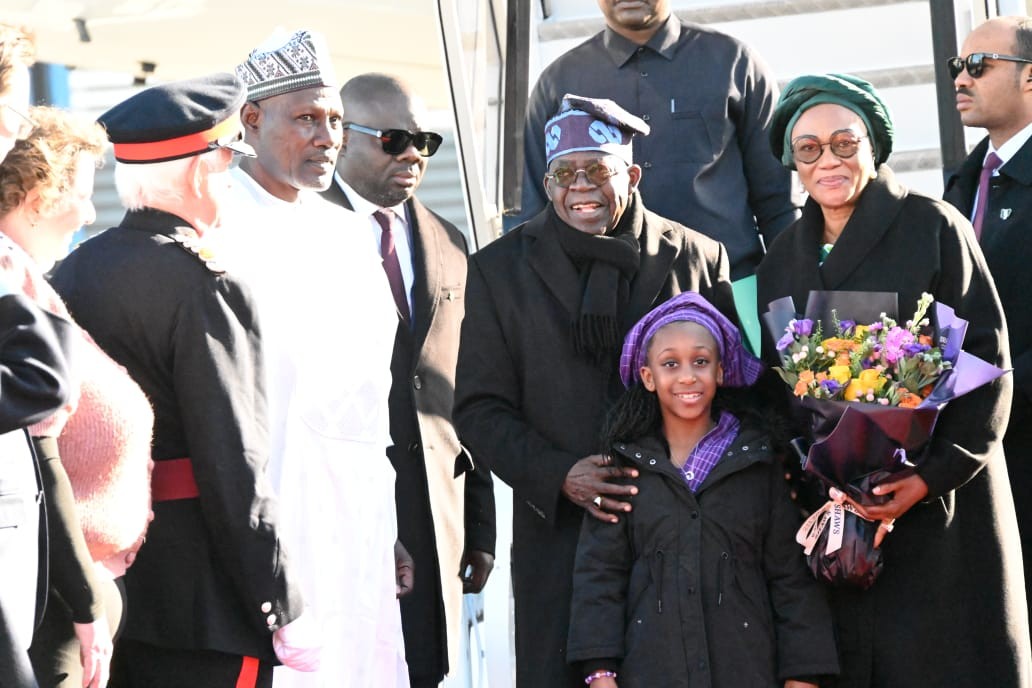
President Bola Tinubu landed in the United Kingdom (UK) on Tuesday for a two-day state visit that carries both symbolic weight and concrete economic prospects for Nigeria.
He is being hosted by King Charles III and Queen Camilla at Windsor Castle, the first Nigerian head of state to receive such an honour in 37 years, and the first ever to be hosted at Windsor. Previous Nigerian leaders visited in 1973, 1981, and 1989, all at Buckingham Palace.
EDITOR’S PICKS
The visit, which runs from March 18 to 19, includes a bilateral meeting with Prime Minister Keir Starmer at 10 Downing Street, a state banquet, and the signing of several agreements that the Nigerian government has projected as significant milestones in the bilateral relationship.
A Flagship Deal for Nigeria’s Ports
The most tangible deliverable is a £746 million financing agreement between UK Export Finance (UKEF), the Nigerian Ports Authority (NPA), and the Federal Ministry of Finance.
The deal targets the refurbishment of two of Nigeria’s most commercially critical facilities: the Lagos Port Complex at Apapa and the Tin Can Island Port Complex.
Both ports are Nigeria’s primary gateways for imports and exports, and their condition has long been a bottleneck for trade and logistics. Congestion, ageing infrastructure, and operational inefficiencies at Apapa alone cost Nigeria billions of naira in demurrage charges annually.
A successful refurbishment, backed by UKEF — the UK’s export credit agency — could significantly improve cargo throughput, reduce turnaround times, and lower costs for Nigerian businesses dependent on maritime trade.
The deal is arguably the most commercially concrete outcome of the visit, and its execution timeline will determine how quickly Nigerians feel any benefit.
Formalising a Growing Strategic Partnership
Beyond the ports deal, the visit is designed to operationalise the Nigeria-UK Strategic Partnership signed in November 2024 during Foreign Secretary David Lammy’s visit to Abuja, and the Enhanced Trade and Investment Partnership (ETIP) agreed in February of that year. Both frameworks cover trade facilitation, investment promotion, security cooperation, and people-to-people ties.
The Downing Street bilateral will produce the signing of multiple Memoranda of Understanding (MoUs) spanning trade, investment, defence, and cultural cooperation.
While MOUs are non-binding instruments and their value depends heavily on follow-through, their formalisation at head-of-state level sends a signal to investors on both sides about the seriousness of the bilateral agenda.
Defence and Security Gains
One area where the partnership has already shown measurable momentum is defence cooperation.
In early February, Nigeria’s Ministry of Defence announced a deepening of security ties with the UK. The state visit is expected to formalise and expand that agenda, with potential benefits in counterterrorism capacity, intelligence sharing, and maritime security, the last of which is particularly relevant given Nigeria’s exposure to crude theft and piracy in the Gulf of Guinea.
For a government that has made security reform a centrepiece of its domestic agenda, any uplift in operational capabilities through UK partnership would carry domestic political significance as well.
Agreements on counterterrorism capacity and intelligence sharing will also be very timely amid the rise in terrorist attacks in Nigeria, including increased attacks on military bases in recent weeks and three suicide bomb attacks in Maiduguri, the Borno State capital, that killed 23 people and injured more than 100 on Monday.
Trade Numbers and the Structural Gap
UK-Nigeria bilateral trade reached £8.1 billion in 2025, an 11.4 per cent increase on the previous year.
The trajectory is positive. However, Nigeria remains only the UK’s 36th largest trading partner, and the balance of trade still favours Britain, meaning Nigeria exports less value than it imports.
This asymmetry is the structural challenge that no single state visit can resolve. Analysts at Chatham House have been direct on this point: the investment optics of the visit are strong, but projected inflows are unlikely to fix Nigeria’s struggling economy or reverse the underlying factors driving emigration. Sustained gains require long-term structural reform in electricity, education, and healthcare, areas that remain under severe strain.
Soft Power and the Diaspora
Tinubu will also attend a reception with Nigerian and British business leaders and members of the Nigerian diaspora, and will be the guest of honour at an exhibition of Nigerian modernist art. King Charles III will host the President at a special viewing of items from the Royal Collection related to Nigeria.
These elements of the visit serve Nigeria’s soft power interests and offer the government an opportunity to engage a diaspora that remitted an estimated $20 billion to Nigeria in 2024.
The Bottom Line
The state visit is meaningful in calibre, and the ports financing deal alone justifies the diplomatic investment.
FURTHER READING
But whether this moment accelerates a rebalancing of Nigeria’s economic relationship with the UK will be answered in the months of implementation that follow.
Philip Ibitoye is a Special Correspondent with EKO HOT BLOG. Click here to find daily analysis and critical insight on trending issues in Lagos and other parts of Nigeria.
Click to watch the video of the week below: