- President Bola Tinubu has officially categorized insecurity and poverty as national emergencies, citing them as fundamental threats to Nigeria’s stability, jobs, and productivity.
- The administration has recruited 45,000 young Nigerians for the Community Protection Guards and deployed 10,000 Agro-Rangers through the NSCDC to safeguard agricultural investments.
- The President noted the implementation of a new national minimum wage, the clearance of pension arrears, and the reintroduction of gratuity payments starting in January 2026.
- Through the Renewed Hope Agenda, cash transfers have reached 15 million households, while major infrastructure projects have generated over 600,000 jobs nationwide.
President Bola Tinubu has declared that the hydra-headed challenges of poverty and insecurity are now being treated as national emergencies.
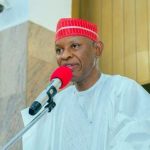
Eko Hot Blog reports that speaking at the 2026 Workers’ Day celebration at Eagle Square through the Secretary to the Government of the Federation, Senator George Akume, the President emphasized that decent work and economic growth cannot exist in an environment of fear and extreme hardship.
EDITOR’S PICKS
- JAMB Delists 23 CBT Centres, Warns 89 After Mock UTME Review
- NASA Astronauts Return to Earth After First Human Trip to the Moon in 50 Years
- INEC Shifts Nationwide Voter Revalidation Until After 2027 General Election
The President detailed a multi-dimensional approach to these crises, highlighting that 15 million vulnerable households are currently benefiting from expanded cash transfer programs.
He also pointed to significant job creation through large-scale projects, including the Lagos-Calabar Coastal Highway and the Ajaokuta-Kaduna-Kano Gas Pipeline.
To protect the nation’s food supply, the government has launched the National Agricultural Growth Scheme and deployed security personnel specifically to protect farming communities.

Beyond security, the administration emphasized its commitment to the Decent Work Agenda.
Tinubu noted that the government has enrolled 800,000 informal sector workers in micro pension schemes and provided a ₦200 billion support fund for small businesses.
Addressing organized labor, the President advocated for industrial harmony, urging that strikes should remain a last resort while promising that the government remains dedicated to promoting fair wages and workplace safety.