Lagos State opened its 2026 fiscal year on a strong note, generating N807.1 billion in revenue during the first quarter, equivalent to 18.2 per cent of its N4.44 trillion annual budget.
This according to official figures released by the state government in the Lagos State 2026 first quarter budget performance report.
EDITOR’S PICKS
The performance, driven largely by a surge in internally generated revenue (IGR), reinforces the commercial capital’s standing as Nigeria’s top revenue-earning state and sets a confident tone for the rest of the fiscal year.
IGR Carries the Load
Of the total earnings, internally generated revenue (IGR) accounted for the bulk, contributing N536.37 billion, the highest recorded by any state in the country during the same period.
Personal income tax was the single biggest driver, yielding N350.37 billion and underscoring how heavily Lagos leans on its vast workforce and business population to fund government operations. The figure also reflects the state’s relatively efficient tax administration machinery, which has steadily expanded its net over informal and formal sector workers alike.
Taxes on bank interest contributed N28.47 billion, while water rates and tariff fees brought in N30.2 billion.
Letter of administration fees generated N22.11 billion, and tax on contracts added N8.77 billion to the state’s coffers.
Federation Account allocations played a comparatively modest supporting role. Lagos received N27.93 billion as statutory allocation and N224.16 billion from value-added tax, with an additional N14.76 billion drawn from other Federation Account Allocation Committee (FAAC) revenues. Aids and grants contributed N901.99 million, while the sale of fixed assets added N1.38 billion. The state entered the year with an opening balance of N1.6 billion.
Notably, despite a budgetary provision of N641.96 billion for borrowing, Lagos did not take on any new loans during the quarter, a signal of fiscal discipline that will likely be cited by the administration as evidence of responsible governance ahead of the 2027 election cycle.
Spending Picture
Total expenditure for the period stood at N715.34 billion, representing a significant share of the revenue earned.
Recurrent spending dominated the disbursement profile. Salaries consumed N88.2 billion, while other running costs accounted for N286.38 billion, bringing total recurrent expenditure to N374.58 billion. Capital expenditure trailed at N340.76 billion, a considerable sum, though still below what was spent keeping the government running day-to-day.
The pattern is a familiar feature of Lagos’s fiscal structure: substantial investment in infrastructure and services, but with recurrent obligations continuing to command the larger slice of total spending. For a state with an annual budget approaching N4.5 trillion, narrowing that gap remains one of the central long-term fiscal challenges. If recurrent costs continue to outpace capital outlays as the year progresses, it will raise questions about how much of the state’s impressive revenue base is actually being converted into durable public assets.
Where the Money Went
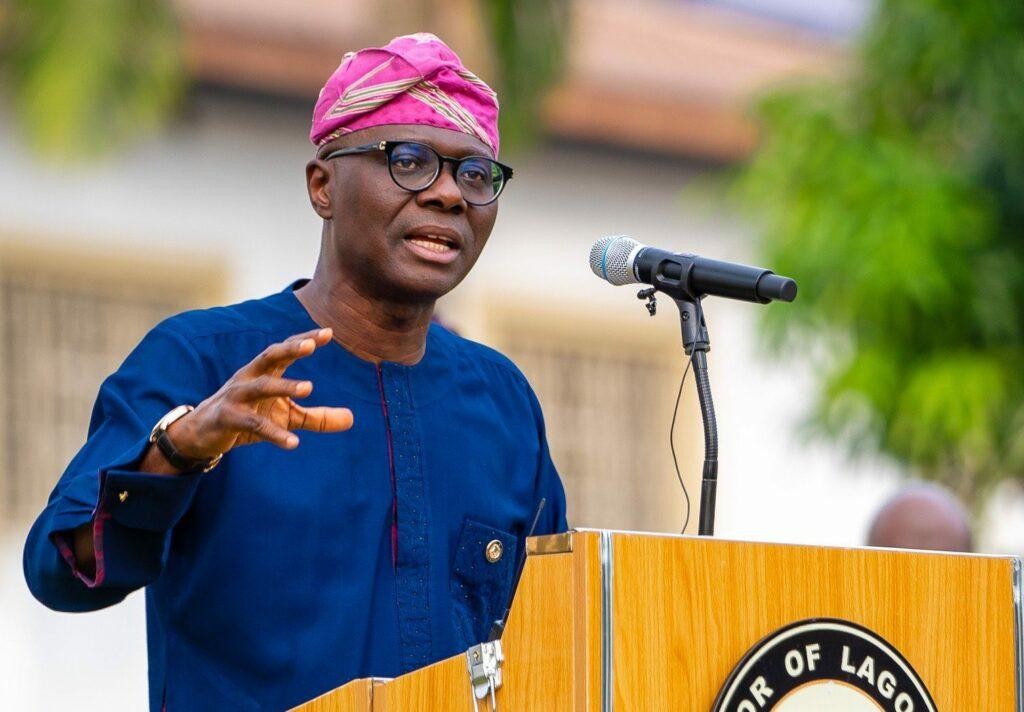
Among the sectors that received capital releases, infrastructure led with the Office of Infrastructure accounting for N128.4 billion, by far the largest allocation, reflecting the Babajide Sanwo-Olu administration’s continued prioritisation of physical development in a state straining under the weight of its own growth.
Health followed with N26.45 billion, representing approximately 17 per cent of the sector’s N155.34 billion annual allocation. The figure suggests a back-loaded spending plan for the sector, meaning larger releases are expected as the year progresses. The Lagos State Metropolitan Area Transport Authority (LAMATA) ranked third, receiving N24.49 billion to support transport infrastructure across the megacity.
The Q1 figures present a broadly positive fiscal picture for Lagos. Revenue generation is on a healthy trajectory, borrowing has been avoided despite approved headroom, and capital spending remains substantial.
FURTHER READING
The more enduring structural question — whether recurrent costs can be progressively trimmed relative to capital outlays — will likely define how effectively the state translates its exceptional revenue base into long-term development gains.
Philip Ibitoye is a Special Correspondent with EKO HOT BLOG. Click here to find daily analysis and critical insight on trending issues in Lagos and other parts of Nigeria.
Click to watch the video of the week below: