
On Wednesday, April 22, 2026, Prince Tajudeen Olusi, the Chairman of the Lagos State Governors’ Advisory Council (GAC), the highest decision-making body of the state chapter of the All Progressives Congress (APC), made the case for re-electing capable senior lawmakers.
In his goodwill message at the Executive-Legislative Parley at Eko Hotel, Victoria Island, Lagos, he said the legislature is not for job seekers, and that capacity, competence and experience count. A legislator, he argued, must be brilliant, patriotic and selfless.
EDITOR’S PICKS
The 89-year-old political leader went further to warn that frequently changing a legislator is not beneficial to the constituency they represent, citing instances of lawmakers in the American parliament who have spent decades in office.

Prince Olusi’s remarks were not mere pleasantry to soothe the egos of the lawmakers in attendance. They cut to the heart of a question that matters enormously to voters ahead of every election cycle: does it pay to keep sending the same person back to the legislature?
A review by EKO HOT BLOG shows that the evidence, from Washington to Abuja, says yes.
How the System Works
Legislative power does not distribute itself equally. In both the United States Congress and Nigeria’s National Assembly, the longer a lawmaker serves, the more influence they accumulate through committee assignments, leadership positions, and the institutional relationships that determine which projects get funded and which bills get passed.
Data collected since World War II show that lawmakers with many years of service successfully push larger proportions of their bills through the legislative process, with each term served worth roughly a four-point increase in the percentage of a member’s introduced bills securing passage. That is not a small margin. It is the difference between a road getting built or remaining a line item on a wish list.
Members of US Congress who have served longer are often more knowledgeable about legislative procedures and are trusted to manage complex issues, which enhances their effectiveness in leadership positions. Seniority, in short, is not a reward for longevity. It is a resource that constituencies can deploy.
The American Example
Three figures illustrate the principle clearly. Mitch McConnell of Kentucky has served seven Senate terms since 1985, becoming the longest-serving Senate party leader in U.S. history.
That record was not incidental — it was the product of consistent re-election, which gave Kentucky a senator with unmatched leverage over appropriations and judicial appointments for decades. Among constituency-level deliverables, he secured funding to combat the invasion of Asian Carp in Western Kentucky lakes and pushed environmental and infrastructure investments tied to his Appropriations Committee membership.

Also, former Speaker Nancy Pelosi has represented San Francisco, California, in the US Congress for 38 years. After the 1989 Loma Prieta earthquake and a series of Bay Area military base closures, she orchestrated a surge of federal resources to transform infrastructure, refurbish landmarks, and create new spaces for affordable housing. Notably, she secured federal authorisation and funding for a new San Francisco Federal Building, resulting in one of the greenest federal government buildings when it opened in 2007.
That capacity to mobilise federal government on behalf of a single city was not available to her in her first term. It came after years of climbing the House ladder to become Speaker.

Chuck Schumer of New York served nine terms in the House before entering the Senate, where he has now served five terms. The accumulation paid off for New Yorkers: he delivered $20 billion to rebuild after the September 11 terror attacks and secured a $63 billion relief package to help New York recover from Superstorm Sandy.
Those figures reflect what access to Senate leadership actually means in practice.
The Nigerian Equivalent
The same logic holds in Nigeria. Femi Gbajabiamila served six consecutive terms representing Surulere I in Lagos. He rose from Minority Leader in the 7th Assembly to Majority Leader in the 8th and Speaker in the 9th National Assembly.
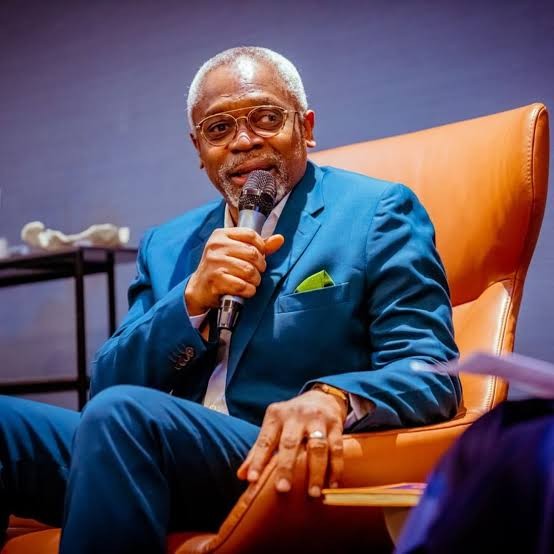
Each promotion expanded what he could deliver for Surulere. His Speakership brought federal legislative attention, sponsored landmark bills including the Students’ Loan Act, and gave his constituency direct representation at the apex of the House.
David Mark’s story is even more instructive. He represented Benue South for five terms from 1999 to 2019, becoming Nigeria’s longest-serving Senate President. He facilitated the establishment of the Federal Science and Technical College, Otukpo, Federal Government College, Otobi, and sponsored the construction of two federal roads connecting his constituency.

He also sponsored the Act establishing the Federal University of Health Sciences, Otukpo, the first of its kind in Nigeria. None of those institutions would exist without the leverage that comes from holding the Senate President’s gavel for eight years.
Prince Olusi’s point, stripped to its essence, is this: a constituency that keeps recycling its lawmakers forfeits the benefits of seniority and starts over at the bottom of the queue every few years.
FURTHER READING
The communities that benefit most from democratic representation are not necessarily those with the loudest voices. They are the ones wise enough to invest in the long game.
Philip Ibitoye is a Special Correspondent with EKO HOT BLOG. Click here to find daily analysis and critical insight on trending issues in Lagos and other parts of Nigeria.
Click to watch the video of the week below: