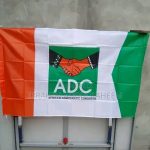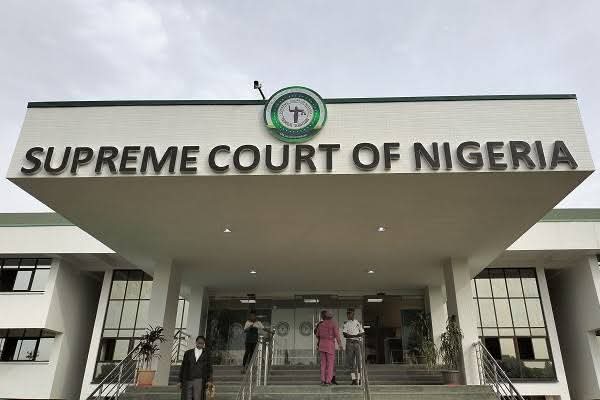
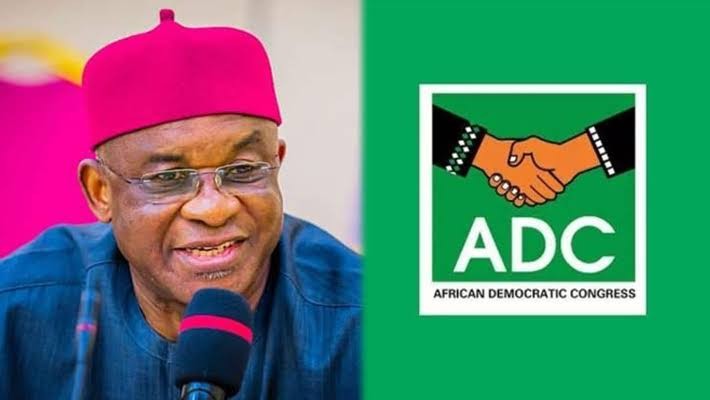
The Supreme Court has ordered David Mark and rival claimants to the leadership of the African Democratic Congress (ADC) to return to the Federal High Court, where the dispute over who legitimately leads the opposition party will finally be heard and determined on its merits.
Delivering a unanimous judgment on Thursday, a five-member panel of the apex court headed by Justice Mohammed Garba upheld the Court of Appeal’s dismissal of Mark’s appeal on procedural grounds, but struck down a critical preservatory order that had become the legal backbone of a far-reaching decision by the Independent National Electoral Commission (INEC).
EDITOR’S PICKS
The ruling does not settle who leads the ADC. But it hands the Mark-led executive a significant, if temporary, restoration of standing.
EKO HOT BLOG explains what that means and how all of these came to be.
How the Crisis Unfolded
The ADC’s leadership crisis traces to the exit of Ralph Nwosu, the party’s founder and former national chairman. Nafiu Bala, a former vice-chairman of the party, argued that he never resigned his position and that the party’s constitution entitled him to assume leadership upon Nwosu’s departure.

He declared himself acting national chairman and filed suit at the Federal High Court in September 2025, seeking to stop the Mark-led executives from parading themselves as national officers and compelling INEC to recognise his own faction.
The Federal High Court did not grant an injunction. It merely ordered the respondents, including INEC, to be put on notice to show cause why Bala’s motion should not be granted. Mark, dissatisfied even with that interlocutory step, filed an appeal at the Court of Appeal challenging the Federal High Court’s jurisdiction to continue hearing the suit at all.
The appellate court dismissed that appeal in its entirety on March 12, 2026, finding it procedurally incompetent. Mark had relied on an enrolled order rather than the actual judicial proceedings, had failed to seek the required leave before approaching the appellate court on an interlocutory matter, and had raised jurisdiction arguments that were still properly before the trial court.
Having dismissed the appeal, the Court of Appeal went further, directing parties to maintain the “status quo ante bellum” and ordering accelerated hearing of the substantive suit.
It was that status quo order — issued after the appellate court had already dismissed the appeal before it — that the Supreme Court has now nullified.
INEC’s Argument No Longer Has a Leg to Stand On
The Court of Appeal’s status quo order handed INEC a legal peg on which to hang a consequential decision.
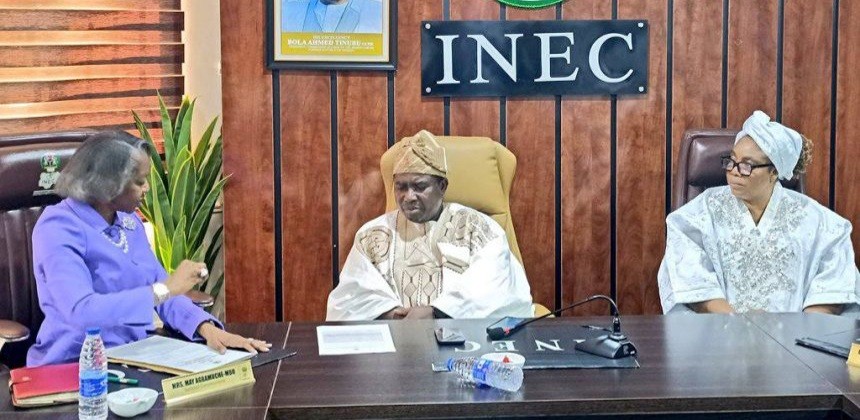
On April 1, 2026, the commission announced that it would no longer recognise any faction of the ADC — neither the Mark-led executives nor the Bala-led claimants — and would refrain from engaging with either group or monitoring their activities, including meetings, congresses, and conventions. INEC positioned this as a neutral reading of the appellate court’s order to preserve the status quo: since no leadership had been judicially validated, the commission would deal with neither.
That reasoning has now been dismantled at its foundation.
The Supreme Court was unambiguous. Issuing a status quo order in an appeal it had already dismissed was, in the words of Justice Garba, “unnecessary, unwarranted and improper.” The order was nullified. And with it, the only judicial basis for INEC’s derecognition collapses.
Here is the critical point: no court has ordered INEC to stop recognising the Mark-led executive. No injunction exists against them. No restraining order has been granted. The Federal High Court, when Bala’s suit was first heard in September 2025, declined to issue such an order, it only asked parties to appear. INEC’s decision to suspend recognition of the Mark leadership was not compelled by any court. It was a unilateral administrative decision, dressed in the language of judicial compliance, that has now lost even that pretence of legal cover.
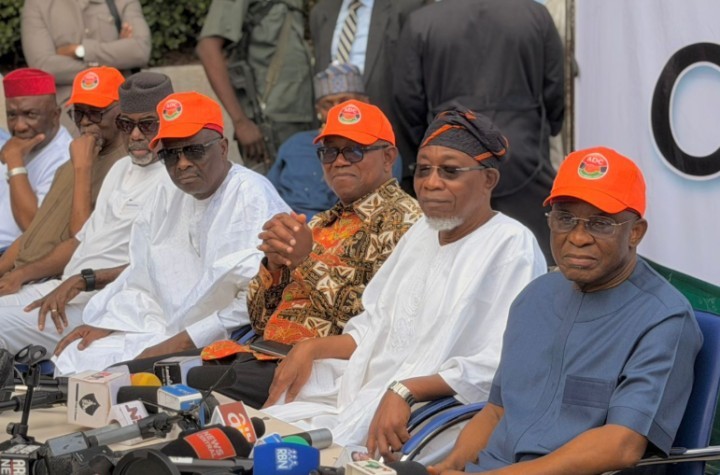
As it stands, the Mark-led executive retains its position as the last recognised leadership of the ADC. The burden has shifted, sharply, to INEC to justify continued non-recognition, and that justification no longer exists.
What Comes Next
All parties are directed to return to the Federal High Court before Justice Emeka Nwite, where the substantive suit, marked FHC/ABJ/CS/1819/2025, will now proceed. The core questions remain unresolved: whether Bala legitimately assumed leadership upon Nwosu’s exit, and what INEC’s obligations are pending a final determination.
FURTHER READING
But the immediate pressure is not on the parties. It is on INEC. The commission must now either reverse its derecognition of the Mark leadership or defend a position for which it no longer has judicial backing. For an opposition party trying to position itself as a coalition vehicle ahead of 2027, that clarification cannot come soon enough.
Philip Ibitoye is a Special Correspondent with EKO HOT BLOG. Click here to find daily analysis and critical insight on trending issues in Lagos and other parts of Nigeria.
Click to watch the video of the week below: