- The Made-in-China Goods Traders Association of Nigeria has appealed to the Chinese government to provide streamlined visa support and expanded commercial opportunities for its members to fortify ongoing economic ties.
- Leading a delegation to the Consulate General of the People’s Republic of China in Lagos, the association lamented that despite over a decade of promoting legitimate trade, members have faced operational neglect and severe travel barriers from the consulate.
- Alongside requests for direct inclusion in premier global commerce events like the Canton Fair, the trade group sought targeted educational scholarships and institutional capacity-building frameworks within China to scale up regulatory compliance.
The Made-in-China Goods Traders Association of Nigeria has appealed to the Chinese government to provide visa support and greater trade opportunities for its members to strengthen economic relations between Nigeria and China.
Presenting the group’s position during a high-profile courtesy visit to the Consul General of the People’s Republic of China in Lagos, Eko Hot Blog reports that Madam Yan Yuqing, the association emphasized that addressing current travel bottlenecks is critical to sustaining bilateral growth.
EDITOR’S PICK
- Fresh Details Emerge on Death of Odomola Monarch, Oba Adebowale Adeshina
- Sanwo-Olu Applauds LASU’s Academic Excellence After JAMB Ranking
- NRC Moves 176,820 Tonnes Of Cargo Through Lagos Ports In Q1
The group noted that establishing a robust, transparent pipeline for trade documentation would directly empower local importers while filtering out illegitimate actors who damage international commerce standards.
The organized trade block, which has systematically promoted Asian manufactured goods across West African markets for more than a decade, noted that its members have consistently funded legitimate business activities and driven economic cooperation.
However, the National President and Patron of the association, Chief Adigun Samuel, expressed deep concern that the group has yet to receive the desired attention, formal recognition, or operational backing expected from the Chinese Consulate.
Samuel maintained that this administrative disconnect has significantly limited the association’s capacity to guide its members properly or effectively expand its commercial footprint.
To bridge these structural gaps, the association explicitly requested simplified access to business visas for both its first-time and regular travelers, particularly those seeking to source inventory directly from factories or attend global exhibitions.
Samuel urged the consulate to institutionalize a dedicated visa review format that would allow verified members to participate in premier commercial platforms, including the world-renowned Canton Fair.
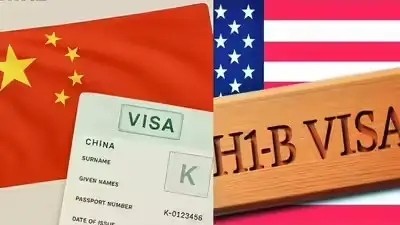
Opposition and independent traders have frequently cited growing visa accessibility hurdles as a primary factor stifling SME expansion, making formal consular intervention a high priority for local textile, electronics, and machinery importers.
Beyond conventional travel entry support, the trade association looked to expand its partnership into human capital development and corporate governance.
The leadership formally petitioned the Chinese government to grant inbound training scholarships and specialized capacity-building slots to Nigerian operators to foster cross-cultural literacy and enforce strict adherence to international trade guidelines.
By integrating local traders into the consulate’s routine events and training schemes, the association believes it can effectively transform its membership base into disciplined economic ambassadors who respect Chinese regulatory laws while contributing to Nigeria’s domestic GDP.