- The Director-General of the Nigeria Centre for Disease Control and Prevention (NCDC), Dr. Jide Idris, has appealed to governors across all 36 states to provide adequate funding and infrastructure for health workers to prevent the Ebola virus from entering Nigeria.
- Federal and state agencies are collaborating to strengthen monitoring, prevention, and contact tracing efforts at international airports and entry points, particularly in high-volume hubs like Lagos.
- While Nigeria currently has zero recorded cases of Ebola, states like Lagos and Oyo have activated technical working groups, mobilized rapid response teams, and placed health facilities on high alert.
The Nigeria Centre for Disease Control and Prevention (NCDC) has called on state governments to step up funding and capacity-building interventions to shield the country from the potential importation of the Ebola Virus Disease.
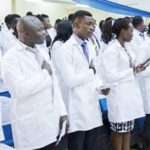
Speaking on Thursday at the third edition of the Adetokunbo Alakija Memorial Lecture and induction of 52 new members into the Nigerian Society of Travel Medicine (NSTM) in Victoria Island, Lagos, Eko Hot Blog reports that NCDC Director-General Dr. Jide Idris emphasized that federal efforts alone cannot sustain national health security.
EDITOR’S PICK
- Fresh Details Emerge on Death of Odomola Monarch, Oba Adebowale Adeshina
- Sanwo-Olu Applauds LASU’s Academic Excellence After JAMB Ranking
- NRC Moves 176,820 Tonnes Of Cargo Through Lagos Ports In Q1
Dr. Idris explained that state health workers are the frontline stakeholders in epidemic responses, prompting the NCDC to engage the Nigeria Governors’ Forum and state commissioners to secure stronger, localized infrastructural and financial backing.
To prevent any potential outbreak, the federal government has intensified border screening, tracking, and monitoring systems at international airports across the federation.
Highlighting the mechanics of transmission, the Chairman of the Board of Trustees of the NSTM, Dr. Patrick Chukwuma, noted that dangerous viruses like Ebola and COVID-19 spread primarily through transit.
He urged newly inducted medical professionals to integrate comprehensive travel history checks into routine clinical patient assessments, treating it as a vital sign, to act as effective gatekeepers against disease importation.
Concurrently, the Director-General of the National Agency for the Control of AIDS (NACA), Dr. Temitope Ilori, delivered a keynote lecture emphasizing the integration of voluntary HIV testing and care services into existing travel health architectures, ensuring that cross-border mobility does not disrupt long-term health treatment.
Regionally, high-transit states are rapidly formalizing their defenses to absorb potential shocks.
The Lagos State Commissioner for Health, Prof. Akin Abayomi, acknowledged the state’s acute vulnerability due to massive daily air travel volumes, confirming that joint preventive protocols with airport command units are fully operational.
Additionally, Abayomi revealed that Lagos has commenced legislative work to mandate health insurance for all residents.
In the same vein, the Oyo State Commissioner for Health, Dr. Oluwaserimi Ajetunmobi, reassured the public via a statement from Information Commissioner Prince Dotun Oyelade that while no case of Ebola exists in Nigeria, the state has activated its Technical Working Group and placed its 33 local government areas under strict surveillance.
Oyo has mobilized its Rapid Response Teams, laboratories, and Disease Surveillance Officers, urging traditional, religious, and community leaders to watch for symptoms like sudden high fever, weakness, vomiting, and unexplained bleeding.