- The International Federation of Red Cross and Red Crescent Societies warns that the deadly Ebola outbreak in the Democratic Republic of Congo has not yet peaked and could take up to a full year to contain.
- The current outbreak is driven by the rare Bundibugyo strain, for which no approved vaccines or treatments exist, and it has already spread across multiple provinces and into neighboring Uganda.
- Field efforts are being severely undermined as local response volunteers face verbal abuse and physical attacks from suspicious communities, crippling critical tracking and safe burial protocols.
The International Federation of Red Cross and Red Crescent Societies has issued a stern warning concerning the escalating Ebola epidemic in the Democratic Republic of Congo.
Eko Hot Blog reports that the Red Cross operations managers stationed at the northeastern epicentre of Bunia revealed on Tuesday that the deadly health crisis has not yet hit its peak, warning that containment operations could drag on for at least a full year.
EDITOR’S PICK
- Hamzat Appoints Obanikoro as Campaign DG Ahead of 2027 Lagos Governorship Race
- Tinubu’s State Police Plan Gains Momentum as Amendment Looms
- Residents Raise Alarm After Two Bodies Found in Lagos Waterway
This projection comes amidst deep structural worries regarding a severe deficiency in localized laboratory testing capacities, which field experts say leaves international monitoring bodies highly blind to the actual speed, volume, and geographical reach of the expanding viral transmission.
Data collated by the World Health Organisation indicates that since the health ministry formally declared the outbreak on May 15, the DRC has registered 808 confirmed cases alongside 192 related fatalities.
The crisis is heavily exacerbated by the specific viral strain identified in this wave, known as the Bundibugyo Ebola virus, for which there are currently no fully approved clinical vaccines or therapeutic treatments.
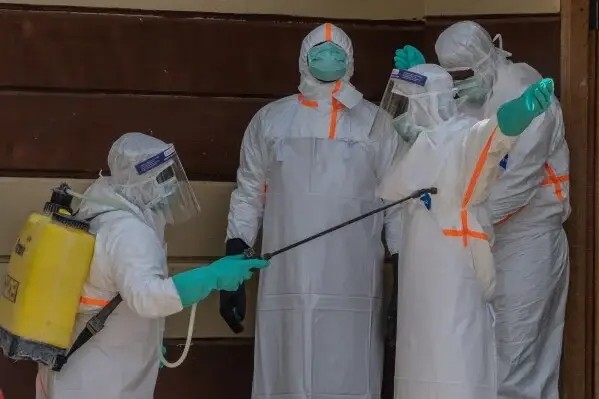
While the primary caseload remains concentrated within the vulnerable Ituri province, active transmission chains have been successfully logged in both North Kivu and South Kivu provinces, with cross-border movement already planting 19 confirmed cases and two deaths inside neighboring Uganda.
Beyond the biomedical challenges, emergency field operations are facing severe social resistance from local populations.
Aid officials reported that Red Cross volunteers have frequently been subjected to intense verbal hostility, direct threats, and physical violence while trying to execute contact tracing and administer safe, dignified medical burials.
The IFRC emphasized that establishing communal trust is just as critical to stopping transmission as the deployment of medical supplies, noting that institutional suspicion prevents families from reporting infections early enough to receive supportive care or protect their immediate households from contagion.