- The joint Ebola outbreak in Uganda and the Democratic Republic of the Congo has rapidly escalated to 894 confirmed cases and 204 fatalities within exactly four weeks of its initial official declaration on May 15, 2026.
- Public health teams are monitoring less than 15% of the estimated 17,000 to 35,000 required daily contacts, severely undermining efforts to catch and isolate new transmissions early.
- Because this particular outbreak involves the aggressive Sudan strain, field responders are operating completely without licensed preventative vaccines or targeted therapeutic medications.
The rapid cross-border spread of a deadly Ebola outbreak across the Democratic Republic of the Congo (DRC) and Uganda has reached a critical threshold, documenting a total of 894 confirmed cases, 204 verified deaths, and just 74 medical recoveries.
Providing an emergency epidemiological briefing during an international health webinar on Thursday, Dr. Wessam Mankoula, Eko Hot Blog reports that the Acting Head of the Emergency Preparedness and Response Division at the Africa Centres for Disease Control and Prevention (Africa CDC), expressed profound concern over the vertical acceleration of the virus.
EDITOR’S PICK
- Hamzat Appoints Obanikoro as Campaign DG Ahead of 2027 Lagos Governorship Race
- Tinubu’s State Police Plan Gains Momentum as Amendment Looms
- Residents Raise Alarm After Two Bodies Found in Lagos Waterway
Mankoula warned that the situation now officially ranks as the third-largest Ebola outbreak by caseload in recorded history, trailing behind only the catastrophic 2014 West African epidemic and the prolonged 2018–2019 DRC crisis.
According to detailed data sets synthesized by continental health boards, the underlying operational drivers of the epidemic remain highly fractured between the two affected nations.
While the situation within Uganda has remained relatively stable, holding at 19 cases and 2 deaths strictly localized within a single quarantined health zone in Kampala, the DRC continues to aggressively fuel the regional surge.
Ituri Province has been formally designated as the absolute epicentre, accounting for 91 standalone confirmed cases and an alarming 78 percent of all fatalities recorded nationwide.
More worrisome, however, is the neighboring North Kivu province, where persistent regional militia violence and severe civic insecurity have severely restricted the physical access of international emergency responders, driving up the regional case fatality rate due to a complete lack of localized tracing.
Epidemiological mapping shows that the geographic spread has metastasized with terrifying speed, exploding from just three active health zones in its first week to a staggering 32 health zones across the DRC and Uganda by week four.
This reflects an immediate 38 percent week-over-week spike in active infections. Despite this massive vertical expansion, Africa CDC officials noted with frustration that the breakdown of physical containment is entirely driven by a near-total collapse in community contact tracing.
To effectively break the chain of transmission for over 800 cases, field teams should theoretically be tracking between 17,000 and 35,000 active civilian contacts on a daily basis; yet, barely 6,000 individuals have been successfully listed, and less than 15 percent are receiving active medical follow-ups.
The complete absence of standard medical countermeasures has further complicated field operations. Because the ongoing outbreak is fueled by the Sudan strain of the Ebola virus, standard commercial vaccines and existing monoclonal antibody therapies are completely ineffective.
Containment relies entirely on traditional public health mechanics: rapid case isolation, rigorous contact monitoring, and safe, dignified burials.
Shockingly, the continental response infrastructure is heavily starved of vital assets, with only seven out of 49 required specialized burial teams currently deployed, and just seven out of 98 necessary logistical vehicles available on the ground across the affected provinces.
In direct response to the escalating continental threat, the Africa CDC took the extraordinary step of declaring a public health emergency of continental security on May 18, immediately mobilizing regional health authorities.
This political intervention triggered the high-level Kampala Summit, where health ministers from the DRC, Uganda, and vulnerable border states like South Sudan established a joint defense framework.
This was followed closely by a unified $517 million strategic response budget launched alongside the World Health Organization (WHO), and an extraordinary assembly of African Union heads of state chaired by the President of Burundi to stabilize international funding.
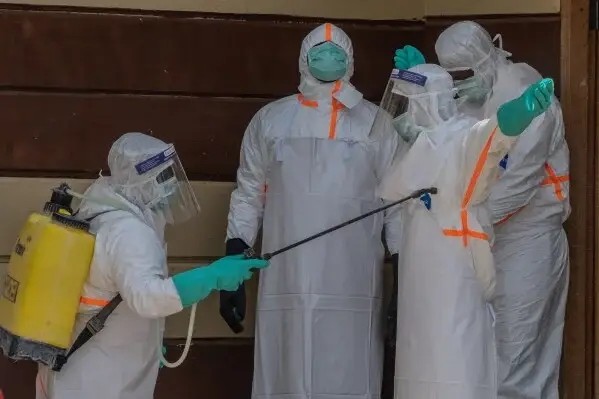
On a positive note, testing infrastructure has undergone massive technical upgrades; historical diagnostic backlogs of up to eight days have been completely wiped out, with regional laboratories now processing advanced PCR tests within 24 hours.
Over 21,000 testing kits have been successfully delivered to the frontlines, with an additional 27,000 units currently in transit.
Furthermore, heavy logistics support from international partners like India and Egypt has dropped over 60 metric tonnes of critical decontamination equipment and medical supplies into the region, bolstered by Starlink terminals to maintain digital data connectivity at remote border checkpoints.
However, financial shortfalls remain a crippling roadblock; out of $910 million in total funding pledges secured during recent diplomatic summits, less than $90 million in hard currency has actually been released to local responders, leaving clinical teams dangerously exposed as treatment beds hit 86 percent occupancy.