- The IAEA says inspectors must be allowed into Iran under the interim deal
- Iran has not confirmed when access to nuclear sites will begin
- Inspectors will verify uranium stockpiles and nuclear materials
The head of the International Atomic Energy Agency (IAEA), Rafael Grossi, has said United Nations nuclear inspectors will be granted access to Iran under the terms of the recently agreed interim peace arrangement between Tehran and Washington.
The temporary agreement, signed last week by the United States and Iran, provides a 60-day window for negotiations aimed at resolving outstanding disputes, particularly over Iran’s nuclear programme, Eko Hot Blog gathered.
EDITOR’S PICK
- UN Mobilizes Humanitarian Aid For Venezuela Following Twin Earthquakes
- Dollar To Naira Exchange Rate Today, June 26, 2026
- Concerns As Repentant Boko Haram Members Allegedly Join Army Recruitment
Although Iran’s Deputy Foreign Minister, Kazem Gharibabadi, stated earlier this week that there were no immediate plans to admit international inspectors, Grossi insisted that inspections are an essential part of the agreement.
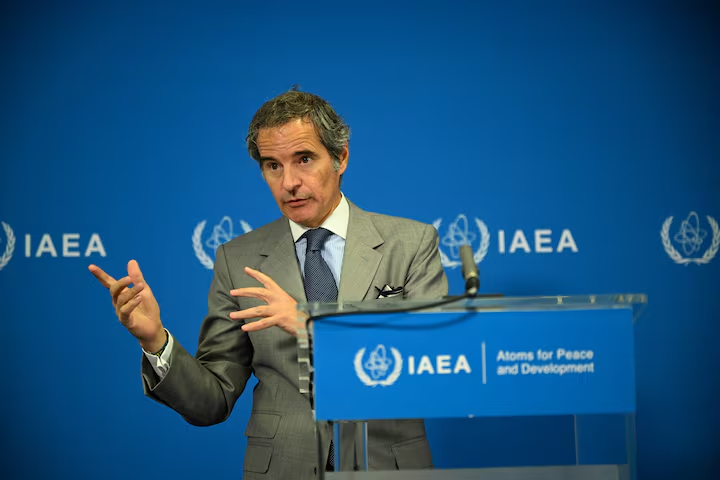
Speaking at a press conference in Japan on Friday, the IAEA chief said compliance with the accord requires the agency to verify Iran’s nuclear activities.
“There is an agreement, and for that agreement to be implemented, the IAEA must be able to access and inspect the relevant facilities,” Grossi said, expressing hope that inspectors would return to Iran soon.
He disclosed that IAEA officials have already begun technical discussions with Iranian authorities as part of preparations for future inspections.
According to Grossi, the agency’s initial priority will be to confirm that official IAEA seals placed on previously monitored nuclear materials remain intact and to determine whether any nuclear material has been removed.
He stressed that effective verification is essential to building international confidence.
“Good intentions alone are not sufficient. A robust verification mechanism is necessary,” he said.
Iran has yet to inform the IAEA about the status or location of its stockpile of enriched uranium following recent U.S. and Israeli military strikes.
Before the conflict escalated, the agency estimated that Iran possessed about 440.9 kilograms of uranium enriched to up to 60 per cent purity.
According to IAEA assessments, if enriched further to weapons-grade level, that quantity could be sufficient to produce around 10 nuclear weapons.
The fate of the uranium stockpile is expected to be a key issue as negotiations between Iran and the United States continue over a possible long-term agreement.
FURTHER READING