- A comprehensive investigation by data intelligence firm SBM Intel has revealed that Nigerian security forces lost 282 service rifles across 94 separate operational incidents between 2021 and mid-2026, with the Nigeria Police Force bearing a staggering 71.3% of the losses, totaling 201 weapons.
- The SBM Intel Violence Tracker, titled Nigeria’s Stolen Rifles: Who Loses, Who Takes, identified Delta and Abia states as the most dangerous regions for armory vulnerabilities, jointly accounting for 42% of all national thefts with 67 and 51 rifles stolen respectively.
- Although non-state armed groups accelerated their theft pace in 2026, state forces successfully recovered 1,442 rifles during the same five-year window, a data point that security analysts warn proves the illicit black-market weapons pipeline extends far deeper than stolen law enforcement stock.
A security report has exposed a critical vulnerability within Nigeria’s frontline defense architecture, revealing that non-state armed groups successfully looted 282 service rifles from security personnel over a five-year period.
Eko Hot Blog reports that the data compiled by regional intelligence research firm SBM Intel via its dedicated Violence Tracker underscores an accelerating operational risk for state forces.
EDITOR’S PICK
- Hamzat Appoints Obanikoro as Campaign DG Ahead of 2027 Lagos Governorship Race
- Tinubu’s State Police Plan Gains Momentum as Amendment Looms
- Residents Raise Alarm After Two Bodies Found in Lagos Waterway
According to the document, titled Nigeria’s Stolen Rifles: Who Loses, Who Takes, these weapons were systematically stripped from agents across 94 distinct security breaches recorded between 2021 and mid-2026.
The statistical breakdown of the losses reveals that the Nigeria Police Force remains the most heavily targeted and vulnerable institution on the frontlines.
Out of the 282 firearms siphoned into the underground market, the police accounted for 201 rifles, representing 71.3% of the aggregate national total.
In comparison, the Nigerian military suffered a loss of 45 rifles, translating to 16% of the recorded thefts.
Unspecified state security branches lost 15 weapons, while a combination of peripheral statutory bodies, including the Nigeria Security and Civil Defence Corps (NSCDC) and the Nigeria Customs Service, lost 12 rifles. Local community vigilante cells lost nine firearms during operational encounters.
The research directly identifies “unknown gunmen”, a phrase often associated with armed separatists and criminal gangs operating across the southern region, as the primary beneficiaries of these security lapses.
This category alone claimed responsibility for the theft of 168 rifles, accounting for 59.6% of the haul.
Organized bandit networks driving the northwestern security crisis seized 58 rifles, while the Islamic State West Africa Province (ISWAP) looted 41 pieces of weaponry.
Furthermore, the Indigenous People of Biafra (IPOB) was connected to the theft of nine rifles, followed by casual kidnappers who took four, and Boko Haram insurgent remnants who secured two.
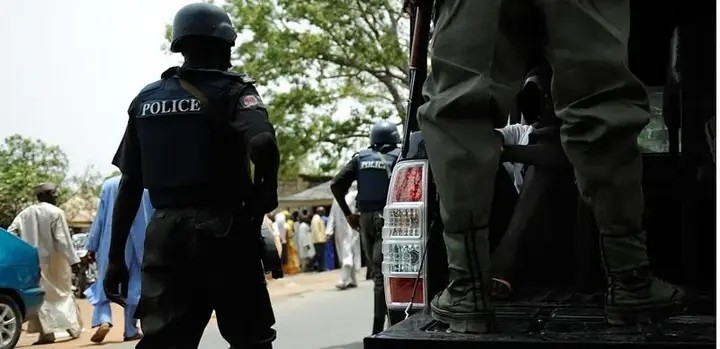
Geographically, the illicit diversion of state armaments is heavily concentrated within the South-South and South-East geopolitical zones. Delta State topped the national log with 67 stolen rifles, closely trailed by Abia State with 51 reported losses.
Combined, Delta and Abia alone accounted for 42% of all state rifles lost to criminals nationwide.
The remaining top high-theft areas include the frontline anti-terror theater of Borno State with 40 rifles, the northwest banditry hubs of Zamfara with 20, and Katsina with 11.
Crucially, the analysts noted that the velocity of these thefts experienced a noticeable spike during the first half of 2026.
Despite the worrying rate of service weapon losses, the intelligence report points out a fascinating counter-trend in operational enforcement.
Within the exact same timeline, Nigerian joint security operations successfully recovered 1,442 rifles from criminal elements across the country.
SBM Intel concluded that because total recoveries vastly outweigh the volume of weapons stolen directly from state personnel, Nigeria’s overarching battle against small arms and light weapons proliferation is driven by cross-border smuggling networks and sophisticated illicit supply pipelines that go far beyond basic service rifle thefts.