- South African President Cyril Ramaphosa has strongly cautioned citizens planning to participate in the June 30 anti-immigration demonstrations to remain entirely law-abiding, declaring that violence and vandalism will face immediate state pushback.
- Addressing the growing internal unrest, the president explicitly condemned self-appointed border enforcement groups, characterizing their actions as a betrayal of the constitution thinly wrapped in patriotic rhetoric.
- While acknowledging real public anxieties regarding pressure on social infrastructure and border security, Ramaphosa detailed a series of ongoing state-led immigration reforms designed to tighten control channels legally.
A profound state of high alert has settled across South Africa’s commercial hubs as President Cyril Ramaphosa delivered an urgent national address ahead of widespread anti-immigration protests scheduled for Tuesday, June 30, 2026.
Eko Hot Blog reports that the planned demonstrations, heavily mobilized by a coalition of over twenty civic organizations including the “March and March” movement, have designated the date as a highly controversial deadline for undocumented foreign nationals to exit the country, raising fears of broad socio-economic disruptions.
EDITOR’S PICK
- Hamzat Appoints Obanikoro as Campaign DG Ahead of 2027 Lagos Governorship Race
- Tinubu’s State Police Plan Gains Momentum as Amendment Looms
- Residents Raise Alarm After Two Bodies Found in Lagos Waterway
While acknowledging that public frustrations over border management and strained public utilities are genuine, Ramaphosa emphasized that democratic freedoms do not provide a legal license for intimidation, profiling, or public disorder.
The state’s security architecture has been fully activated to prevent a recurrence of previous historical tragedies, with the South African Police Service allocating a massive R600-million operational budget specifically to police the demonstration corridors.
Law enforcement agencies, supported by private security networks and military stand-by units, are heavily focused on preventing potential flashpoints across Gauteng, KwaZulu-Natal, and the Eastern Cape from descending into open conflict.
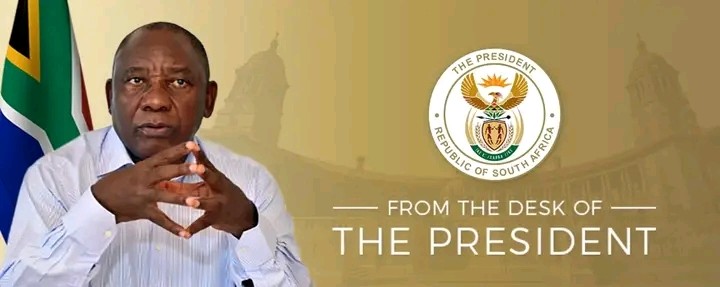
The president reminded the public that the authority to verify identification documents and enforce immigration statutes belongs exclusively to accredited state agents, dismissing any unauthorized civilian enforcement as unadulterated vigilantism.
The upcoming protests have triggered significant anxieties within migrant communities and corporate sectors alike, with major security firms drawing up immediate contingency plans to protect businesses and vital supply routes from potential road blockages.
Organizers of the shutdown have publicly stated that their movement targets administrative gaps rather than fueling xenophobic sentiment.
However, human rights groups have raised alarms over pre-protest vigilante activity in various informal settlements.
Addressing these fears directly, Ramaphosa noted that thousands of foreign nationals reside in South Africa in complete compliance with the law, contributing significantly to the domestic economy, and are fully entitled to equal constitutional protections.
To systematically lower the domestic temperature, the executive branch has re-engaged with labor unions, traditional leaders, and religious bodies while fast-tracking sweeping overhauls to the broader immigration architecture.
The state’s ongoing policy response includes upgrading technical equipment for the Border Management Authority, tightening visa issuance integrity, and prosecuting corrupt officials who have compromised border controls.
The president concluded by calling for historical reflection, urging citizens to avoid returning to the dark eras of arbitrary street harassment and to collectively choose structural legal channels over volatile civilian confrontation.