- Retail cooking gas prices drop significantly across Nigeria, now averaging between ₦1,100 and ₦1,650 per kilogramme, down from highs of ₦2,400 in May and June.
- Price variations persist across regions due to transport costs, with Lagos recording the lowest rates starting at ₦1,100/kg, while the North-East experiences up to ₦1,650/kg.
- Industry leaders attribute the relief to increased domestic production, steady imports, regulatory interventions against hoarding, and a decline in panic buying.
Households across Nigeria are finally breathing a major sigh of relief as the retail prices of Liquefied Petroleum Gas, widely known as cooking gas, have begun a steady downward trend.
Eko Hot Blog reports that this welcome development follows a notable improvement in product supply and a subsequent reduction in depot prices across the country.
EDITOR’S PICK
- Hamzat Appoints Obanikoro as Campaign DG Ahead of 2027 Lagos Governorship Race
- Tinubu’s State Police Plan Gains Momentum as Amendment Looms
- Residents Raise Alarm After Two Bodies Found in Lagos Waterway
For weeks, consumers have had to endure highly inflated costs that severely strained domestic budgets, but recent market updates indicate that the pressure is beginning to ease, bringing much-needed comfort to families grappling with the broader high cost of living.
According to recent market surveys and confirmations from industry leaders, the price reductions are becoming evident in major cities, although the adjustment remains uneven.
This lack of uniformity is primarily attributed to varying transportation logistics, regional distances from major supply depots, and the individual profit margins of local retailers.
In South-Western cities such as Lagos, Ibadan, and Abeokuta, cooking gas is currently trading between ₦1,100 and ₦1,350 per kilogramme.
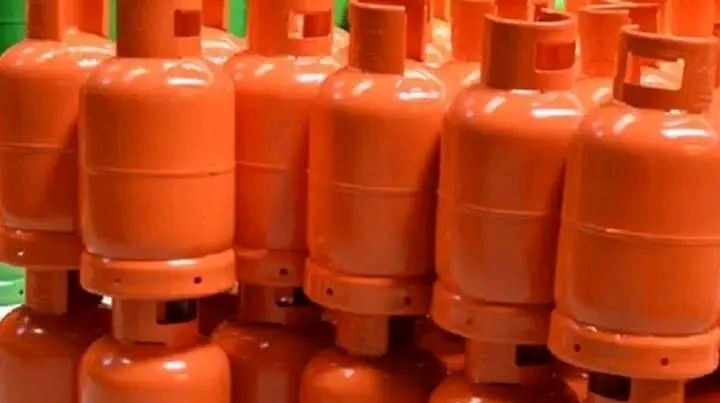
Meanwhile, consumers in South-South hubs like Benin City, Port Harcourt, and Warri are seeing prices range from ₦1,150 to ₦1,400 per kilogramme. Moving towards the South-East, retail prices in Onitsha and Enugu are hovering between ₦1,200 and ₦1,450 per kilogramme.
In the Federal Capital Territory, Abuja, residents are paying between ₦1,250 and ₦1,500 per kilogramme.
The National President of the Nigerian Association of Liquefied Petroleum Gas Marketers (NALPGAM), Edu Inyang, shed light on the pricing dynamics in the northern regions.
He disclosed that northern cities like Kano and Kaduna are recording retail rates between ₦1,300 and ₦1,550 per kilogramme.
On the farther end of the spectrum, consumers in Maiduguri and other parts of the North-East are experiencing the highest rates, fluctuating between ₦1,350 and ₦1,650 per kilogramme, which heavily reflects the hefty additional logistics costs incurred while transporting the commodity to those distant areas.
Overall, the national average retail price for cooking gas now sits roughly between ₦1,100 and ₦1,650 per kilogramme, though some local shops charge slightly more.
This market correction marks a significant turnaround from the sharp price spikes observed since May, when severe supply bottlenecks and skyrocketing depot prices pushed the essential commodity out of reach for many everyday Nigerians.
Cooking gas prices had previously surged from an average of ₦1,000 per kilogramme in January and February this year to as high as ₦2,400 per kilogramme between May and June.
Edu Inyang explained that the ongoing decline is a direct result of enhanced product availability stemming from a combination of boosted domestic production and strategic imports.
Furthermore, increased market competition and a significant drop in panic buying have stabilized the supply chain.
He noted that recent government market interventions effectively curbed hoarding, which previously exacerbated the scarcity.
Based on these prevailing market rates, refilling a standard 5kg cylinder now costs between ₦5,500 and ₦8,250. Families using a 6kg cylinder can expect to spend between ₦6,600 and ₦9,900, while a larger 12.5kg cylinder refill now ranges from ₦13,750 to ₦20,625, depending strictly on the retailer’s location.
Adding to this perspective, Ayobami Olarinoye, the National Chairman of the Liquefied Petroleum Gas Retailers Branch of NUPENG, confirmed that normalcy is steadily returning to the sector.
He noted that while supply is flowing better, local neighbourhood shops buy from plant operators at rates between ₦1,300 and ₦1,500 per kilogramme and subsequently sell to final consumers at ₦1,600 to ₦1,800 per kilogramme to cover localized overhead and transport expenses.
The crisis originally forced the regulatory authorities to issue additional import licenses to bridge the gap left by local producers who were unable to satisfy the overwhelming domestic demand.
This proactive step, coupled with a stern warning against profiteering by the Minister of Petroleum Resources (Gas), Ekperikpe Ekpo, has successfully steered the market toward recovery.
Industry operators remain highly optimistic that if local production remains steady and imports continue without logistics disruptions, cooking gas prices will experience further moderation in the coming weeks, ensuring long-term relief for the populace.
FURTHER READING
- Seyi Makinde Restricts Motorcycle Operations Over Rising Insecurity in Oyo
- Lagos Launches Digital Planning Permit System to Boost Urban Development
- Ogun Police Arrest Seven Suspects in Multi-Location Crime Crackdown
Click here to watch video of the week
https://youtu.be/nXdilmxTznY?is=MJA-OgfIH-rQChF_