- The Senate will convene on Tuesday to address the growing controversy surrounding a N1.3 billion budget allocation to a fraudulent entity named the Presidential Foreign Intervention Promotion Council.
- Civil society organizations, including SERAP and HEDA, alongside opposition leaders, have demanded immediate transparency and a comprehensive public inquiry into how the non-existent council bypassed national security checks.
- Investigations revealed that the suspected mastermind, Prince Adeniyi Adeyemi Mathew, successfully secured an office complex at the Federal Secretariat using a forged appointment letter with a falsified signature of the Chief of Staff to the President.
The Nigerian Senate is scheduled to address the escalating crisis involving a N1.3 billion budgetary allocation granted to a fraudulent agency, the Presidential Foreign Intervention Promotion Council (PFIPC), in the 2026 Appropriation Act.
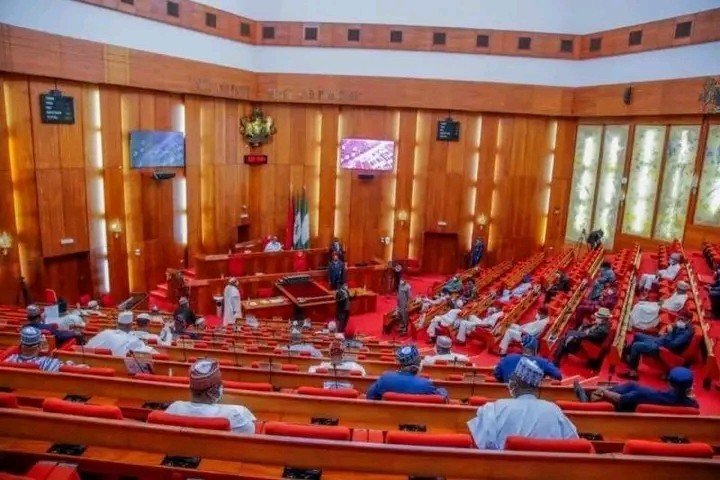
Eko Hot Blog reports that the upper legislative chamber plans to deliberate on the multi-layered security and bureaucratic failure as plenary resumes on Tuesday, seeking to douse the intense public scrutiny and tension surrounding the National Assembly’s oversight functions.
EDITOR’S PICK
- Hamzat Appoints Obanikoro as Campaign DG Ahead of 2027 Lagos Governorship Race
- Tinubu’s State Police Plan Gains Momentum as Amendment Looms
- Residents Raise Alarm After Two Bodies Found in Lagos Waterway
Fresh details have emerged showing how the alleged mastermind behind the scheme, Prince Adeniyi Adeyemi Mathew, managed to operate under the guise of government legitimacy for over a year.
Insiders confirmed that Adeyemi bypassed critical civil service safeguards by submitting a forged appointment letter bearing a falsified signature of the Chief of Staff to the President, Femi Gbajabiamila.
The document was accepted at the Civil Service Headquarters without proper authentication, enabling him to secure high-profile office space at the Federal Secretariat Complex in Abuja, set up an official website, and issue formal letterheads.
The N1.3 billion allocation reportedly passed through the legislative process via a backdoor arrangement without the council or any representative appearing before the Senate Committee on Establishment and Public Service for standard budget defense.
The fraudulent operation was initially flagged in October of last year by the Nigerian Investment Promotion Commission (NIPC) after officials noticed statutory overlaps.
Following an initial intervention by the Department of State Services (DSS) and subsequent arraignment, the suspect allegedly violated his bail conditions while continuing operations outside the secretariat, with a formal trial now slated for July 27, 2026.
The disclosure has triggered fierce reactions across Nigeria’s political landscape and civil society.
The Socio-Economic Rights and Accountability Project (SERAP) has issued a seven-day Freedom of Information ultimatum to the National Assembly leadership, demanding certified records of the committee members and public officials who approved and defended the budget.
Meanwhile, opposition leader and former Vice President Atiku Abubakar heavily criticized the administration, describing the incident as an indication of a structural collapse in governance.
Various political factions and the Committee for the Defence of Human Rights (CDHR) have additionally called for independent investigations to determine institutional complicity within the Budget Office and the legislative branches.