- Kalu said the State Police Bill has safeguards against abuse
- He urged support for decentralised policing in Nigeria
- He also sought EU backing for constitutional reforms
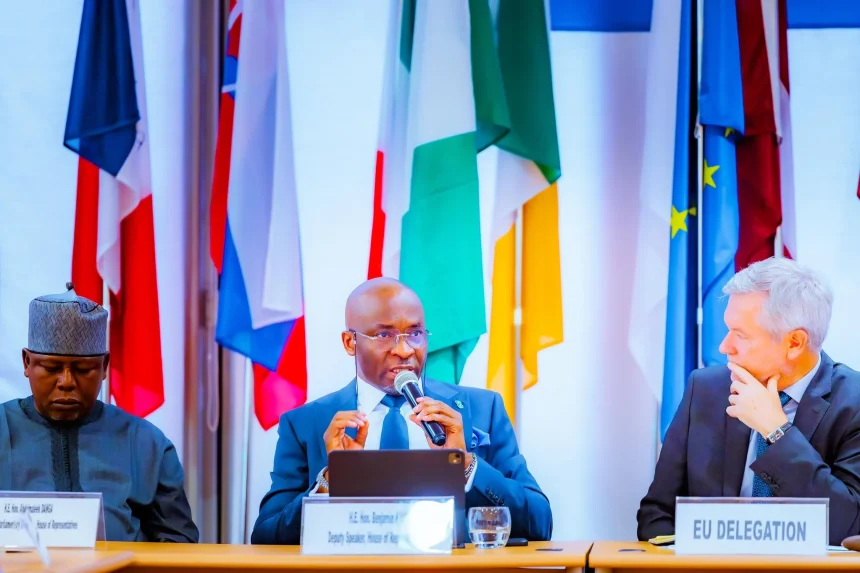
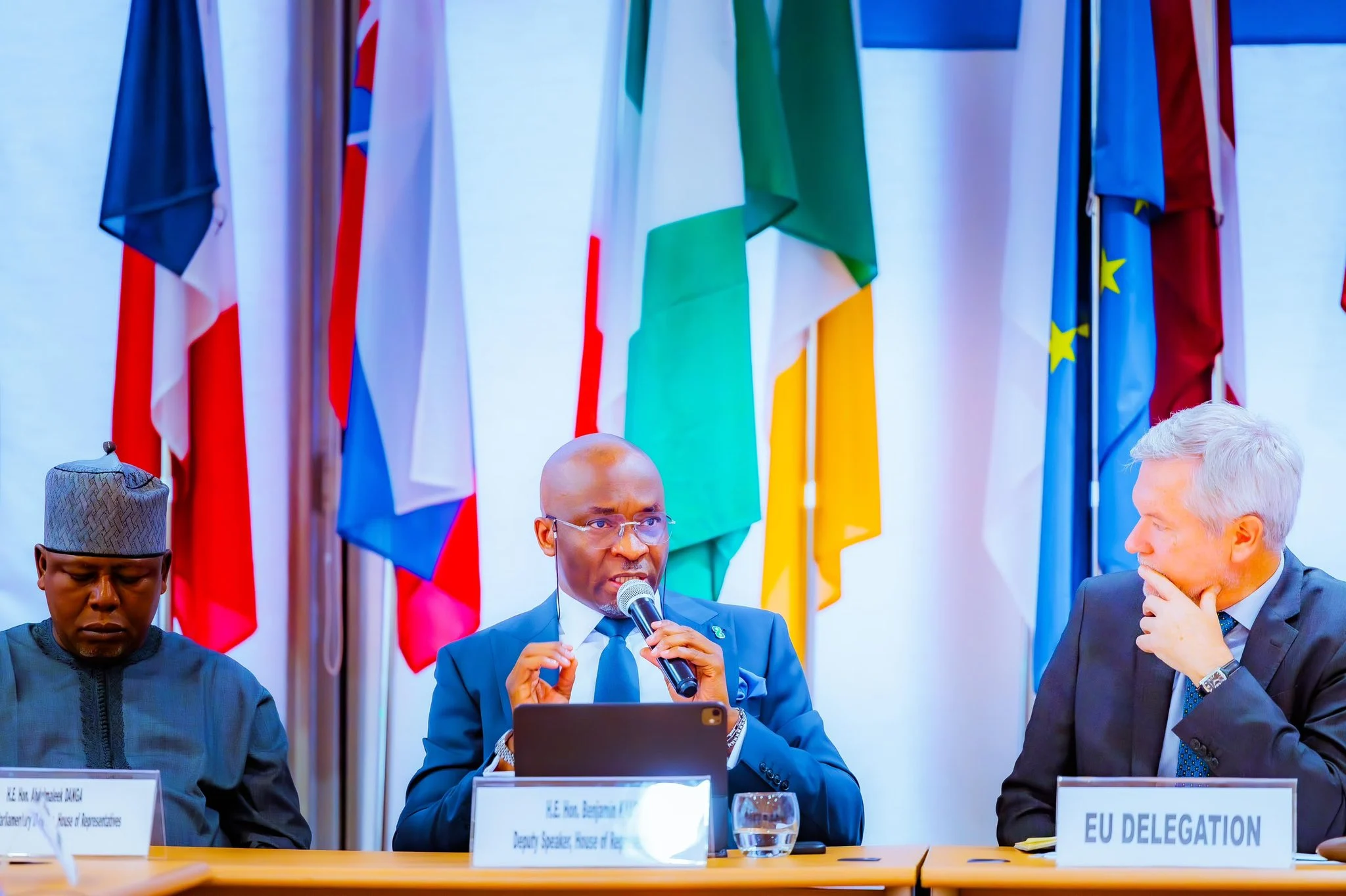
Deputy Speaker of the House of Representatives, Benjamin Kalu, has assured Nigerians that the proposed State Police Bill contains adequate constitutional safeguards to prevent misuse by state governors and ensure accountability in its operations.
Eko Hot Blog gathered that Kalu, who also chairs the House Committee on Constitution Review, gave the assurance on Tuesday during a reception hosted by the European Union Ambassador to Nigeria and ECOWAS, Gautier Mignot, in Abuja.
EDITOR’S PICK
- UN Mobilizes Humanitarian Aid For Venezuela Following Twin Earthquakes
- Dollar To Naira Exchange Rate Today, June 26, 2026
- Concerns As Repentant Boko Haram Members Allegedly Join Army Recruitment
The event brought together European Union Heads of Mission as part of ongoing engagements on Nigeria’s constitutional amendment process.
Addressing concerns that state-controlled police could be used to intimidate political opponents, Kalu said the proposed legislation was carefully designed with strong constitutional checks rather than relying on political promises.
According to him, the objective of the bill is not only to decentralise policing but also to establish a system that guarantees transparency, accountability and institutional oversight.
He explained that the framework includes measures that would prevent abuse of power, stressing that the proposed state police structure would operate under clearly defined constitutional provisions.
Kalu argued that Nigeria’s current centrally controlled policing system is increasingly inadequate for a country with more than 230 million people spread across over 923,000 square kilometres.
He noted that many federal nations around the world, including Germany, India, Canada and Australia, operate decentralised policing systems that combine local law enforcement with national coordination.
Drawing attention to the benefits of community-based policing, the Deputy Speaker said officers recruited from local communities are better positioned to understand the terrain, culture and security challenges within their jurisdictions.
He maintained that such familiarity would improve intelligence gathering and strengthen efforts to combat insecurity across the country.
The lawmaker said the proposed constitutional amendment seeks to establish state police with clearly defined responsibilities, professional recruitment standards, independent oversight mechanisms and coordinated operations alongside federal security agencies.
Kalu also appealed to the European Union and its member states to continue supporting Nigeria’s constitutional reform efforts through technical assistance and the sharing of international best practices.
He disclosed that the constitutional amendment bills had already secured approval from both chambers of the National Assembly and were awaiting endorsement by at least 24 state Houses of Assembly before being forwarded for presidential assent.
According to him, collaboration with international partners remains important as Nigeria works to strengthen democratic institutions and improve governance through constitutional reforms.
Beyond security, Kalu highlighted other key proposals contained in the amendment process, including greater autonomy for local governments, reforms to the judiciary, improvements to the electoral system, fiscal restructuring, expanded human rights protections and changes to citizenship laws aimed at eliminating gender discrimination while introducing citizenship by investment.
He also renewed his call for support for the Reserved Seats for Women Bill, arguing that increasing women’s participation in governance would strengthen democracy and contribute significantly to Nigeria’s economic development.
Kalu noted that despite women making up nearly half of the country’s population, they remain underrepresented in the National Assembly, adding that broader female inclusion would deliver substantial social and economic benefits.
He expressed confidence that the ongoing constitutional review would produce reforms capable of strengthening democratic governance, improving public service delivery and addressing some of Nigeria’s longstanding institutional challenges.
FURTHER READING