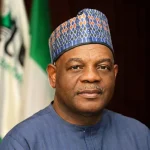
- Shettima directed NCC to implement Nigeria’s unified 112 emergency number.
- Federal Government seeks nationwide support for integrated emergency response system.
- NCC says 35 emergency communication centres are already operational nationwide.
Vice President Kashim Shettima has directed the Nigerian Communications Commission (NCC) to develop a comprehensive roadmap for the nationwide adoption and implementation of 112 as Nigeria’s single national emergency telephone number.
Shettima, however, stressed that the initiative would only succeed with the full commitment of state governments, security agencies, ambulance services and other emergency response organisations across the country.
The Vice President gave the directive on Thursday during a meeting with a delegation from the NCC at the Presidential Villa in Abuja. The delegation was led by the Chairman of the Commission’s Governing Board, Idris Olorunnimbe.
EDITOR’S PICKS
- Messi Breaks 96-year World Cup Record As Argentina Sends Egypt Home
- I Deposited Billions In Cash For Emefiele – Witness Reveals
- Tinubu Gives Fresh Appointment To Gbajabiamila, AGF, Others
EKO HOT BLOG reports that the directive follows the approval by the National Economic Council (NEC) to adopt 112 as Nigeria’s unified emergency number. The council also established a multi-agency implementation committee to be coordinated by the Office of the Vice President and the NCC.
Details of the meeting were disclosed in a statement by the Senior Special Assistant to the President on Media and Communications in the Office of the Vice President, Stanley Nkwocha, titled ‘FG, Governors, Responders to Finalise Plan on 112 Emergency Call Initiative.’
Shettima instructed the NCC to work closely with the National Emergency Management Agency (NEMA) in designing the implementation framework, noting that the agency’s expertise in disaster management, emergency relief and rehabilitation would be critical to the project’s success.
He also assured the commission that the Federal Government would mobilise the necessary funding through the National Economic Council, alongside support from the private sector.
The Vice President called for sustained engagement with state governors and key emergency response agencies to ensure broad participation in the initiative.
According to him, the unified emergency number should not be viewed merely as a telecommunications project but as a national public safety programme that requires collaboration across all levels of government.
Shettima warned that creating a central emergency line without strengthening the agencies responsible for responding to distress calls would undermine the effectiveness of the initiative.
Speaking during the meeting, Olorunnimbe disclosed that the NCC has already established about 35 Emergency Communications Centres across the country.
He explained that the centres were built with technology capable of serving as the foundation for a coordinated national emergency response system.
According to him, the remaining challenge is securing stronger commitment from state governments and all agencies responsible for responding to emergency situations.
“In addition, we also need the full commitment of all response agencies because if someone calls for police intervention and, for some reason, the call does not reach the police, that person will not receive the help they need,” Olorunnimbe said.
He stressed that every organisation involved in emergency response must be prepared to act swiftly whenever distress calls are received.
“We need commitment at every level of all response agencies, from top to bottom, including the Nigeria Police Force, ambulance services across the states, and at the national level, the National Emergency Management Agency.
“Everyone is expected to buy into this initiative and recognise its importance.
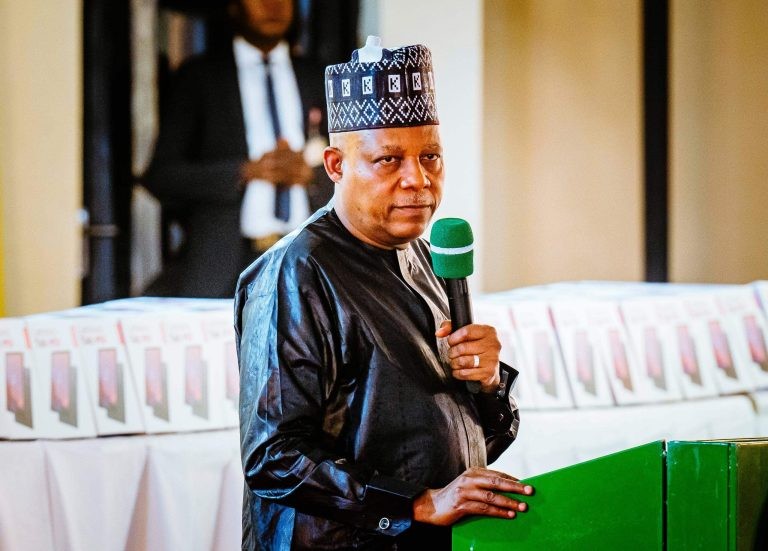
“It is a patriotic duty to our country to ensure that anyone in distress can get the help they need in a very swift manner,” he added.
Under the proposed system, the 112 emergency number will replace Nigeria’s fragmented emergency communication network, where different security agencies, hospitals, fire services and state governments currently operate separate emergency lines.
Once fully implemented, Nigerians facing emergencies will be able to dial 112, with calls automatically routed to the appropriate agency, including the police, ambulance services, fire authorities, NEMA or other relevant responders, depending on the nature and location of the incident.
The initiative is modelled after emergency communication systems used across the European Union and several other countries, where a single emergency number provides access to multiple response services.
FURTHER READING
- Portable Backs Remi Tinubu Over Controversial ‘Akara and Corn’ Business Advice
- Dangote Begins $17bn Kenya Refinery Project
- State Police: Tinubu Sets Up Committee To Prepare Implementation Framework
.