- Uganda’s Ministry of Health has officially declared the end of its latest Ebola outbreak after recording 20 confirmed cases, 18 recoveries, and two fatalities.
- The declaration follows the successful completion of the mandatory 42-day surveillance period with zero new cases detected since the last patient was discharged in June.
- Fifteen of the infected individuals contracted the virus in the neighboring Democratic Republic of Congo, the main epicenter of the regional surge.
Uganda’s Minister of Health, Dr. Chris Baryomunsi, has officially declared the East African nation free of Ebola following the successful containment of its latest outbreak of the viral hemorrhagic disease.
Eko Hot Blog reports that the announcement comes after health authorities completed the mandatory 42-day monitoring period, equivalent to two 21-day incubation cycles of the virus, with no new cases detected nationwide.
EDITOR’S PICK
- Nearly 30 Years Later, Who Really Knows How Abacha Died?
- Tinubu Govt Dismisses Reports of Fresh Electricity Tariff Increase
- Traditional Rulers Remain Key Partners in Lagos Development – Sanwo-Olu
The surveillance window commenced following the discharge of the last locally infected patient on June 16, 2026, while the final patient overall, a Congolese national, was discharged on June 22.
During the outbreak, which was initially declared in mid-May, Uganda recorded a total of 20 confirmed cases.
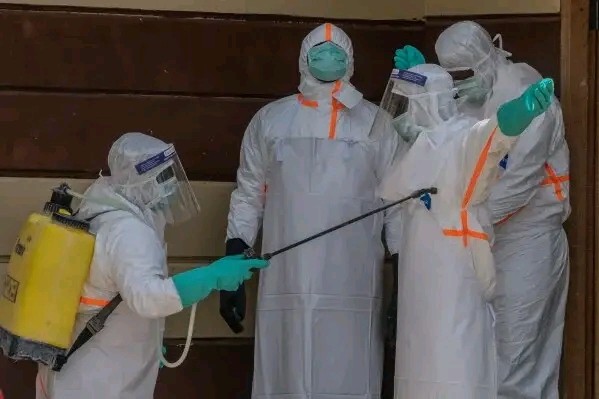
Health officials confirmed that 18 patients successfully recovered and were discharged, while two individuals succumbed to the disease. Both fatalities were nationals of the neighboring Democratic Republic of Congo (DRC).
Fifteen of the total confirmed cases were traced back to transmission within the DRC, where ongoing regional cases have exceeded 3,000.
Speaking on the achievement, Dr. Baryomunsi highlighted the country’s robust response system and intensive nationwide surveillance, which prevented widespread community transmission.
He noted that while Uganda remains naturally vulnerable due to its dense tropical forests, the natural habitat of fruit bats that serve as reservoirs for the virus, the nation’s health sector has developed critical technical capacity and rapid-response infrastructure to swiftly isolate and neutralize recurring outbreaks.
Health authorities continue to urge border communities and healthcare workers to maintain vigilance, emphasizing that early detection and rapid contact tracing remain the most effective defenses against future cross-border transmissions of the deadly virus.