- Emergency responders and military personnel in southern Japan are engaged in a race-against-time operation to locate survivors following a powerful 7.1-magnitude earthquake that struck Kumamoto Prefecture.
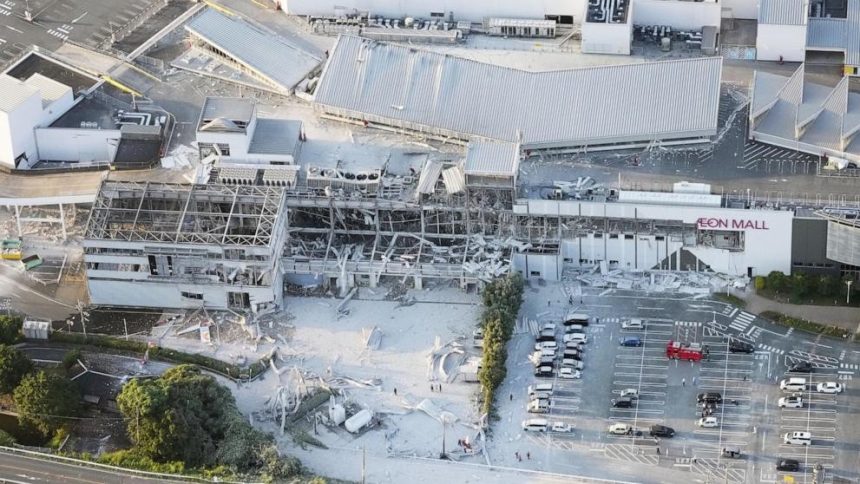
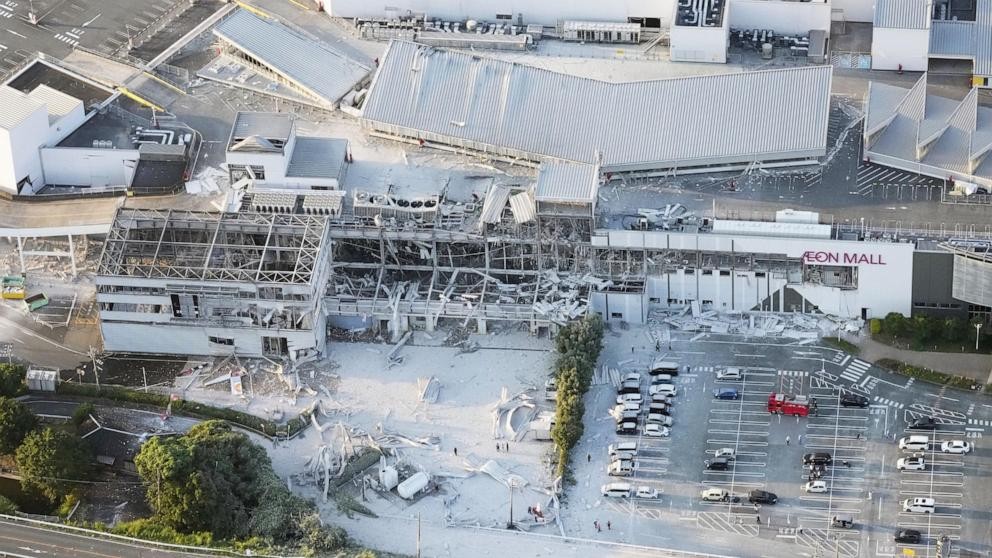
- A major post-quake explosion and partial building collapse at the Aeon Mall in Kashima Town has become the central focus of rescue efforts, with multiple casualties confirmed and workers still unaccounted for.
- Over 9,000 residents remain in evacuation shelters as intense heatwaves, power outages, and widespread water disruptions complicate relief efforts across the Kyushu region.
Search and rescue operations across southern Japan have entered a critical, time-sensitive phase following the powerful 7.1-magnitude earthquake that struck Kumamoto Prefecture on Tuesday afternoon.
Eko Hot Blog reports that with the confirmed death toll rising to at least 13 and more than 380 people receiving treatment for injuries, emergency teams are concentrating their efforts on locating missing individuals trapped beneath collapsed buildings and industrial structures.
EDITOR’S PICK
- Tinubu Approves Army Expansion, Recruitment of 28,000 Personnel
- Aregbesola Claims Record as First Nigerian Governor to Serve Eight Years Without Owning a House
- Ikosi-Ejinrin LCDA Commissions Fully Equipped NSCDC Divisional Headquarters, Donates Patrol Vehicle and Motorcycle to Boost Security
Ongoing aftershocks and severe summer heat continue to hamper recovery efforts across the affected areas of the Kyushu region.
Public attention and emergency resources remain heavily focused on the devastated Aeon Mall complex in Kashima Town.
The retail facility experienced a secondary disaster when a violent explosion tore through the structure roughly an hour after the initial seismic jolt.
What had begun as an orderly evacuation of thousands of shoppers and staff turned catastrophic when the blast damaged upper floors, exposed heavy structural steel, and littered surrounding parking areas with concrete debris.
Emergency crews have managed to extract several individuals from the rubble, but search teams are maintaining a careful approach due to suspicions of an ongoing gas leak.
Top government officials confirmed that first responders detected a strong odor of gas emanating from inside the shattered building, raising fears of potential secondary fires or further structural collapses while workers navigate the unstable ruins.
Beyond the retail complex, emergency responders are working to reach residents trapped inside damaged homes across several municipalities. In Hikawa Town, at least 18 residential structures collapsed during the primary quake, leaving local firefighting units and Self-Defense Forces personnel clearing debris to free trapped occupants.
Meanwhile, in Yatsushiro City, search operations continue at the Nippon Paper Industries factory, where a massive industrial chimney collapsed during the height of the tremors, trapping workers beneath heavy masonry.
The city also reported severe infrastructure damage, including a derailed freight train at Yatsushiro Station, a damaged highway bridge, and structural collapses along the historic stone walls of Kumamoto Castle.
The human toll of the earthquake is being intensified by severe environmental conditions across the disaster zone. More than 9,000 displaced residents are currently taking shelter in over 500 evacuation centers established across five prefectures.
Many of these emergency facilities are struggling with municipal water outages and electrical grid failures.
With daily temperatures projected to reach 35 degrees Celsius, Japanese defense authorities have begun flying hundreds of mobile air conditioning units, power generators, and emergency water supplies into Kumamoto to prevent widespread heatstroke among survivors and rescue personnel.
Addressing a press conference in Tokyo, Japanese Prime Minister Sanae Takaichi emphasized that government agencies are deploying every available resource to save lives as the crucial window for rescue operations closes.
Over 4,600 military, police, and specialized firefighting personnel have been mobilized alongside 20 reconnaissance aircraft to assess structural damage and coordinate relief logistics.
Major industrial operations in the region, including key facilities operated by Honda, Sony, and semiconductor maker TSMC, have suspended operations to inspect their plants for structural integrity.
Seismologists at the Japan Meteorological Agency have warned residents to remain vigilant, noting that strong aftershocks are likely to persist over the coming days.
FURTHER READING