- FG promised to publish details of subsidy savings spending
- Oyedele defended reforms, saying they corrected economic distortions
- CBN linked food price shocks to rising inflation across Africa
The Federal Government has announced plans to publish a breakdown of how funds saved from the removal of fuel and foreign exchange subsidies have been spent.
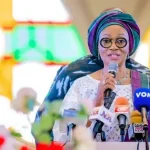
Eko Hot Blog gathered that the Minister of Finance and Coordinating Minister of the Economy, Taiwo Oyedele, disclosed this on Thursday at the 7th Africa Emerging Markets Forum in Abuja, following concerns over the impact of the government’s economic reforms on Nigerians.
EDITOR’S PICK
- Tinubu Approves Army Expansion, Recruitment of 28,000 Personnel
- Aregbesola Claims Record as First Nigerian Governor to Serve Eight Years Without Owning a House
- Ikosi-Ejinrin LCDA Commissions Fully Equipped NSCDC Divisional Headquarters, Donates Patrol Vehicle and Motorcycle to Boost Security
The World Bank Group’s Chief Economist and Senior Vice-President for Development Economics, Indermit Gill, had earlier questioned whether the benefits of increased government revenue, reduced subsidies, and improved fiscal position had translated into better living conditions for citizens.

Gill noted that while the government had recorded progress in raising revenues and reducing the fiscal deficit, many Nigerians were still uncertain about how the additional resources and savings from the reforms had been utilised.
Responding to the concerns, Oyedele admitted that Nigerians had the right to demand accountability and promised that a comprehensive report on the use of subsidy savings would be made public within days.
“The question about subsidy savings and where it has gone is a valid one. In a few days, you will see the detailed analysis because we owe Nigerians an explanation of what we do. That is what transparency looks like,” he said.
The minister explained that the combined effect of removing fuel subsidies and foreign exchange-related distortions was estimated at about five per cent of Nigeria’s Gross Domestic Product.
Oyedele said the reforms were not introduced simply to create savings but to correct economic distortions that had affected the country for years. He added that assessing the reforms required considering what the economy would have looked like without the policy changes.
He listed increased debt servicing costs caused by higher interest rates, the implementation of the new N70,000 minimum wage, and expanded social programmes as some areas where the funds had been directed.
The minister also highlighted the Nigerian Education Loan Fund programme, saying it had supported more than 1.5 million students through tuition assistance and monthly stipends.
Defending the government’s borrowing plans, Oyedele explained that increased revenue does not automatically remove the need for borrowing when budget requirements remain higher than income.
He argued that borrowing could be justified when funds are invested in projects capable of generating returns above the cost of borrowing.
On concerns over rising poverty levels, Oyedele disagreed with claims that the reforms were responsible for worsening living conditions, describing the policies as necessary corrections to long-standing economic problems.
He said the government’s priority was now to convert improved economic stability into increased productivity, job creation, and shared prosperity.
Oyedele also revealed that the Federal Government was working on measures to reduce borrowing costs without introducing new subsidies, saying the plan would support businesses and complement the Central Bank of Nigeria’s inflation control efforts.
Meanwhile, the CBN’s Director of Statistics, Dr Okpanachi Moses, disclosed that a recent study by the apex bank found a strong connection between food price volatility and inflation across several sub-Saharan African countries.
Presenting findings from research covering 36 countries, Moses said food price shocks had a stronger impact on inflation in conflict-affected nations due to weaker monetary policy transmission.
He explained that because many African households spend a large portion of their income on food, changes in food prices quickly affect overall inflation levels.
Moses advised countries facing instability to focus on strengthening food production systems and implementing structural reforms rather than depending only on interest rate increases to control inflation.
FURTHER READING