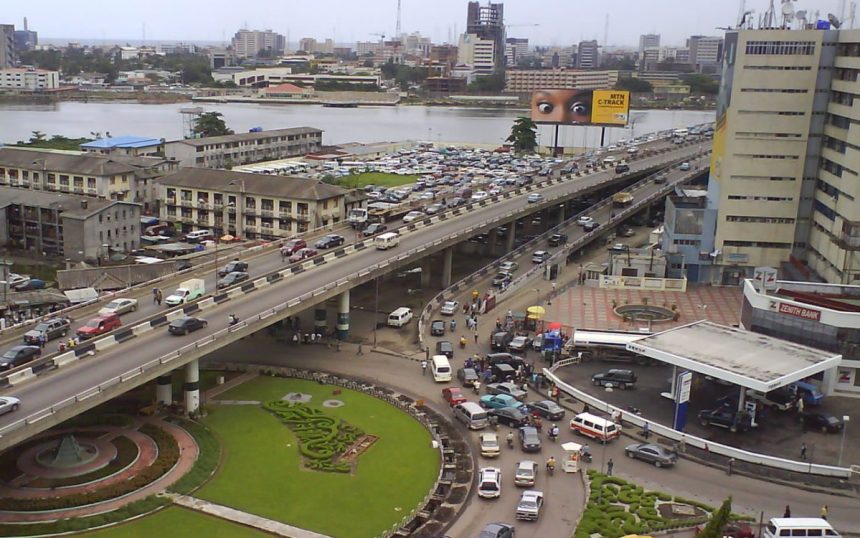
Lagos is not Nigeria’s most expensive state for food, at least according to new data. A report by civic tech group BudgIT shows Lagos ranks fourth on the list of states where it costs the most to eat healthy, behind Ekiti, Imo, and Abia.
The report, titled “The Price of Survival: Nigeria’s Cost of a Healthy Diet Tracker, Q1 2026,” draws on data from the National Bureau of Statistics (NBS) and the Global Alliance for Improved Nutrition (GAIN). It tracks how much it costs an average Nigerian to eat a healthy diet across all 36 states and the FCT.
EDITOR’S PICKS
What The Numbers Show
As of March 2026, it cost ₦1,910 a day to eat healthy in Lagos. That’s high, but three states beat it: Ekiti tops the list at ₦2,091 a day, followed by Imo (₦2,052) and Abia (₦1,970). Ebonyi rounds out the top five at ₦1,891.
So while Lagos is expensive, the popular assumption that it’s the priciest place to eat in Nigeria doesn’t hold up. Smaller states like Ekiti and Imo, with far less commercial activity than Lagos, currently cost more to eat well in.
The report doesn’t dig deep into Lagos specifically, but it points to a broader pattern: food costs are shaped by local supply chains, transport routes, and market conditions, not just a state’s size or wealth. A state like Ekiti may depend more heavily on food brought in from elsewhere, which pushes up prices.
Lagos, despite its high cost of living generally, benefits from being a major food distribution hub, which can moderate some food prices even as rent and transport stay high.
A North-South Divide
The bigger story in the report is regional, not state-specific. Eight of the 10 cheapest states for a healthy diet are in the north. All 10 most expensive states are in the south.
This split has been consistent, and Lagos’s position — expensive, but not the worst — fits inside a wider Southern pattern rather than standing apart from it.
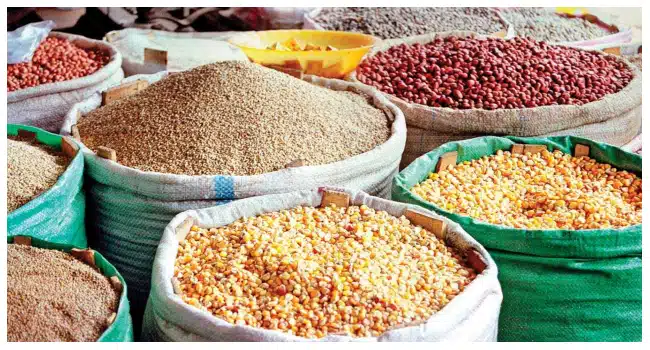
On the other end, Adamawa has Nigeria’s cheapest healthy diet at ₦1,004 a day, followed by the FCT (₦1,113), Taraba (₦1,149), Borno (₦1,244), and Bauchi (₦1,273). Notably, some of these states, including Borno and Taraba, face major insecurity yet still record some of the lowest food costs, which BudgIT says raises separate concerns about how conflict affects food markets long-term.
Even though Taraba is among the cheapest states overall, it recorded the sharpest price increase of any state this quarter, a 49.3 percent jump between January and March 2026.
BudgIT cautions that this doesn’t mean Taraba is now expensive; it started from Nigeria’s lowest base price (N769 a day in January), so the percentage jump looks bigger than the actual naira increase.
Still, the organisation says the spike is worth government attention. Gombe (34.1%), Yobe (29.9%), Cross River (28.1%), Kano (27%), and Ogun (26.7%) also saw sharp increases.
The Squeeze On Households
Nationally, the average cost of a healthy diet rose 11.7 percent between December 2025 and March 2026: from ₦1,380 to ₦1,541 per person per day. This wiped out a 6.4 percent drop recorded late last year, when harvest season briefly eased prices.
BudgIT says that dip was seasonal, not a sign of real improvement. The report warns that food costs are eating deeper into incomes: in Ekiti, a healthy diet now takes up about 89.6 percent of the ₦70,000 minimum wage, leaving roughly ₦7,261 a month for rent, transport, electricity, healthcare, and everything else.
BudgIT wants state governments in Taraba, Gombe, Yobe, Cross River, Kano, and Ogun to explain the sharp price increases in their states. It’s also asking the federal government to treat insecurity in the north-west and north-central as a food security issue, since conflict is disrupting farming and pushing rural food prices above urban ones in some areas. The organisation says it will publish this tracker every quarter going forward.
FURTHER READING
Lagos remains one of Nigeria’s costliest states to eat well in, but it isn’t the most expensive. Ekiti, Imo, and Abia currently cost more. The real story, per BudgIT, is a widening South-versus-North gap in food affordability and a handful of states, cheap and expensive alike, seeing costs shift fast enough to demand answers.
Philip Ibitoye is a Special Correspondent with EKO HOT BLOG. Click here to find daily analysis and critical insight on trending issues in Lagos and other parts of Nigeria.
Click to watch the video of the week below: