- The US apologised after displaying an inaccurate map of Africa
- The map wrongly placed several African countries during a conference presentation
- Officials said the error resulted from last-minute changes to the presentation
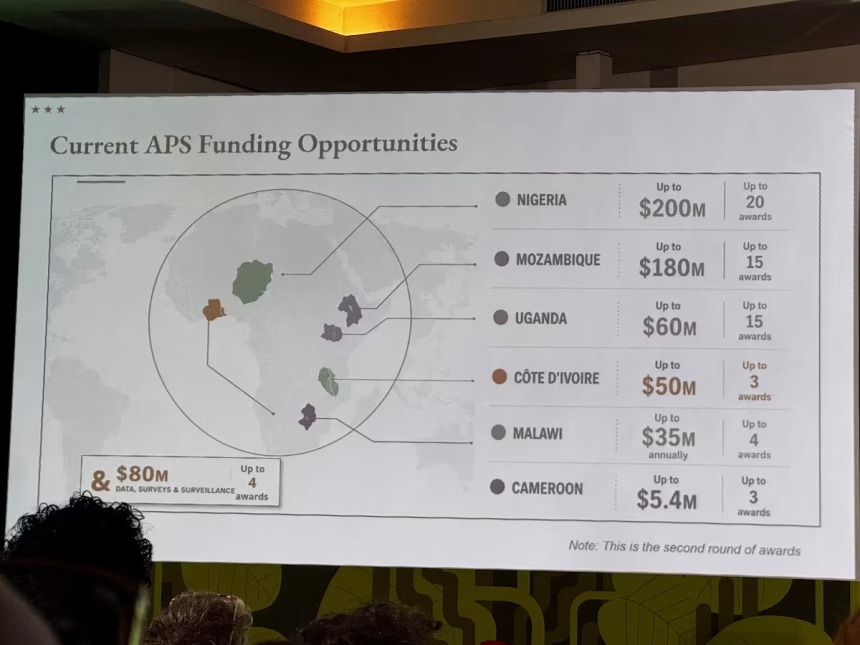
The United States Department of State has apologised after a presentation at an international health conference in Brazil displayed a map of Africa that incorrectly identified the locations of every country on the continent.
Eko Hot Blog gathered that the mistake occurred during the AIDS 2026 conference in Rio de Janeiro while officials were presenting the State Department’s new global health agreements.
EDITOR’S PICK
- Tinubu Approves Army Expansion, Recruitment of 28,000 Personnel
- Aregbesola Claims Record as First Nigerian Governor to Serve Eight Years Without Owning a House
- Ikosi-Ejinrin LCDA Commissions Fully Equipped NSCDC Divisional Headquarters, Donates Patrol Vehicle and Motorcycle to Boost Security
A video of the presentation, reviewed by Reuters, showed the inaccurate map being projected during the session. The incident quickly gained attention after participants captured screenshots and shared them on social media.
According to a Reuters analysis, the image contained an artificial intelligence watermark indicating it had been created using OpenAI tools. OpenAI said it was looking into the report.
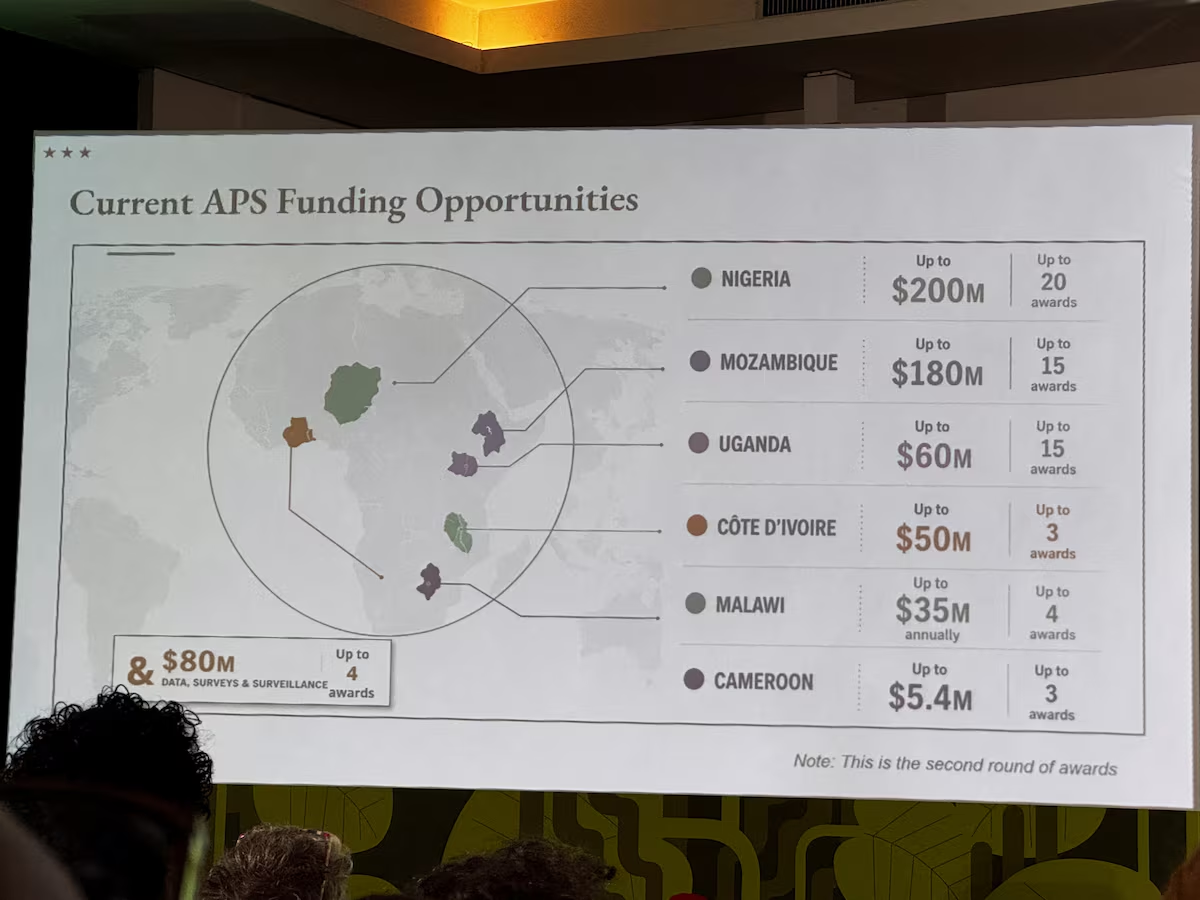
In a statement, the State Department accepted responsibility for the error, explaining that the map was inserted after a last-minute revision of the presentation by a member of its team.
Among the mistakes, Nigeria was shown as a landlocked country in the Sahara Desert instead of West Africa. Mozambique was misplaced to the Horn of Africa, while Côte d’Ivoire was incorrectly positioned on the opposite side of the continent.
The inaccurate map sparked criticism from conference attendees and policy experts, with screenshots circulating widely online. One widely shared LinkedIn post questioned how such basic geographical mistakes could pass through the review process.
Despite the controversy, the State Department said discussions at the conference remained productive and reaffirmed the United States’ commitment to global HIV/AIDS programmes through the President’s Emergency Plan for AIDS Relief (PEPFAR).
Jeff Graham, the senior US health official overseeing PEPFAR, delivered the presentation but did not publicly comment on the incident.
The conference came as the US government continues to review its international aid spending. Although key PEPFAR services, including access to life-saving HIV medication, have resumed after a funding pause, Washington is reducing spending on some prevention and surveillance programmes and plans to gradually phase out the initiative in South Africa.
FURTHER READING