- Jonathan has warned against governors converging on states during off-cycle elections
- He said the practice could create fear, pressure and political tension
- Jonathan urged stakeholders to set clear boundaries for election conduct
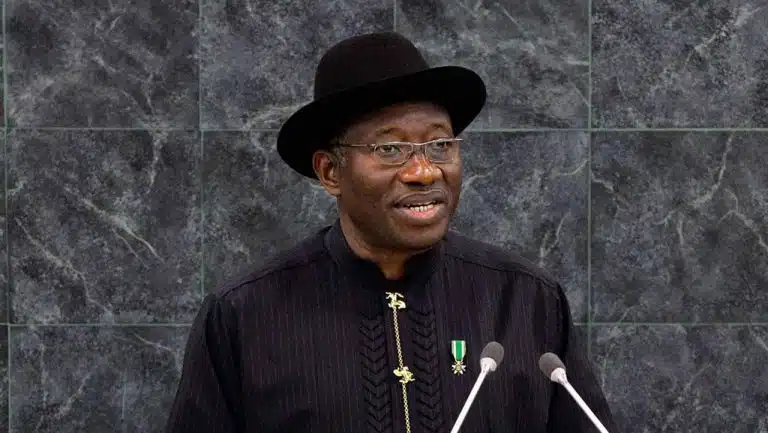
Former President Goodluck Jonathan has raised concerns over the increasing presence of serving governors, senior political officials and influential party figures in states during off-cycle elections, warning that the practice could put Nigeria’s democracy under further strain.
Eko Hot Blog gathered that Jonathan made the remarks in a statement issued in Abuja on Tuesday, following the recent Osun State governorship election. He said the large-scale mobilisation of political leaders and their aides from outside the state could create an atmosphere of fear, pressure and intimidation around elections.
EDITOR’S PICK
- Osun Election: INEC Reports 94.5% Polling Units Opened on Time
- THEDSF Visits Alara of Ilara Kingdom, Seeks Royal Support for Youth Mobilisation
- Super Falcons Miss Women’s World Cup for First Time
The former president pointed to the recent elections in Osun, Ekiti and Ondo as examples of a growing pattern that, in his view, should not become accepted practice in Nigeria’s democratic system.
He commended the Independent National Electoral Commission, security agencies, political parties and voters in Osun for the conduct of the election. However, he said political mobilisation on election day should have clearly defined limits.
Jonathan noted that the presence of several serving governors and senior officials, accompanied by large entourages and security personnel, could give voters and political opponents the impression that government power was being deployed to influence the electoral environment.
According to him, political parties have every right to campaign, mobilise supporters and use their established structures. He, however, argued that the situation becomes problematic when powerful public officials from across the country converge on an election venue in large numbers.
The former president recalled that similar circumstances arose during the 2013 Anambra and 2014 Ekiti governorship elections while he was in office.
Jonathan said he responded by directing party leaders and senior government officials to leave the affected states, stressing that public office holders have a responsibility to protect the integrity of democratic processes.
He warned that allowing the current practice to continue could trigger a dangerous cycle in which rival political parties respond to the presence of one group of powerful politicians by deploying an even larger political force.
Such a situation, he said, could transform elections from peaceful contests for voters’ mandates into battles between political power blocs.
Jonathan questioned whether the increasing involvement of serving governors and other senior officials in off-cycle elections was compatible with the principles of free, fair and peaceful elections.
He also cautioned against the growing perception that elections must be won at all costs, saying political competition should not be allowed to undermine democratic stability.
The former president urged politicians who have previously occupied public offices to recognise the additional responsibility that comes with their positions.
He said their influence should be used to strengthen democratic institutions and reassure citizens rather than create anxiety among voters and political opponents.
Jonathan consequently called on the National Peace Committee to urgently bring political stakeholders together to discuss the issue and establish acceptable boundaries for political conduct during elections.
He proposed that the dialogue should include leaders of registered political parties, INEC, security agencies, the National Assembly, the Nigerian Bar Association, the Nigeria Governors’ Forum, civil society organisations and the media.
According to him, bringing the stakeholders together early would provide an opportunity to address the issue before the practice becomes entrenched.
Jonathan expressed confidence in the National Peace Committee’s ability to lead the discussion, citing its experience in bringing political actors together during periods of heightened tension.
He said an early national dialogue could help establish common standards for political behaviour during elections and ensure that Nigeria’s democratic process remains peaceful, credible and focused on the will of the electorate.
FURTHER READING