- FG questioned how Atiku would fund petrol subsidy
- The government warned of renewed financial pressure
- Onanuga urged clear details on the proposal
The Federal Government has asked former Vice President Atiku Abubakar to explain how he intends to finance his proposal to restore petrol subsidy, warning that the policy could place renewed pressure on Nigeria’s finances.
Eko Hot Blog gathered that the the government made its position known in a statement issued on Thursday by Bayo Onanuga, Special Adviser to President Bola Tinubu on Information and Strategy.
EDITOR’S PICK
- Osun Election: INEC Reports 94.5% Polling Units Opened on Time
- THEDSF Visits Alara of Ilara Kingdom, Seeks Royal Support for Youth Mobilisation
- Super Falcons Miss Women’s World Cup for First Time
Atiku, who is seeking the presidency, has included a return to petrol subsidy among his proposed economic measures, despite previously supporting its removal.
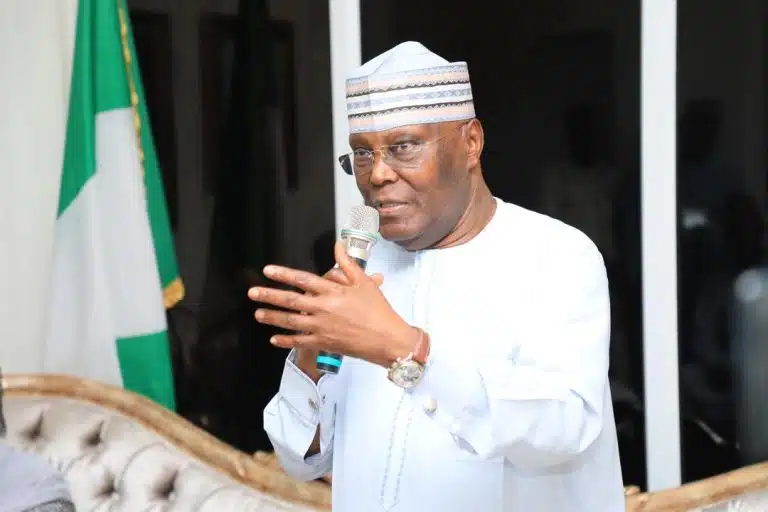
Onanuga said Atiku had the right to present alternative economic policies but argued that any plan to revive subsidy must clearly state its expected cost and source of funding.
He explained that petrol subsidy was not a fixed amount kept by the government for distribution. Rather, it represented the amount government covered when the regulated pump price was lower than the actual cost of supplying the product.
The presidential aide therefore asked Atiku to explain how the proposed subsidy would be funded and how it would comply with existing laws governing Nigeria’s petroleum sector.
According to Onanuga, the Petroleum Industry Act had provided for the removal of petrol subsidy by June 2023, with the Tinubu administration bringing the policy into effect earlier.
He also argued that Nigeria’s petroleum industry had changed considerably since the subsidy regime ended, particularly with the expansion of domestic refining.
Onanuga pointed to the Dangote Refinery and other local facilities as signs that Nigeria was reducing its reliance on imported petroleum products. He warned that restoring subsidy could discourage investment in domestic refining and weaken progress already made in the sector.
The presidential aide also said the removal of subsidy had increased the revenue shared among the federal, state and local governments through the Federation Account.
However, he acknowledged that the policy had contributed to higher transport and energy costs, placing additional pressure on households and businesses.
He said the Federal Government was exploring alternatives such as compressed natural gas, which could provide cheaper fuel for vehicles and reduce transportation costs.
Onanuga noted that some major Nigerian companies had already introduced CNG-powered vehicles into their operations, describing the development as part of the transition towards more affordable energy options.
He argued that the debate over petrol subsidy should focus on providing lasting relief to Nigerians without returning to a system that could create unsustainable financial obligations for government.
The presidential aide asked how much a restored subsidy would cost each year, where the money would come from and whether government would need to borrow to sustain the programme.
He also questioned whether bringing back the subsidy would require changes to the Petroleum Industry Act and other regulations.
Onanuga raised concerns about the monitoring of subsidy payments, asking how the government would prevent the fraud, leakages and other abuses associated with the previous system.
He maintained that the increased capacity of domestic refineries had changed the dynamics of Nigeria’s petroleum sector and should be considered in any discussion on fuel pricing.
According to him, policymakers must also determine exactly which areas of the petroleum value chain any proposed subsidy would cover, including production, transportation and distribution.
Onanuga warned that returning to a system with significant hidden fiscal costs could increase public debt, limit spending on infrastructure and social programmes, and put additional pressure on the naira.
He said Nigerians should be encouraged to debate the cost of living and the country’s economic direction but insisted that political proposals must be backed by clear financial and legal details.
He therefore challenged Atiku and other advocates of a return to petrol subsidy to provide Nigerians with a comprehensive explanation of how the policy would be implemented and financed.
FURTHER READING