- Information Minister Mohammed Idris has warned against calls to restore petrol subsidy.
- He said subsidy reforms have released N15.8 trillion in resources to the three tiers of government.
- Idris argued that reversing the policy could worsen Nigeria’s fiscal position and undermine ongoing investments.
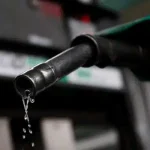
The Minister of Information and National Orientation, Mohammed Idris, has warned that returning to petrol subsidy could put Nigeria’s recent economic gains at risk.
Eko Hot Blog reports that Idris made the position known amid renewed calls for the Federal Government to reconsider the removal of petrol subsidy, arguing that the country must carefully weigh the benefits of the reforms against the consequences of reversing them.
EDITOR’S PICK
- How Lagos Achieved 57.4% Exclusive Breastfeeding Rate
- Shaibu Lists Nigeria’s Biggest Security Challenges
- Vote, Protect Your Mandate, Governor Adeleke Urges Residents Ahead of August 15 Polls.
He recalled that Nigeria spent about $10 billion on fuel subsidies in 2022, at a time when the country was struggling with declining oil production and weak revenues.
The minister said the World Bank had also warned that the subsidy was consuming resources that could have been directed towards education, healthcare, infrastructure and social protection.
According to Idris, the administration of President Bola Tinubu inherited the system and decided to reform it in order to create greater fiscal space for government.
N15.8tn released through subsidy savings
Idris cited figures presented during the Federal Government’s recent “Nigeria’s Reform Scorecard: The Benefits, Costs and Harms Prevented.”
He said the Minister of Finance and Coordinating Minister of the Economy, Taiwo Oyedele, disclosed that subsidy savings mobilised N15.8 trillion in resources for the Federation between June 2023 and December 2025.
Of the amount, approximately N5.43 trillion accrued to the Federal Government, N6.52 trillion went to states, while N3.88 trillion accrued to local governments.
Idris clarified that the N15.8 trillion was not held in a separate government account as cash savings.
Instead, he explained that the figure represented resources released within the Federation’s wider fiscal system and made available across the three tiers of government.
He said the additional resources had strengthened the capacity of states and local governments to meet salary and pension obligations and invest in infrastructure and essential services.
At the federal level, he said the increased fiscal space had supported investments and government obligations that would have been considerably more difficult to sustain under the old subsidy system.
FG highlights infrastructure investments
The minister said the government’s Reform Scorecard recorded approximately N6.47 trillion in additional expenditure on strategic infrastructure.
The investments cover sectors including transport, housing, agriculture and security, with major projects such as the Lagos-Calabar Coastal Highway and Sokoto-Badagry Superhighway among those cited.
Idris also said the reforms had created room for greater investment in human capital and social support.
According to him, more than 10 million Nigerian households have benefited from social transfers, while over N400 billion has been committed to major social investment initiatives.
These include N223.8 billion for the Nigerian Education Loan Fund, N150 billion for the MOFI Real Estate Investment Fund and N50 billion for the Nigerian Consumer Credit Corporation.
He further claimed that renewed domestic and foreign investor confidence had helped strengthen Nigeria’s stock market and external reserves while oil production had increased.
Idris warns of consequences of subsidy return
Idris argued that returning to the old subsidy system could recreate some of the fiscal pressures and market distortions that prompted the reforms.
He said the government’s Reform Scorecard estimated that petrol scarcity could have returned if the subsidy regime had remained unchanged, potentially pushing prices above N3,000 per litre on the black market.
He also said the legacy Ways and Means financing, which stood at about N30 trillion in May 2023, could have risen to N60 trillion or more without the reforms.
The minister said the country’s fiscal challenges would have become more severe, particularly for states that were already struggling to meet salary obligations.
He also drew attention to the cost of electricity subsidies, saying Nigeria spent an additional N3.14 trillion between June 2023 and December 2025 to bridge the gap between actual electricity production costs and capped tariffs paid by consumers.
According to him, restoring petrol subsidy on top of the electricity subsidy would place additional pressure on government finances.
‘Reforms have not solved every challenge’
While defending the reforms, Idris acknowledged that Nigeria continues to face significant economic challenges.
He said the government was not claiming that the reforms had solved every problem, noting that more needed to be done to translate increased fiscal capacity into jobs, better public services, infrastructure and improved living standards.
However, he argued that the solution to the hardship associated with the reforms was to accelerate their benefits rather than reverse them.
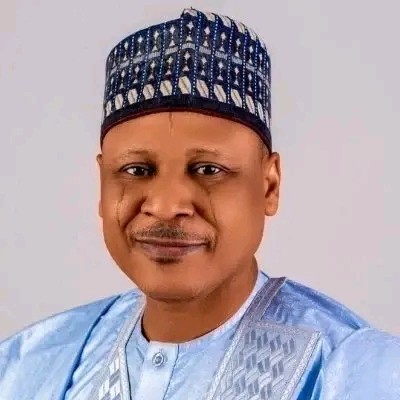
Idris said the government’s objective was to move public resources away from subsidising consumption and towards investments in Nigerians and the productive foundations of the economy.
He also presented the subsidy debate as a choice between maintaining current programmes and returning to the previous system.
The minister asked whether Nigeria should restore petrol subsidy at the expense of student loans, consumer credit, higher allocations to states and local governments, infrastructure projects, healthcare, education and social protection.
He said the Organised Private Sector and other members of the economic community had also cautioned against reversing the reforms.
According to Idris, fiscal sustainability, policy stability and a competitive downstream petroleum sector remain essential for investment, job creation and economic growth.
He maintained that Nigeria should consolidate the progress made since the reforms rather than return to what he described as an unsustainable subsidy regime.
FURTHER READING