The just-concluded by-elections offered a first glimpse of its reach, but the real story lies in the strategic players shaping the party and what they could mean for 2027.
EDITOR’S PICK
- What We Heard from the South East on Tinubu’s Government – Presidency
- Man Survives Suicide Attempt After Cutting Off P3nis in Borno
- First Class Northern Traditional Ruler Confirmed Dead
Defections have given ADC credibility and momentum. Figures like Silas Onu, former PDP chairman in Ebonyi, and Noheem Balogun in Lagos have already disrupted local dynamics, forcing PDP into damage control.

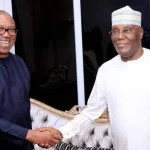
More consequential are Rotimi Amaechi, NSid El-rufai; Peter Obi and Atiku Abubakar, both former presidential candidates. Their alignment brings national recognition, decades of political experience, and networks across regions, signaling that ADC is serious about challenging APC and PDP and that 2027 may not be business as usual.
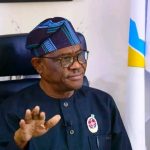
The most strategic figure in ADC’s rise is Rauf Aregbesola, former governor of Osun and once Tinubu’s closest lieutenant. If not for his fallout with Tinubu, he would remain one of the voices the president listens to at any hour.

He brings insider knowledge of APC’s election machinery, grassroots networks, and vote protection strategies. In ADC, he is a potential insider threat capable of turning the ruling party’s playbook against it. His presence has already sparked tension; reports indicate he was pelted with stones at the recent by-election in Remo Federal Constituency, Ogun State, highlighting both his prominence and the resistance he faces.
The by-elections also highlighted ADC’s limitations. APC retained Jigawa and Kaduna, while PDP won Ibadan North in Oyo. Despite ADC’s claims, no victories were independently verified.
The results exposed gaps: a lack of mobilized grassroots structures, polling unit agents, and operational depth. Yet these contests are only a snapshot. INEC-concluded elections, especially presidential contests, offer a larger platform where ADC’s coalition, strategic planning, and high-profile defectors could make a real impact.
The comparison with Labour Party’s 2023 surge is instructive. Peter Obi’s success combined a compelling candidate with youth mobilization, volunteer networks, digital engagement, and parallel vote protection.

ADC has some of these ingredients: elite defectors like David Mark, Aregbesola, Obi, and Atiku, all with credibility and national reach. But the party still faces two critical challenges: picking a presidential candidate who can unify these forces and translating elite symbolism into broad-based voter enthusiasm. Failure risks reducing ADC to another headline-grabbing but electorally impotent experiment.
Nigeria has long witnessed “third force” experiments collapse under internal contradictions or the brute strength of APC and PDP. ADC has unique advantages: high-profile defectors, Aregbesola’s insider expertise, and a media landscape hungry for disruption.
But advantages alone do not win elections. Without coalition unity, grassroots mobilization, and a compelling candidate, ADC risks becoming another mirage, a party promising change but delivering little.

With 2027 approaching, ADC has a narrow window to convert elite defections and strategic insight into electoral success. Aregbesola’s knowledge of APC’s machinery, combined with the star power of Obi and Atiku, provides an unprecedented opportunity to challenge the status quo.
The party must act decisively, turning symbolism into votes, orchestrating a cohesive campaign, and galvanizing voters across regions. Success could redefine Nigeria’s political scene; failure would consign ADC to the long list of promising yet impotent opposition experiments.

The choice is stark. ADC can emerge as a credible third force capable of breaking APC and PDP’s dominance or fade as another fleeting experiment.
With elite defectors, insider expertise, and nationwide appeal, the tools are in place. The question is whether the party can wield them effectively. For Nigeria, 2027 may well be the test of whether ADC is the real third force or just another political mirage.
FURTHER READING
- IPOB Hails Canadian Court Labeling APC, PDP As Terrorist Groups
- SERAP Demands Probe Into Alleged ₦3 Million Bribe-for-Bills at National Assembly