- Former Vice President Atiku Abubakar laments that current security and political crises exceed conditions in 2014.
- Atiku highlights the failure of the APC-led government to improve upon the issues that necessitated the removal of the PDP in 2015.
- Comments follow President Tinubu’s recent admission that insecurity remains Nigeria’s most pressing challenge.
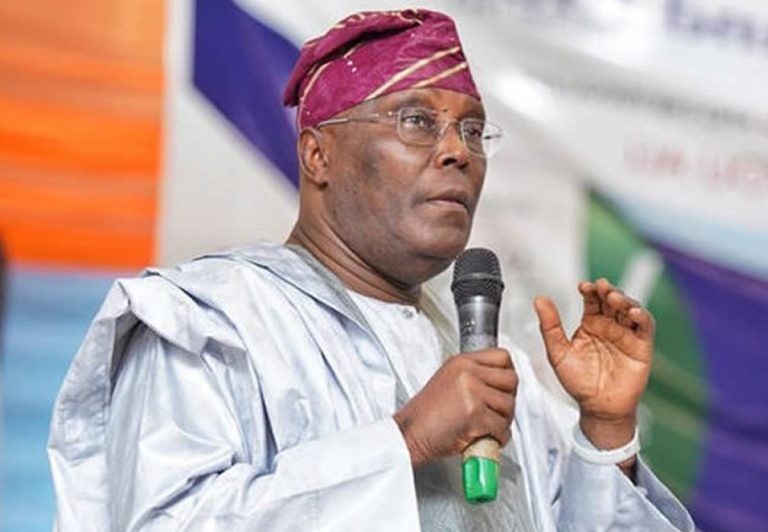
Former Vice President Atiku Abubakar has expressed profound regret over the current state of Nigeria, arguing that the nation’s security and political situation has deteriorated significantly.
Eko Hot Blog reports that Atiku said the economy has damaged beyond the conditions that led to the formation of the All Progressives Congress (APC) and the removal of former President Goodluck Jonathan in 2015.
EDITOR’S PICK
- 540 Candidates Cleared as Lagos APC Moves to Elect LGA Executives
- Court Sentences Pastor to Death for Killing UniUyo Student
- Lagos Teacher Questions Lack of Recognition for One-Day Governor Mentors
Speaking on Thursday evening to opposition members, Atiku reflected on the coalition that reshaped Nigeria’s political landscape, noting that the expectations of Nigerians for a safer and more prosperous country have largely remained unmet.
Atiku argued that the major challenges of insecurity and faulty governance that united opposition politicians more than a decade ago have not only persisted but have intensified under the APC administration.
“You see, we did this exercise in 2014. We came together to form APC because the governance was faulty in 2014,” Atiku stated.
“Only for us to end up in the same position we found ourselves in 2014, and it is even worse. Because the major challenges we faced were insecurity here and there. Now, it is even worse than what we fought in 2014.”
These remarks come amidst escalating violence, banditry, and kidnappings across Nigeria, drawing heavy criticism from opposition figures and civil society groups.
The APC emerged from a merger of several opposition parties to defeat the then-ruling Peoples Democratic Party (PDP) in 2015, marking a historic moment in Nigeria’s democracy.
However, Atiku, a central figure in that coalition, suggested that the change movement has failed to deliver the promised reforms.
In a related development, President Bola Tinubu recently echoed similar concerns, describing insecurity as the most pressing challenge confronting the nation, particularly in the northern region.
Speaking at the 25th Anniversary of the Arewa Consultative Forum (ACF) in November 2025, the President, represented by Speaker of the House of Representatives Tajudeen Abbas, emphasized that rebuilding trust and safeguarding vulnerable communities must be treated as urgent national priorities.
While acknowledging the inherited complexities of these challenges, the President assured that his administration is confronting them with urgency, bolstered by ongoing economic projects such as oil exploration in the North and the accelerated completion of major infrastructure projects like the Abuja–Kaduna–Kano Superhighway.