- Bauchi Governor Bala Mohammed signed a new law creating 13 emirates.
- The law also repeals Sayawa Chiefdom and establishes Zaar Chiefdom.
- Officials say the reform will strengthen traditional institutions statewide.
Bauchi State Governor, Bala Mohammed, has signed into law the Chieftaincy Appointment and Deposition Law, authorising the creation of 13 new emirates and more than 111 district heads across the state.
EDITOR’S PICKS
- Federal Judge Blocks Trump Administration Layoffs During Shutdown
- What Another Drop in Monthly Inflation Rate Signals for Nigerians
- ‘PDP Defections to APC Prove I Was Right About Tinubu’ – Wike
EKO HOT BLOG reports that the governor also assented to the repeal of the Sayawa Chiefdom and the establishment of the Zaar Chiefdom, with its headquarters at Mhrim Namchi community in Tafawa Balewa Local Government Area.
During the signing ceremony held on Tuesday at the Government House, Bauchi, Governor Mohammed further endorsed two additional laws — the Local Government Pension Contributory Scheme and the 2025 Appropriation Supplementary Act — both aimed at enhancing governance efficiency and funding ongoing developmental projects.
The newly established emirates include Burra, Duguri, Dambam, Bununu, Lere, Darazo, Jama’a, Lame, Toro, Ari, Warji, Giade, and Gamawa.
Governor Mohammed cautioned against politicising the reforms, warning that any individual or group attempting to incite division or obstruct implementation would face strict legal consequences.
“This administration will not tolerate any attempt to undermine or obstruct these reforms,” the governor said. “Anyone spreading misinformation or disrupting public peace will be dealt with according to the law. Government officials or traditional leaders acting against the spirit of this reform will also face disciplinary action.”
He directed the Attorney General and the Secretary to the State Government to ensure the new laws are gazetted, published, and distributed promptly to relevant authorities.
Speaker of the Bauchi State House of Assembly, Abubakar Y. Suleiman, described the law as the result of extensive consultation among traditional rulers, civil society groups, and community leaders.
“This law reflects collective responsibility and fairness,” Suleiman said. “It will strengthen traditional institutions and extend governance and development to underserved communities.”
He added that the Assembly prioritised fairness, due process, and respect for traditional norms in drafting the provisions for appointing and deposing traditional rulers.
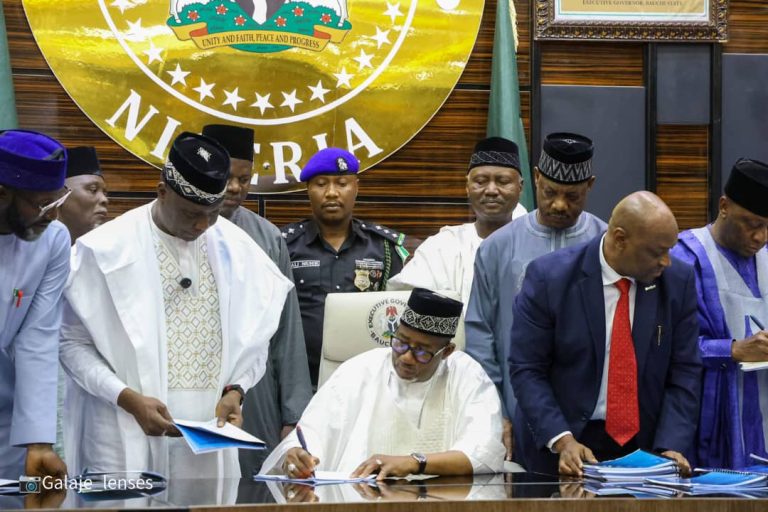
The move marks a major step in Bauchi’s effort to decentralise governance, reinforce traditional authority, and bring development closer to the grassroots.?
FURTHER READING
- Kano Court Remands Orphanage Owner Over Abduction of 600 Children
- Information Minister Hails Borno as Nigeria’s Most Resilient State
- Businessman Sends SOS to Police Over Abduction of 16-Year-Old Son in Iba