- The House of Representatives has officially stepped down its independent constitutional amendment bill aimed at creating state police, choosing instead to prioritize the newly transmitted Executive bill from the presidency.
- During Tuesday’s plenary session, the Executive-sponsored state police bill successfully scaled both its first and second readings on the floor of the Green Chamber.
- The proposed legislation has been referred to the House Committee on Constitutional Review, where lawmakers will scrutinize and refine its statutory provisions before presenting it back to the house.
House of Representatives on Tuesday withdrew its self-sponsored constitutional amendment bill aimed at establishing state police.
Eko Hot Blog reports that instead, the Green Chamber has resolved to focus its legislative energy on a similar bill transmitted to the parliament by the Executive.
EDITOR’S PICK
- Why Africa Still Cannot Win the FIFA World Cup Despite Its World Class Talent
- Man Allegedly Slits Father’s Throat, Mutilates Body in Anambra
- Lagos Court Convicts Director, Company Over N822.4m Fraudulent Conversion
The legislative pivot became clear during Tuesday’s plenary session in Abuja. In a swift process reflecting political alignment, federal lawmakers cleared the newly received, Executive-backed state police bill through both its first and second readings.
With these initial readings completed, the bill was immediately referred to the House Committee on Constitutional Review.
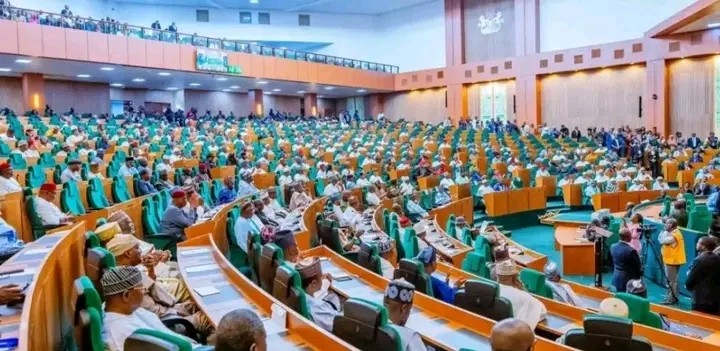
The committee is expected to conduct detailed legislative work, gathering stakeholder input and analyzing structural provisions before returning the bill to the floor for final consideration and voting.
By stepping down its own bill, the House has streamlined the constitutional amendment process, effectively ensuring that any future model for decentralized policing will be built around the framework proposed by President Bola Tinubu’s administration.
The Executive bill is anticipated to introduce critical details regarding the funding, control, and operational boundaries of state-level police forces.
This structure aims to resolve long-standing debates over how to prevent local political abuse while equipping states to combat rising regional insecurity.
Supporters of the shift believe that prioritizing an Executive-backed bill increases the likelihood of securing the necessary political consensus, particularly among state governors and the 36 State Houses of Assembly, whose approval is required for any successful constitutional amendment.