The planned alignment of Peter Obi and Rabiu Kwankwaso with the Nigeria Democratic Congress has triggered fresh debate across political circles. For some, it signals a bold attempt to rebuild a fractured opposition. For others, it exposes a system already struggling to hold itself together.
EDITOR’S PICK
- Desmond Elliot Picks Up APC Nomination Form For Lagos Assembly Re-election
- Atiku heads to US over Nigeria crisis
- Ward A3 Unites in Landmark Endorsement of Rep. Wale Raji for Another Term
At the centre of the tension is the question of trust. The opposition had recently agreed in Ibadan to present a single candidate against the ruling All Progressives Congress in 2027. That agreement, known as the Ibadan Declaration, was supposed to mark a new level of cooperation. Instead, it is now being tested by competing ambitions and shifting alliances.
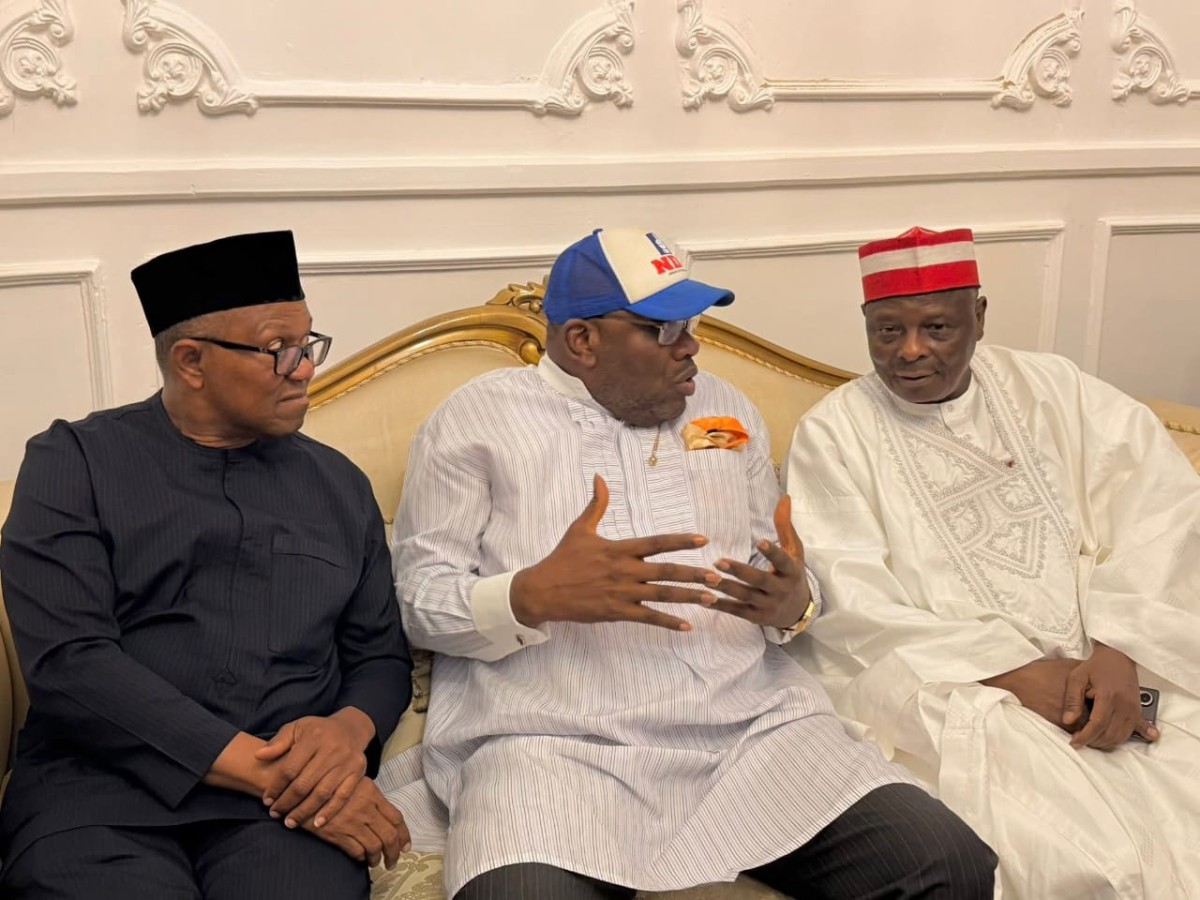
Concerns within the African Democratic Congress have played a major role in the unfolding situation. Reports suggest that fears over the influence of Atiku Abubakar in the party’s structure have raised doubts among other key players about fairness and internal balance. These concerns are said to have pushed Obi and Kwankwaso to explore other options.
The Nigeria Democratic Congress, led by Seriake Dickson, has quickly emerged as a new political platform attracting attention.
Unlike older parties weighed down by internal court cases and long standing factional battles, the NDC is presenting itself as a fresh start. But whether it can truly escape the same political struggles remains an open question.
Behind the scenes, consultations are reportedly advanced. Political structures linked to both Obi and Kwankwaso are said to be aligning with the NDC ahead of formal announcements expected soon.
The urgency is driven by electoral timelines set by the Independent National Electoral Commission, which leave little room for prolonged negotiations.
Supporters of both leaders have already begun building momentum under what is being called the OK Movement, a blend of Obi’s Obidient base and Kwankwaso’s Kwankwasiyya network. On paper, it looks like a strong cross regional alliance. In practice, it is still a loose coalition of different political interests trying to find common ground.
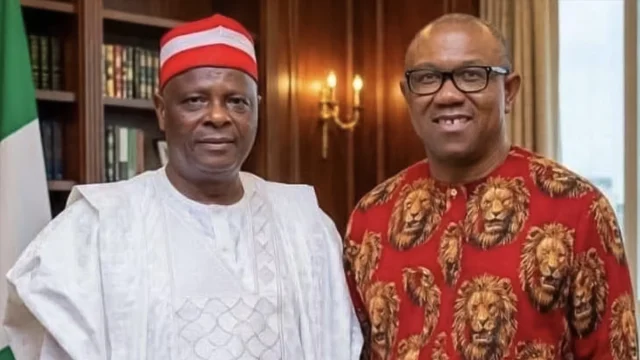
This is where the uncertainty becomes clear. Can two strong political figures with different bases, strategies and ambitions truly merge into a single force? Or will their presence in a new platform simply recreate the same struggles seen in older parties?
A political analyst, Adebayo Abubakar, believes the deeper issue is not the creation of a new platform but the absence of trust within the opposition. He argues that repeated realignments show a pattern where personal ambition often overrides collective strategy.
Even within the ADC, reactions have been mixed. Party officials insist that efforts to build a united front ahead of 2027 are still ongoing, but they also acknowledge that defections and internal disagreements are weakening those plans.
The emergence of the NDC has therefore created two competing narratives. One side sees it as a necessary reset, a chance to break away from political structures that have repeatedly failed to deliver unity. The other side sees it as another layer of fragmentation that could further weaken the opposition.
What makes the moment more critical is timing. With election deadlines approaching, there is little space left for prolonged negotiations. Decisions made now could determine the shape of the 2027 contest.
So the question remains open. Can the move by Obi and Kwankwaso strengthen opposition unity under the NDC? Or will it deepen the crisis it was meant to solve?
For now, Nigeria’s opposition stands at a crossroads, unsure whether it is building a new beginning or repeating an old cycle.
FURTHER READING