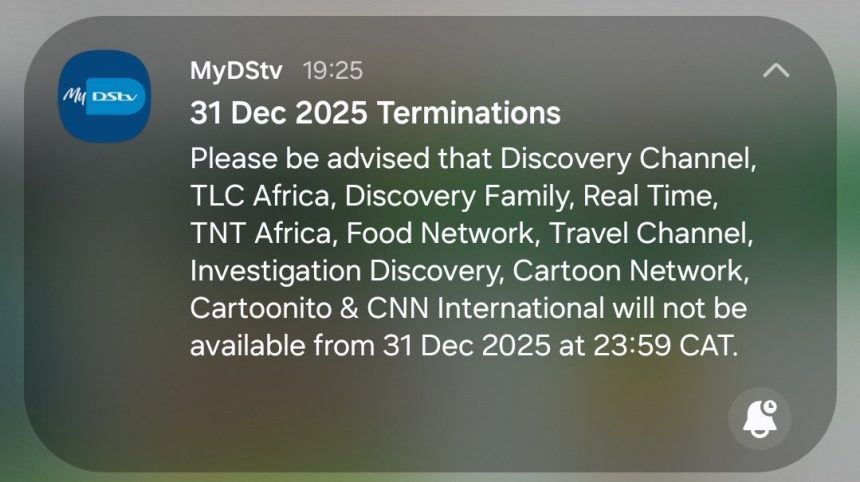
MultiChoice’s confirmation that 11 major channels, including CNN International, Discovery Channel, TLC Africa, Investigation Discovery, Cartoon Network and TNT Africa, may disappear from DStv on December 31 has reignited questions about the sustainability of traditional cable TV in an era defined by streaming, rising costs and shrinking subscriber loyalty.
The company says its distribution agreement with Warner Bros. will expire at year-end, and no new deal has been reached.
EDITOR’S PICKS
If the stalemate remains, the channels will be gone from January 1, 2026.
For a platform already losing subscribers across Africa, the development signals deeper shifts in the pay-TV landscape. EKO HOT BLOG explores the stakes.
Price Hikes and the Value-for-Money Question
Over the past few years, DStv has faced intense backlash in Nigeria and other African markets over repeated subscription price increases. Each announcement has triggered public anger, regulatory scrutiny and consumer advocacy campaigns questioning why customers were paying more for what many saw as stagnant or diminishing value.
This discontent has been reflected in subscriber numbers. In its audited results for the year ending March 31, 2025, MultiChoice admitted that its Nigerian operation lost 1.4 million subscribers in two years — a striking decline for its most important market.
The looming removal of 11 channels now reinforces an uncomfortable point: subscribers paying higher fees may soon receive fewer channels.
For customers already frustrated with rising costs, losing premium brands like CNN, Discovery and Cartoon Network further weakens the value proposition.
In practical terms, DStv risks deepening the very churn it has been struggling to reverse.
Cable TV Under Pressure from Streaming
The broader industry reality is that cable TV is fighting for relevance in a world where streaming dominates consumer habits. Across Africa — especially in Nigeria — more households prefer to pay for unlimited internet and choose content on-demand rather than remain tied to rigid channel bundles.

Netflix, Amazon Prime Video, Showmax, YouTube, and even TikTok have fundamentally changed entertainment consumption. Viewers increasingly customise their viewing diets instead of paying heavy monthly cable fees for channels they may never watch.
Against this backdrop, the loss of 11 attractive and internationally recognised channels makes DStv’s challenge even steeper. With each premium channel removed, the platform becomes less competitive relative to streaming services that keep expanding catalogues while offering greater flexibility.
In essence, the channel losses accelerate the trend already underway: consumers questioning why they should maintain cable subscriptions when streaming offers more content, more control, and often better value.
A Warning Sign for the Future of Pay TV
MultiChoice has tried to reassure customers, listing alternative channels it still carries and emphasising new content partnerships. But the timing of this disruption — coming months after Canal+ acquired majority control and amid long-term subscriber decline — underscores the fragile state of traditional pay TV.
The indication from the loss of CNN, Discovery and the other channels is clear is that, unless cable TV platforms adapt quickly through innovation, competitive pricing, and stronger content deals, their relevance will continue to shrink.
FURTHER READING
For DStv, the next few months will be decisive, not only for negotiating with Warner Bros., but for demonstrating that it can still offer compelling value in a world where customers now have more viewing choices than ever before.
Philip Ibitoye is a Special Correspondent with EKO HOT BLOG. Click here to find daily analysis and critical insight on trending issues in Lagos and other parts of Nigeria.
Click here to watch the video of the week below: