- Economic Reforms Are Here to Stay, No Turning Back – Tinubu
- Tinubu said the reforms, though painful at the onset, were necessary to stabilise Nigeria’s economy
- Bjerde commended Tinubu for his consistency and resolve in implementing reforms over the past two years, describing the results as “remarkable and commendable”
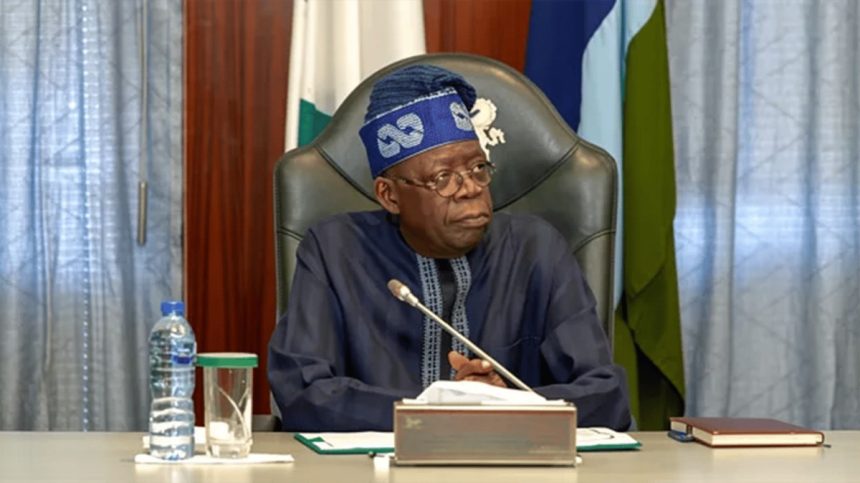
President Bola Ahmed Tinubu has declared that his administration will not reverse course on its economic reforms, despite the initial hardships experienced by Nigerians, while reaffirming his commitment to transparency and accountability in governance.
Eko Hot Blog reports that the President made the declaration on Tuesday while receiving a World Bank delegation led by the Managing Director of Operations, Anna Bjerde, at the State House, Abuja.
EDITOR’S PICK
- EFCC Arraigns Man for Allegedly Defrauding US Investors of $525,276
- Tinubu’s State Visit Yields Nigeria–Turkey Diaspora Partnership
- FG, States, LGs Receive ₦1.969trn as FAAC Allocation for December 2025
Tinubu said the reforms, though painful at the onset, were necessary to stabilise Nigeria’s economy and unlock opportunities for the country’s growing youth population.
“Since we went into this journey of reform, we have our hands on the plough, and we are never going to look back,” the President said.
“It was painful and difficult at the beginning, but those who succeed are not those who give up during hard times.”
He stressed that Nigeria, as a key driver of Africa’s economic future, must take bold steps to transform its economy, particularly through agricultural mechanisation and increased support for farmers.
Tinubu called on the World Bank to assist Nigeria in establishing mechanisation centres, strengthening seedling programmes and improving access to locally produced fertilisers, especially as output from the country’s petrochemical industry increases.
“How do we help farmers move from subsistence farming to large-scale cooperatives and commercial agriculture that can create real opportunities for Nigerians?” he asked.
The President said his administration had taken difficult but necessary decisions, including the removal of fuel subsidies and the unification of the foreign exchange rate, despite the initial shock these measures caused.
“It was difficult to turn away from a system riddled with corruption under the subsidy regime and multiple exchange rates,” Tinubu said.
“We gave it up so that the country could benefit from a stable currency. Inflation rose initially, but it has come down significantly. The naira is stable today.”
He urged the World Bank to explore financing options that would accelerate economic growth, reduce the role of intermediaries, manage risks and build the skills of Nigerians.
In her response, Bjerde commended Tinubu for his consistency and resolve in implementing reforms over the past two years, describing the results as “remarkable and commendable”.
She said Nigeria has increasingly become a reference point in her discussions with global leaders, policymakers and investors due to the progress recorded.
“What I have particularly appreciated is the steady direction you have communicated to Nigerians and the international community. Even when reforms are difficult, there has been no turning back,” she said.
Bjerde noted that while many countries often slow down or reverse reforms during challenging periods, Tinubu had remained firm, a stance that has been widely recognised internationally.
She disclosed that the World Bank’s engagement with Nigeria is now aligned with the country’s $1 trillion GDP target and seven per cent growth ambition, with job creation identified as the core priority.
“Africa will need about 600 million new jobs by 2050, and Nigeria’s youthful population presents both a challenge and an opportunity,” she said, adding that sustainable livelihoods remain the most effective pathway out of poverty.
The World Bank official highlighted infrastructure development as critical to growth, noting that Nigeria’s infrastructure spending as a share of GDP remains low and would require a mix of public and private sector investment.
On agriculture, she praised Nigeria’s innovations and expressed the Bank’s commitment to scaling them through mechanisation, cooperatives and stronger value chains.
Bjerde also addressed funding challenges facing small and medium-sized enterprises (SMEs), which she said account for up to 90 per cent of job creation globally but struggle to access finance, particularly those in the middle segment.
On human development, she commended Nigeria’s efforts to tackle stunting and said early childhood development could serve as a key entry point for further World Bank support.
She revealed that the World Bank’s public sector portfolio in Nigeria stands at about $17 billion, making the country one of its largest clients, while private sector investments through the International Finance Corporation amount to roughly $5 billion annually.
The Multilateral Investment Guarantee Agency, she added, currently provides over $500 million in risk guarantees, with plans to expand.
Bjerde disclosed that the World Bank is preparing a new Development Policy Operation to support Nigeria’s budget, directly linked to the government’s reform agenda.
“Nigeria is consistently top of mind when investors ask which African country they should be watching,” she said.