- Tinubu Reforms Drive $18.2bn Oil Investments, New Reserves Unlocked
- Lokpobiri said the Federal Government had enabled International Oil Companies (IOCs) to divest onshore and shallow-water assets to capable Nigerian firms,
- He highlighted the impact of Project One Million Barrels, launched in October 2024, which has raised Nigeria’s crude oil production to between 1.7 million and 1.83 million barrels per day
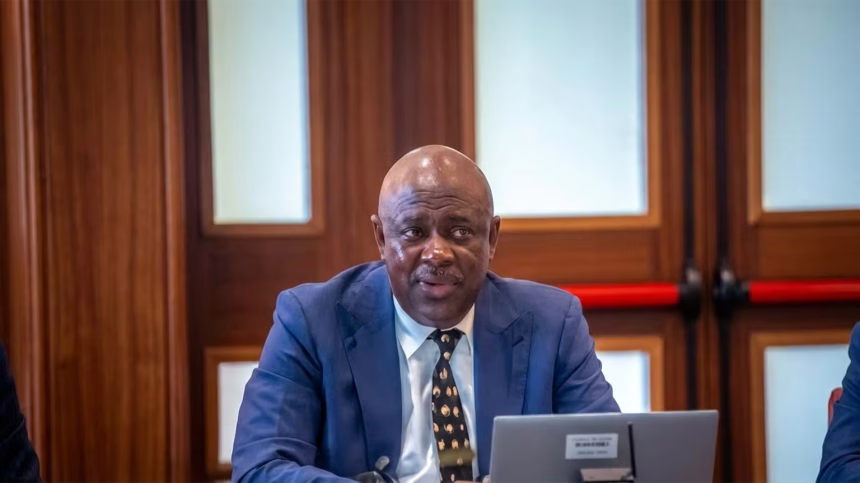
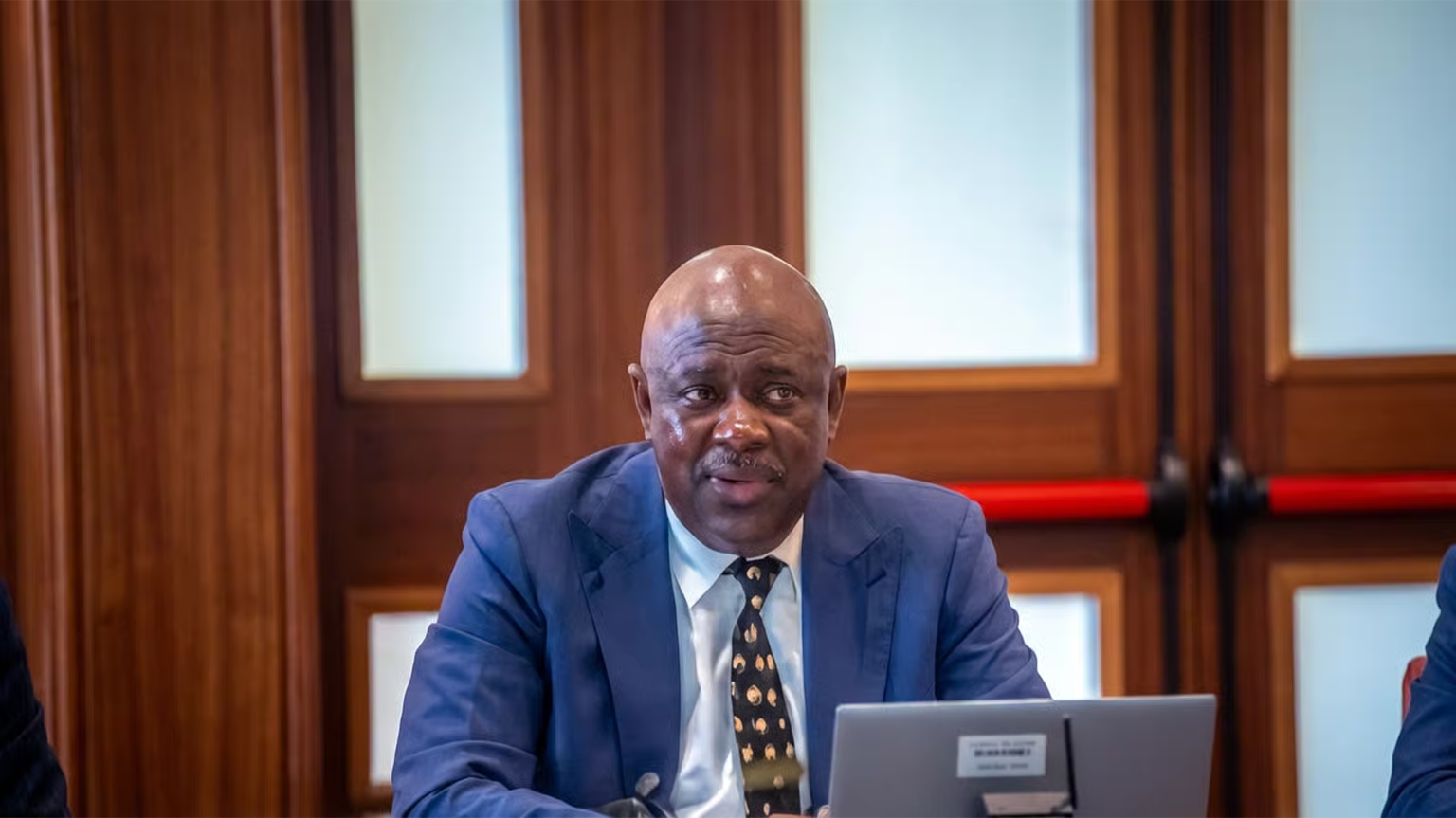
The Minister of State for Petroleum Resources (Oil), Senator Heineken Lokpobiri, has disclosed that Nigeria approved 28 new Field Development Plans (FDPs) valued at $18.2 billion in 2025, unlocking an estimated 1.4 billion barrels of crude oil reserves.
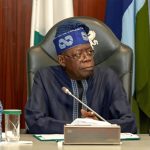
Eko Hot Blog reports that Lokpobiri made the disclosure on Tuesday at the official opening of the 2026 Nigeria International Energy Summit (NIES) in Abuja, which was declared open by President Bola Tinubu, represented by Vice-President Kashim Shettima, at the Presidential Banquet Hall, Aso Villa.
EDITOR’S PICK
- EFCC Arraigns Man for Allegedly Defrauding US Investors of $525,276
- Tinubu’s State Visit Yields Nigeria–Turkey Diaspora Partnership
- FG, States, LGs Receive ₦1.969trn as FAAC Allocation for December 2025
Speaking at the summit, the minister said the transformation of Nigeria’s petroleum sector under the Tinubu administration marked a clear departure from years of declining output, stalled investments and capital flight.
According to him, Nigeria accounted for four of the seven major Final Investment Decisions (FIDs) announced across Africa between 2024 and 2025, attributing the development to policy clarity, regulatory stability and deliberate leadership.
“Between 2024 and 2025, four of the seven major Final Investment Decisions announced across Africa were in Nigeria,” Lokpobiri said.
He explained that recent reforms have repositioned the petroleum sector as a globally competitive and investment-ready destination, restoring investor confidence and unlocking billions of dollars in new capital.
“Our investment climate allows for the free movement of capital. In line with global best practices, companies can invest and divest freely,” he stated.
Lokpobiri said the Federal Government had enabled International Oil Companies (IOCs) to divest onshore and shallow-water assets to capable Nigerian firms, citing transactions involving Shell and Renaissance, ExxonMobil and Seplat, and Eni and Oando.
“These are not merely asset transfers; they represent a transfer of confidence, capability and ownership,” he said, adding that the transactions had resulted in an additional 200,000 barrels per day in crude oil production.
The minister noted that several of the divestments had remained stalled for years but were concluded swiftly under the current administration, leading to improved output and operational efficiency.
On the downstream sector, Lokpobiri said the removal of fuel subsidies had stabilised the market and improved product availability. He commended indigenous investors such as Dangote Group and BUA Group for expanding Nigeria’s refining and midstream infrastructure.
He also disclosed that licensing processes had been liberalised to promote transparency and fairness, while Nigeria’s newly launched West African Reference Market was designed to position the country as a regional refining hub for the Gulf of Guinea and the wider African market.
On the continental outlook, Lokpobiri said Africa spends over $120 billion annually on hydrocarbon imports, describing the figure as a major drain on the continent’s economy. He called for stronger support for the African Energy Bank, headquartered in Nigeria, to mobilise capital for Africa-focused energy projects.
The minister stressed that Africa’s energy strategy must prioritise availability, accessibility and affordability, noting that projections by the International Energy Agency (IEA) and OPEC indicate that fossil fuels will remain dominant in the foreseeable future.
He highlighted the impact of Project One Million Barrels, launched in October 2024, which has raised Nigeria’s crude oil production to between 1.7 million and 1.83 million barrels per day, representing an increase of about 300,000 bpd within a year.
Lokpobiri also revealed that the number of active drilling rigs had risen from 14 in 2023 to over 60, signalling renewed industry activity.
According to him, international investor confidence has returned, citing major FIDs including Shell’s $5 billion Bonga North project, TotalEnergies’ $550 million Ubeta project, Shell’s $2 billion HI project, and Chevron’s $1.8 billion Panther project.
He further disclosed that Shell has announced plans for a $20 billion Final Investment Decision, with additional projects expected in the near term.