- The Federal Government is phasing out the “disarticulation policy” that splits Junior and Senior secondary schools into separate entities with different principals and facilities.
- Education Minister Dr. Tunji Alausa revealed that over 20 million pupils drop out between primary school and JSS, pointing out a critical 1-to-8 infrastructure ratio mismatch between primary and junior secondary schools.
- A ministerial committee chaired by Prof. Rashid Aderinoye has been inaugurated to immediately audit and open underutilized or uncompleted UBEC-funded Smart, Bilingual, and Alternative schools.
The Federal Government of Nigeria has announced a major policy shift aimed at restructuring the nation’s basic education system, revealing plans to officially scrap the policy that separates Junior Secondary Schools from Senior Secondary Schools.
Eko Hot Blog reports that this decisive move comes on the heels of alarming statistics indicating that more than twenty million pupils drop out of the school system before they can even reach the senior secondary level.
EDITOR’S PICK
- Hamzat Appoints Obanikoro as Campaign DG Ahead of 2027 Lagos Governorship Race
- Tinubu’s State Police Plan Gains Momentum as Amendment Looms
- Residents Raise Alarm After Two Bodies Found in Lagos Waterway
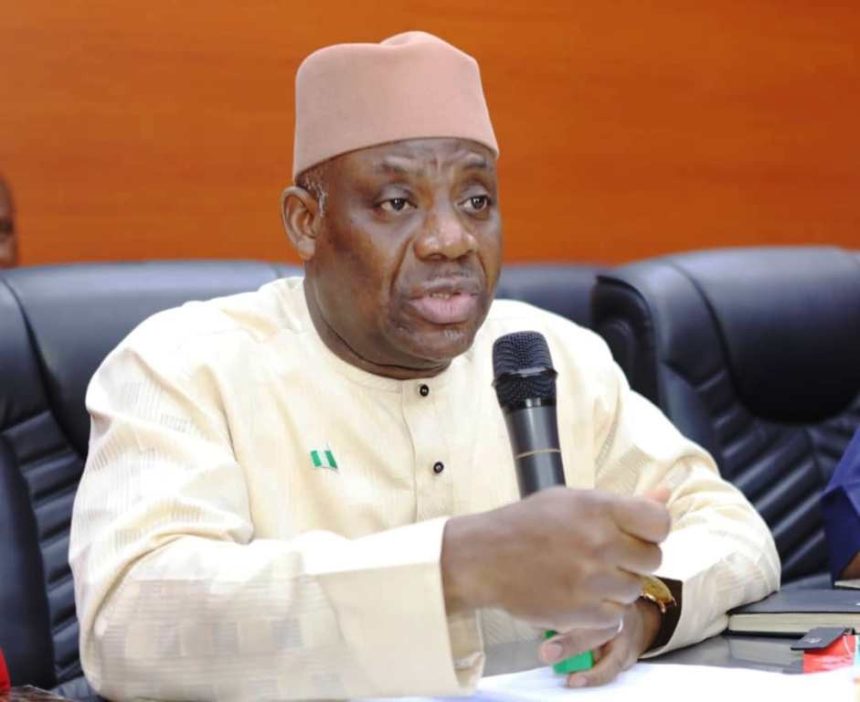
The announcement was made public on Tuesday in Abuja by the Minister of Education, Dr. Tunji Alausa, during the formal inauguration of the Universal Basic Education Commission Ministerial Implementation and Monitoring Committee.
According to Dr. Alausa, the long-standing “disarticulation policy,” which legally and operationally mandated that Junior Secondary Schools and Senior Secondary Schools function as entirely separate entities with distinct school principals, administrative staffs, and physical facilities, has fundamentally failed to achieve its intended educational goals.
Instead of fostering a seamless progression for students, the policy has inadvertently created massive bottlenecks within the system, driving up drop-out rates at an unprecedented scale across the federation.
Providing a stark breakdown of the data that prompted this policy reversal, the Minister disclosed that the country currently faces an overwhelming gap between primary and secondary school infrastructure.
Statistics show that Nigeria possesses roughly 80,000 public primary schools, yet there are only about 15,000 junior secondary schools available to absorb graduating pupils.
This represents a highly problematic one-to-eight ratio, meaning that for every eight primary schools operating in a community, there is only one junior secondary school available for transition.
Dr. Alausa questioned where the millions of students who disappear between these educational tiers are going, emphasizing that this systemic deficit directly fuels the nation’s out-of-school children crisis.
This infrastructure imbalance has led to severe overcrowding in the limited junior secondary school facilities across the country, while conversely leaving numerous senior secondary schools heavily underutilized.
The Minister specifically cited Kaduna State and several other states in the northern region as primary examples where these operational mismatches are most visible.
He strongly criticized the original motivations behind the disarticulation policy, suggesting that it was driven more by bureaucratic desires to create high-level administrative vacancies and director positions rather than a genuine interest in upgrading the educational journey of Nigerian children.
He maintained that the current administration is strictly focused on doing what is practically and structurally best for the students.
To officially dismantle the framework, Dr. Alausa confirmed that the proposal to abolish the separation policy will be formally tabled and debated at the upcoming meeting of the National Council on Education.
The government intends for this structural alignment to drastically expand classroom access, ease transition friction, and ultimately improve the foundational learning outcomes for millions of children nationwide.
In tandem with this reform, the Minister also took steps to address ongoing infrastructure waste within the basic education sector by inaugurating a specialized monitoring committee.
Chaired by Professor Rashid Aderinoye, this committee is specifically mandated to oversee the implementation, completion, and immediate operationalization of various UBEC-funded projects, including the highly anticipated Smart Schools, Bilingual Schools, and Alternative Schools across the country.
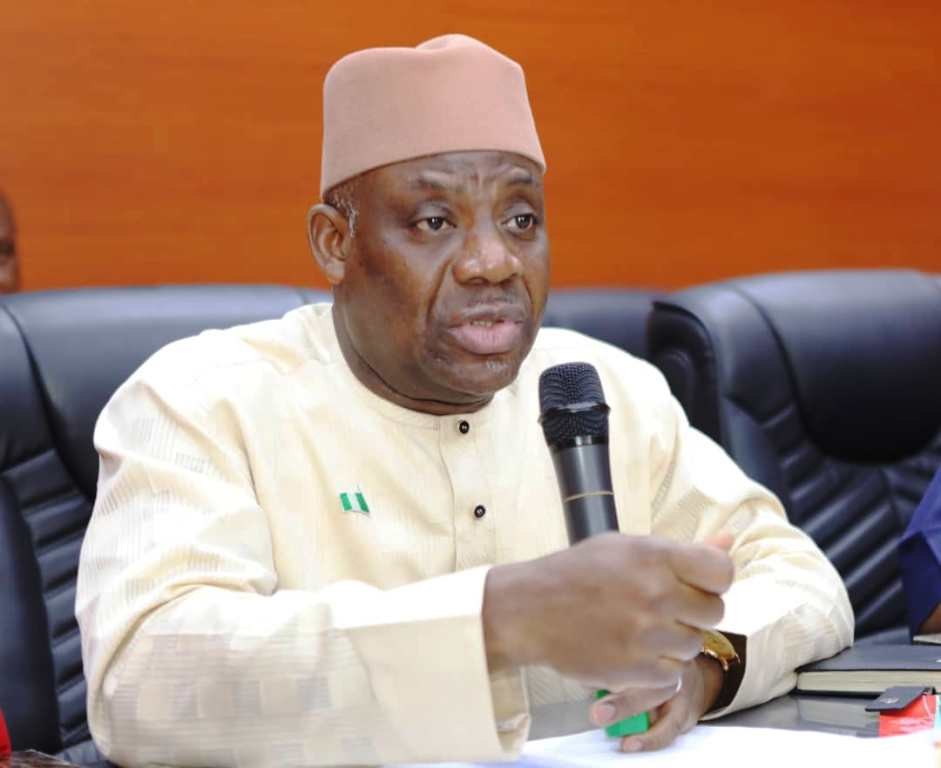
Dr. Alausa expressed dissatisfaction with the current state of these projects, noting that while the Universal Basic Education Commission has heavily invested public resources into hundreds of these specialized institutions nationwide, many remain incomplete or completely devoid of students.
He labeled the abandonment and delay of these completed facilities as an unacceptable waste of public funds, tasking the new committee with ensuring that these structures are immediately handed over to state governments and opened for active learning.
With Nigeria currently holding one of the largest populations of out-of-school children globally, education stakeholders have repeatedly stressed that fixing the system requires more than building new classrooms; it demands making sure that existing facilities are fully operational, adequately staffed, and smoothly integrated to support continuous learning.
Through these combined measures, the Federal Government aims to turn the tide on the country’s educational decline and guarantee a more secure academic future for the next generation.
FURTHER READING
- Seyi Makinde Restricts Motorcycle Operations Over Rising Insecurity in Oyo
- Lagos Launches Digital Planning Permit System to Boost Urban Development
- Ogun Police Arrest Seven Suspects in Multi-Location Crime Crackdown
Click here to watch video of the week
https://youtu.be/nXdilmxTznY?is=MJA-OgfIH-rQChF_