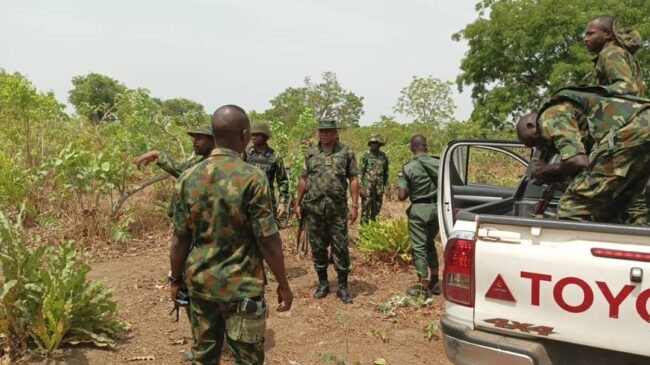
- Eight soldiers were reportedly killed after a convoy hit an IED in Borno
- The troops were returning to Dikwa after escorting supplies from Maiduguri
- Military authorities had yet to officially confirm the casualties
At least eight Nigerian soldiers were reportedly killed after a military convoy struck an Improvised Explosive Device (IED) allegedly planted by suspected fighters of the Islamic State West Africa Province (ISWAP) in Borno State.
Eko Hot Blog gathered that the incident was said to have occurred on Thursday as troops attached to the 24 Task Force Brigade in Dikwa were returning from Maiduguri after escorting food supplies and other logistics to their base.
EDITOR’S PICK
- Tinubu Approves Army Expansion, Recruitment of 28,000 Personnel
- Aregbesola Claims Record as First Nigerian Governor to Serve Eight Years Without Owning a House
- Ikosi-Ejinrin LCDA Commissions Fully Equipped NSCDC Divisional Headquarters, Donates Patrol Vehicle and Motorcycle to Boost Security
According to military sources, the convoy’s lead vehicle, a gun truck, detonated the roadside explosive while travelling along the route.
A source familiar with the incident said the explosion destroyed the vehicle and killed all the soldiers on board.
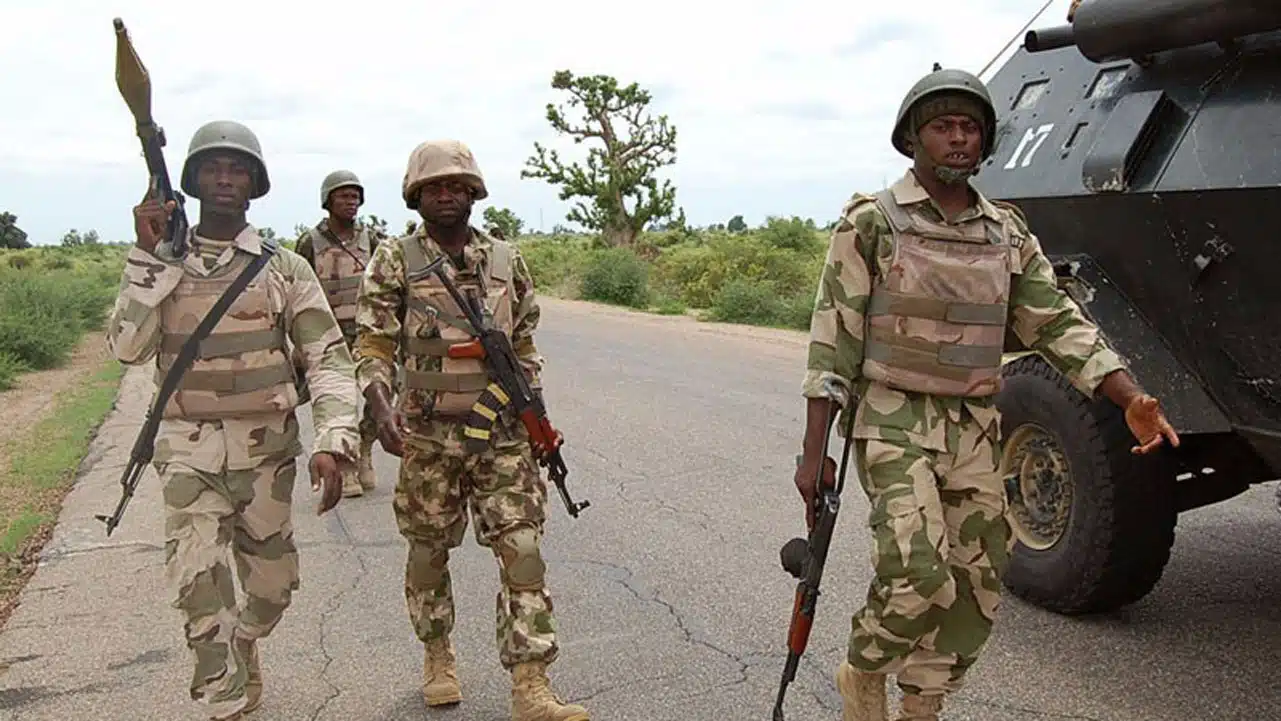
The source disclosed that about eight personnel were believed to have died at the scene following the blast.
As of the time of filing this report, military authorities had not officially confirmed the number of casualties or released the identities of the deceased personnel.
The latest attack is the latest in a series of roadside bomb explosions targeting troops operating in Nigeria’s North-East region.
In June, three soldiers lost their lives and several others sustained injuries after a military vehicle triggered an IED along the Marte–Dikwa road, a key supply corridor in Borno State.
A similar incident was recorded in April 2025 when suspected insurgents reportedly ambushed a military convoy in the Dikwa area, killing at least four soldiers and destroying two military vehicles.
Security experts have linked the growing number of attacks to a change in insurgent tactics, with armed groups increasingly relying on roadside explosives instead of engaging troops in direct combat.
The explosives are frequently planted along military supply routes used to transport personnel, food, fuel and other essential logistics between Maiduguri, Dikwa, Bama and surrounding communities.
FURTHER READING