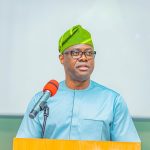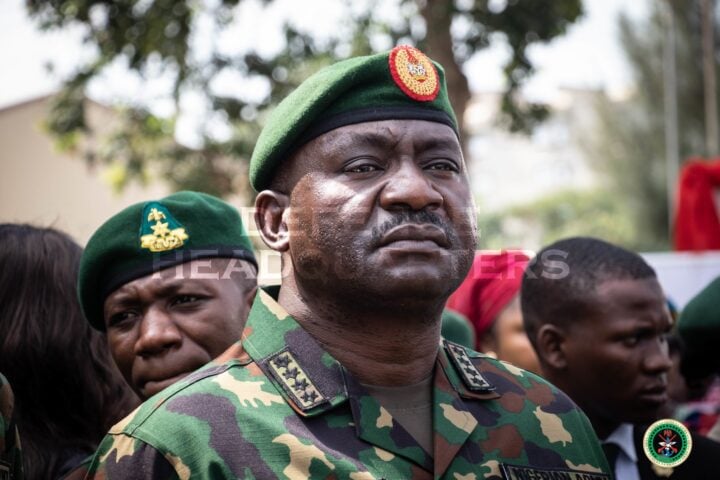
At a cultural night in Abuja on Sunday, former Chief of Defence Staff (CDS) Christopher Musa delivered a message that cut through the noise surrounding United States (US) President Donald Trump’s threat of military action in Nigeria.
Speaking at the Unity Schools Old Students’ Association (USOSANS) event, Musa praised Nigeria’s diversity and urged citizens to reject division.
EDITOR’S PICKS
When asked about Trump’s comments, his response was blunt and direct: “Nobody will save our country other than ourselves. We must do it ourselves, and we can do it.”
His message is not merely patriotic—it is historically grounded, strategically sound, and urgently relevant.
A nation that must shape its own security
Musa’s position reflects a reality that Nigerian leaders, analysts and citizens must confront: no foreign country, no matter how friendly, will assume responsibility for Nigeria’s internal security. At best, foreign powers provide support that aligns with their own geopolitical interests. At worst, they deepen instability.
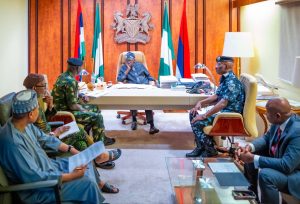
Nigeria will always be able to request intelligence sharing, training, arms sales and technical support, and according to the presidency, the US has now agreed to expedite defence procurement processes for Nigeria. But these forms of cooperation do not and cannot replace domestic capacity.
Even the Trump administration’s threat of unilateral military action illustrates this point. The US is acting according to its own political narratives, domestic constituencies and strategic calculations, not necessarily Nigeria’s realities. Musa’s warning is therefore a reminder that outsourcing national security is neither realistic nor sustainable.
Nigeria must strengthen policing, modernise the armed forces, reform intelligence coordination, and address the socioeconomic engines of violence. These tasks cannot be delegated to Washington, London or Paris.
When foreign intervention weakens a country
Musa’s argument also carries historical weight. Across Africa, the Middle East and Asia, foreign military intervention has rarely solved a domestic security crisis—and has often left states weaker.
Libya (2011):
NATO intervention toppled Muammar Gaddafi, but the promised stability never arrived. Instead, Libya fractured into militia-dominated territories, creating one of the world’s most enduring security vacuums.
Iraq (2003):
The US-led invasion removed Saddam Hussein but also dismantled state institutions. What followed was a decade of sectarian conflict, the rise of ISIS, and hundreds of thousands of civilian deaths.
Afghanistan (2001–2021):
Two decades of massive U.S. military presence failed to build lasting stability. When foreign forces withdrew, the Taliban returned to power almost immediately, proof that local ownership of security is indispensable.
Mali (2013–2024):
French and EU forces intervened to combat jihadists, but the insurgency spread. By 2024, much of the country was still unstable, and foreign withdrawal left Mali’s junta scrambling for new alliances.
In each of these countries, the lesson was the same: foreign boots cannot build a nation, and external firepower cannot substitute for internal unity or strong institutions.
The Path Forward
Nigeria can and should leverage global partnerships. Intelligence sharing with the US, surveillance technology from Europe, and weapons purchases from multiple allies are normal and necessary parts of modern defence strategy. But the backbone must be domestic.
Musa’s appeal for unity is not rhetorical fluff. Ethnic and religious polarisation weaken the internal cohesion required for effective security operations. The former CDS is effectively saying that national security is a collective project, not solely the work of soldiers and politicians.
With violent actors — bandits and terrorists — operating across multiple states, and with global powers projecting their own interests into Nigeria’s internal affairs, the country’s stability will depend on Nigerians seeing themselves as stakeholders in a single destiny.
FURTHER READING
In the end, Musa’s warning stands as both diagnosis and prescription: foreign help can support Nigeria, but it can never save Nigeria. Only Nigerians can do that.
Philip Ibitoye is a Special Correspondent with EKO HOT BLOG. Click here to find daily analysis and critical insight on trending issues in Lagos and other parts of Nigeria.
Click here to watch the video of the week below: