- Nigeria’s direct loans from other countries increased by 10.42 per cent, climbing from $6.09bn in 2024 to $6.72bn by the end of 2025.
- Lending from Chinese institutions now accounts for roughly 83 per cent of Nigeria’s total bilateral debt, with obligations to the China Development Bank more than doubling in 12 months.
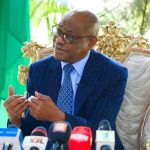
- The Emir of Kano, Muhammadu Sanusi II, has criticized the government’s continued reliance on external loans despite the removal of petrol subsidies, questioning the lack of fiscal discipline.
Fresh data from the Debt Management Office (DMO) has revealed a significant spike in Nigeria’s external financial obligations, with the country’s bilateral debt stock rising by over $634m throughout 2025.
Eko Hot Blog reports that this increase contributed to a broader surge in total external debt, which jumped from $45.78bn in 2024 to a staggering $51.86bn by the end of December 2025, a 13.27 per cent year-on-year increase.
EDITOR’S PICKS
- JAMB Delists 23 CBT Centres, Warns 89 After Mock UTME Review
- NASA Astronauts Return to Earth After First Human Trip to the Moon in 50 Years
- INEC Shifts Nationwide Voter Revalidation Until After 2027 General Election
The report highlights that France and China remain the primary drivers of this credit expansion.
Loans from France increased by 53.80 per cent to reach $911.43m, while the China Development Bank saw a 103 per cent rise in its exposure to Nigeria, now totaling $517.37m.
Despite a marginal decline in debt owed to the Exim Bank of China, it remains Nigeria’s largest single bilateral creditor, holding over 75 per cent of the country’s total bilateral debt portfolio.
This rising debt profile has ignited a heated debate between the Presidency and the Emir of Kano, Muhammadu Sanusi II.
The monarch, a former Central Bank Governor, publicly questioned why the federal government is seeking new loans, including a recent $516.3m request for the Sokoto–Badagry Superhighway, even after freeing up trillions of naira through the removal of fuel subsidies.
“If you’re not paying the subsidy and you’ve got the money, why are we still borrowing?” Sanusi asked, warning that weak fiscal discipline could negate the benefits of recent economic reforms.
Beyond bilateral lending, multilateral debt, primarily from the World Bank and African Development Bank, remains Nigeria’s largest external burden at $23.85bn.
Commercial loans and Eurobonds also recorded significant increases, reflecting a growing reliance on international capital markets to fund major infrastructure projects.
With the government currently negotiating a further $2bn facility from China for an electricity “super grid,” concerns regarding debt sustainability and future repayment capacity continue to dominate the national economic conversation.