- FG Reaffirms Push to Make Nigeria a Production Nation – Enoh
- Says Tinubu has placed industrialisation and local value addition at the centre of his Agenda
- Noted that Nigerian manufacturers currently spend 40–60% of their production costs on energy
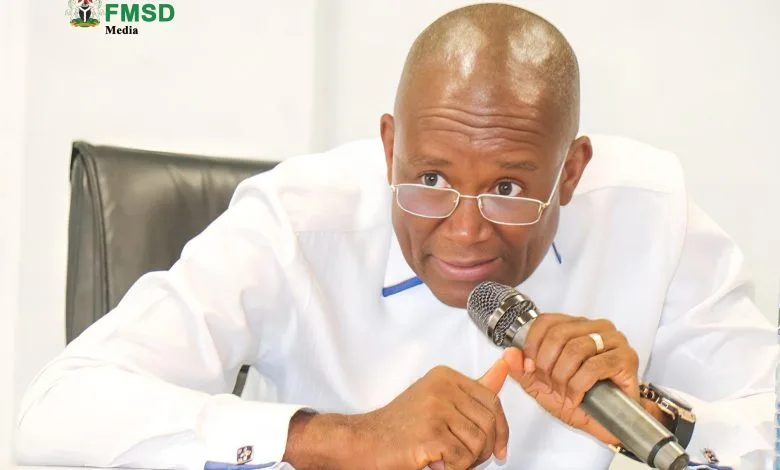
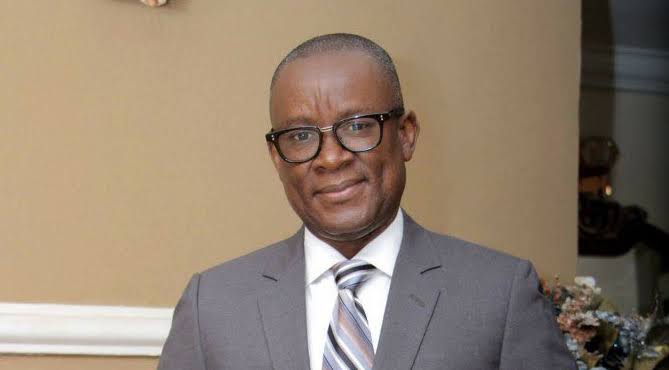
The Minister of State for Industry, Trade and Investment, John Owan Enoh, has reiterated the Federal Government’s resolve to reposition Nigeria as a production-driven nation, describing industrialisation as the next frontier of Nigerian content development, Eko Hot Blog reports.
Speaking at the Practical Nigerian Content Forum organised by the Nigerian Content Development and Monitoring Board (NCDMB) in Yenagoa, Bayelsa State, Enoh said industrialisation is no longer optional but the pathway to prosperity, dignity and national sovereignty.
EDITOR’S PICK
- Kcee Opens Up on Longstanding Rift With Flavour
- Trump Says Zelenskyy Stalling U.S. Peace Plan
- Tinubu Applauds Nigerian Troops for Crushing Benin Coup
He emphasised that the government is committed to moving from “plans to platforms, frameworks to factories, and discussions to delivery,” noting that Nigeria’s industrial future is within reach if citizens and government work together.
According to Enoh, local content has evolved from a statutory obligation into Nigeria’s “economic lifeline,” stressing that no country can achieve sustainable industrial growth without a strong local content framework and deliberate industrial policies.
“Local content is not simply a compliance framework; it is the foundation of industrial competitiveness,” he said. “It is about retaining value within our economy, building indigenous technical capacity, creating jobs, manufacturing equipment locally, strengthening SMEs and MSMEs, and securing national productivity and sovereignty.”
The minister noted that President Bola Ahmed Tinubu has placed industrialisation and local value addition at the centre of Agenda 7 and 8 of the Renewed Hope Agenda. He added that the National Industrial Policy (NIP) 2025–2035 is being developed to transition Nigeria from a consuming nation to a production hub.
Enoh explained that the NIP would focus on strengthening local manufacturing through incentives and industrial clusters, deepening value addition in key sectors such as steel, petrochemicals and gas-based industries, and integrating energy with industrial operations for global competitiveness.
He maintained that energy remains the backbone of industrialisation, describing gas as the fuel of Nigeria’s future and power as the oxygen that sustains industries. He noted that Nigerian manufacturers currently spend 40–60% of their production costs on energy, a structural weakness the government is seeking to address.
To tackle the challenge, the ministry has convened the Ministerial Energy Roundtable on Industrial Energy Security, bringing together major institutions including NNPCL, BOI, NSIA, AfDB, Afreximbank, InfraCorp and key private-sector players to develop dedicated industrial power corridors, ensure gas availability, implement Naira-based tariff pilots and introduce embedded generation for industrial clusters.
“Local content cannot flourish in darkness; industrialisation cannot take root in an environment of unpredictable energy,” Enoh warned.
FURTHER READING
- Tinubu Tasks Federal Universities on Sustainable Funding, Infrastructure Upgrade
- Shettima Leaves Abuja For Côte d’Ivoire As Tinubu’s Representative
- US Congressional Delegation Visits Nigeria For Security Talks
Click here to watch video of the week