- The Federal Government rejected Atiku’s proposal to restore petrol subsidy
- Mohammed Idris said the policy had created more fiscal space.
- He warned that reversing it could renew pressure on public finances
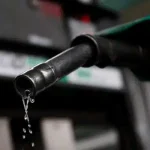
The Federal Government has rejected former Vice President Atiku Abubakar’s proposal to restore petrol subsidy, insisting that reversing the 2023 reform could revive the fiscal problems and market distortions the policy was introduced to address.
Eko Hot Blog gathered the Minister of Information and National Orientation, Mohammed Idris, said the government’s position was based on the resources that have become available to the three tiers of government since the subsidy was removed.
EDITOR’S PICK
- Tinubu Directs Installation of 3,700 Telecom Towers Across Nigeria
- Alara of Ilara Praises Sanwo-Olu, LASU Staff’s Dedication To Progress
- Burna Boy, Tems Bag Nominations at 2026 MTV VMAs
Atiku, the African Democratic Congress presidential candidate, recently said he would introduce a targeted and transparent subsidy system if elected president in 2027. He argued that Nigerians had yet to feel the impact of the savings the government claimed to have made from ending the subsidy regime.
The former vice president also questioned the continued use of public funds to provide incentives for major investors in the petroleum sector while ordinary Nigerians face rising transportation, food and energy costs.
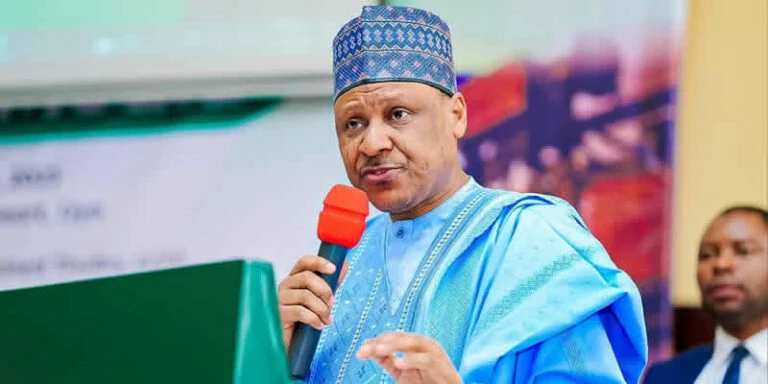
Responding to the proposal, Idris said subsidy removal had created additional fiscal space and enabled the government to channel resources into infrastructure, social programmes and other critical sectors.
According to the minister, the Federal Government’s Reform Scorecard showed that subsidy savings generated about N15.8tn for the federation between June 2023 and December 2025.
He said the Federal Government received approximately N5.43tn, while states and local governments received about N6.52tn and N3.88tn respectively.
Idris clarified that the N15.8tn was not held in a separate account as cash savings but represented additional resources released into the federation’s wider fiscal system.
He said the increased revenue had helped state and local governments meet obligations such as salaries and pensions while supporting infrastructure and essential services.
At the federal level, Idris said the additional fiscal capacity had supported strategic investments, including about N6.47tn in transport, housing, agriculture and security projects.
He also disclosed that more than 10 million households had benefited from social intervention programmes, while over N400bn had been allocated to initiatives such as the Nigerian Education Loan Fund, the MOFI Real Estate Investment Fund and the Nigerian Consumer Credit Corporation.
The minister argued that bringing back petrol subsidy could reverse some of these gains and place fresh pressure on government finances.
He recalled that Nigeria spent roughly $10bn on fuel subsidies in 2022, despite declining oil production and significant pressure on government revenue.
According to Idris, maintaining the old subsidy structure would have continued diverting public resources from sectors such as healthcare, education, infrastructure and social protection.
He also warned that a return to the former arrangement could encourage fuel scarcity, arbitrage and other distortions in the petroleum market.
The minister said the government’s reform projections indicated that without the changes, petrol shortages could have resurfaced, with black-market prices potentially exceeding N3,000 per litre.
He further argued that the country’s fiscal position could have deteriorated significantly, noting that the legacy Ways and Means balance of about N30tn recorded in May 2023 could have risen to N60tn or more under the previous policy framework.
Idris also pointed to the cost of electricity subsidies, which he said amounted to about N3.14tn between June 2023 and December 2025.
He warned that reintroducing petrol subsidy while maintaining electricity subsidies would place an additional burden on public finances.
The minister said the key issue was not simply whether Nigerians were experiencing hardship but whether the government should respond by reversing a reform that was intended to address longstanding fiscal weaknesses.
He maintained that the government’s priority should be to accelerate measures that would make the benefits of the reforms more visible to citizens rather than return to what he described as an unsustainable subsidy system.
“We are not claiming that the reforms have solved all of Nigeria’s economic challenges,” Idris said, acknowledging that more needed to be done to improve living standards, create jobs and strengthen public services.
He added that the government believed the appropriate response to the hardship caused by the reforms was to increase their benefits rather than dismantle them.
The Federal Government’s rejection comes amid growing debate over petrol pricing and economic hardship, with the issue expected to become a major campaign topic ahead of the 2027 presidential election.
FURTHER READING