- A military tribunal in Guinea-Bissau has abruptly remanded prominent opposition figure Domingos Simões Pereira into a maximum-security prison, terminating his period of house arrest.
- The state accuses the veteran politician of actively financing a foiled October 2025 coup attempt, alongside separate corruption charges and links to another rebellion in 2023.
- Pereira’s legal representatives completely boycotted the flash hearing, labeling the rapid judicial proceedings an unlawful, politically charged mechanism to disqualify him from the upcoming December presidential race.
A military tribunal in the West African nation of Guinea-Bissau has ordered the immediate imprisonment of the country’s prominent opposition leader, Domingos Simões Pereira.
Eko Hot Blog reports that the sudden judicial move has sent shockwaves through the country’s fragile political landscape, as Pereira transitions from months of strict house arrest back into a high-security prison cell under heavy military guard.
EDITOR’S PICK
- Hamzat Appoints Obanikoro as Campaign DG Ahead of 2027 Lagos Governorship Race
- Tinubu’s State Police Plan Gains Momentum as Amendment Looms
- Residents Raise Alarm After Two Bodies Found in Lagos Waterway
The state has accused him of deep involvement in multiple treasonous conspiracies aimed at violently overthrowing the government.
According to senior security sources who spoke to news agencies on Friday, July 10, 2026, the leader of the African Party for the Independence of Guinea and Cape Verde (PAIGC) was arrested immediately upon arriving at a military court facility in the capital city of Bissau mid-morning.
In an operation that unfolded within a matter of minutes, a military judge formally revoked Pereira’s house arrest status and ordered his immediate transfer to the capital’s notorious Segunda Esquadra prison.
He was escorted out of the courtroom by heavily armed rapid-response police officers wearing balaclavas to prevent any public interference or demonstrations by his supporters.
The severe legal actions taken against Pereira are tied directly to chronic political instability within the volatile West African state.
The politician was initially detained by the military junta on November 26 of last year when the armed forces successfully overthrew the democratically elected president, Umaro Sissoco Embaló.
While the ruling military council temporarily softened its stance by releasing Pereira into a heavily monitored house arrest arrangement in January, prosecutors have continuously built a complex treason case against him.
The military state’s formal indictment alleges that Pereira played a pivotal role in organizing and funding a separate, bloody coup attempt against the Embaló administration in October 2025, just a month before the military successfully took over.
Additionally, the PAIGC leader faces separate, unresolved indictments detailing alleged financial crimes, corruption, and a previous role in an unsuccessful 2023 mutiny.
Legal analysts note that both major coup plots levied against him occurred under the former president’s tenure, well before the current junta seized power.
Reacting swiftly to the sudden developments, Pereira’s defense team chose to completely distance themselves from the court session, declaring the entire exercise an illegal judicial ambush.
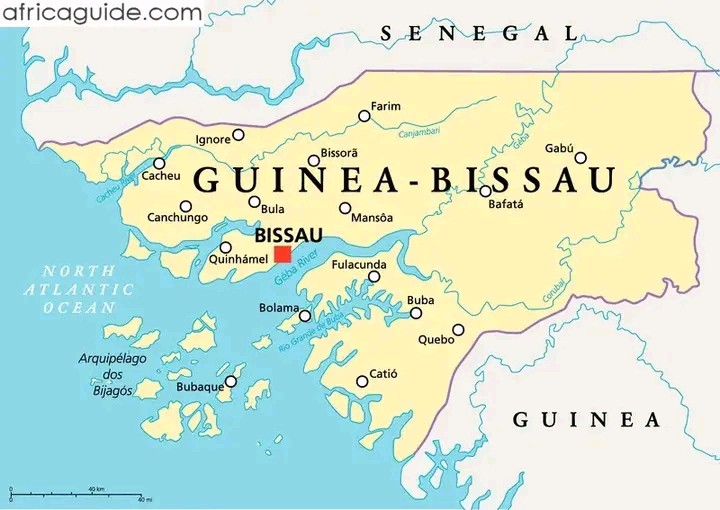
Speaking on local radio stations in Bissau, Roberto Indeque, a prominent member of Pereira’s legal council, explained that the lawyers staged a total boycott of the mid-morning hearing because the military judge violated standard constitutional protections by failing to provide any advanced legal notice regarding the defendant’s scheduled appearance.
Both the defense team and top executives within the PAIGC have strongly denounced the charges as entirely arbitrary, describing them as a calculated, politically motivated campaign orchestrating by the ruling military elite to block Pereira from participating in the highly anticipated presidential elections scheduled for December 6.
Guinea-Bissau has earned a turbulent reputation for chronic institutional instability, having experienced five successful military coups and dozens of failed overthrows since securing independence from Portugal in 1974.
The country is currently governed by a strict military administration led by General Horta N’Tam, who took control following the November 26 palace coup.
International observers have repeatedly warned that the coastal country’s deep economic challenges and persistent political chaos have made its porous borders highly vulnerable to transnational drug smuggling cartels and systemic corruption.
With the main opposition candidate now locked behind bars, the future of the nation’s democratic transition remains deeply uncertain.