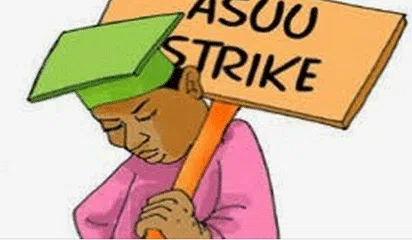
After a rare two-year streak of uninterrupted academic activity in Nigerian public universities, the Academic Staff Union of Universities (ASUU) is back to downing tools this week, embarking on a two-week warning strike.
Addressing a press conference on Sunday, October 12, 2025, the union’s National President, Professor Chris Piwuna, said all branches across the country had been directed to commence a full withdrawal of their services beginning at midnight on Monday, October 13, 2025.
EDITOR’S PICKS
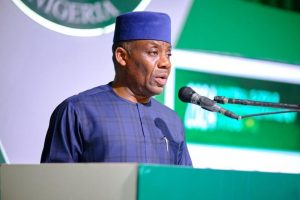
This announcement came about three years after ASUU suspended its last strike — in October 2022 — following eight months of halted academic activities across the vast majority of public universities in the country. The reasons for the previous strike are strikingly similar to those listed for the latest industrial action. ASUU has accused the Federal Government of failing to implement key agreements, including the renegotiation of the 2009 FGN–ASUU Agreement, revitalisation of public universities, payment of earned academic allowances, and other welfare-related demands. They are also demanding the payment of outstanding 25–35 per cent salary arrears and promotion arrears spanning over four years. But the Minister of Education, Dr. Tunji Alausa, noted that most ASUU concerns have been addressed, including improved allowances and service conditions, with remaining matters before governing councils.
Nevertheless, many stakeholders in the university system, including students, are baffled by the situation, considering that school fees have seen significant hikes over the past two years. Since President Bola Tinubu assumed office in May 2023, his administration has made sustained efforts to reduce universities’ reliance on the Federal Government, removing subsidies that had previously allowed lower tuition in federal universities. In turn, these universities have embarked on substantial fee increases. For example, many students at Nigeria’s premier institution, the University of Ibadan, were subjected to over a 400 per cent hike in school fees without warning, forcing some to resort to crowdfunding to remain in school. It is the same story in other federal universities, including the University of Ilorin (UNILORIN), where this month school fees were suddenly more than doubled — in some cases reaching as high as ₦400,000 — leaving many students shocked and dejected.
Despite these indiscriminate fee hikes, students are once again confronted with the familiar reality of perennial strikes that have disrupted their lives for years and caused prolonged stays in school. The latest strike has left many students in discomfort and despair as they try to navigate another period away from campus. Although this is a warning strike expected to last 14 days, ASUU has threatened to embark on an indefinite strike — with no end in sight — if the Federal Government does not accede to their demands. Essentially, students may be looking at months of zero academic activity, considering that the previous two strikes lasted nine and eight months respectively.
Most students, EKO HOT BLOG observed, are displeased with this disruption and uncertainty. Adedayo Rhamat Adedayo, a medical student at Olabisi Onabanjo University (OOU), expressed sadness at the latest strike, saying she had experienced two before now that have “marred” her for life. If there had been no strikes, Adedayo would have been inducted into the medical profession two months ago, already beginning her career. However, at the moment, she has no control over when she will finally be inducted, thanks to ASUU’s perennial strikes.
Adedayo is hardly alone in this distressing situation. Ayobami Ojeniyi, a 500-level engineering student at UI, gained admission in 2019 and, under normal circumstances, was supposed to graduate in 2024. But in October 2025, he still cannot say when he will eventually obtain his degree. He noted that there was a nine-month strike when he was in 100 level, an eight-month action in his 200 level, and after three years of reprieve, there is another strike that may go on for a long time in his final year.
Ojeniyi’s situation mirrors that of Arowona, a UI student who also gained admission to the institution in 2019 and is still yet to graduate through no fault of hers. Before ASUU embarked on its warning strike, Aweda, a final-year Veterinary Medicine student at the same university, had pleaded with the union not to proceed with the action. But now that the strike is underway, the UI undergraduate says his graduation has effectively been moved to next year. If the warning strike does not persist beyond the two-week window, Aweda may still graduate this year, but there is little hope of that. “I want 2025,” he said.
Nonetheless, many university students are already preparing for the strike to last a long time and are trying to make the most of the free period. Aminah, a final-year Economics student at Obafemi Awolowo University (OAU), has taken to X to seek finance internship opportunities. “If the ASUU strike becomes long term, I’m open to finance internship opportunities,” she wrote. Likewise, Chidalu Nnubia, a fourth-year Law student at the University of Nigeria, Nsukka, Enugu Campus (UNEC), said he was open to internship opportunities at any law firm on Lagos Island if the ASUU strike persists beyond the initial two weeks. Arowona, the UI student, is also a food and product photographer, and she put out a post urging anyone in need of a photographer to hire her.
I'm a 4th year law student, with a good academic performance.
I'm open up to internship from any law firm in the island, Lagos.
Just putting it out there https://t.co/tSBDcPoCn7
— Mr. daluu (@ChidaluNnubia) October 14, 2025
Gained admission since 2019, I still never graduate.
Okay naw😭😂
Some of my mates have finished NYSC, but it's cool
If you need a photographer, please hire me, make I use these 2 weeks hustle https://t.co/zIi8ZcRWIV
— Food/ Product photographer in Ibadan/Lagos (@_arowona) October 12, 2025
With so many unknowns five days into the two-week strike, students continue to reel from the disruption and grieve over lost time, but some are looking beyond the four walls of the university to gain professional skills through internships or to earn money from their trades. ASUU and the Federal Government are currently locked in a standoff — the latter threatening to implement its ‘No work, no pay’ policy against striking lecturers, and the former responding in kind with ‘No pay, no work’.
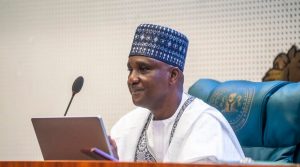
As it stands, there are no negotiations scheduled between ASUU and the Federal Government, but on Tuesday, the House of Representatives tasked Speaker Tajudeen Abbas to lead efforts to facilitate a “mutually acceptable lasting solution to the ongoing dispute.”
FURTHER READING
Whether a lasting solution will be found within the next two weeks or ASUU embarks on an indefinite strike remains to be seen, but there is no doubt that the continuous suspension of academic activities is hurting students and their futures.
Philip Ibitoye is a Special Correspondent with EKO HOT BLOG. Click here to find daily analysis and critical insight on trending issues in Lagos and other parts of Nigeria.
Click here to watch the video of the week below: