- The Independent Corrupt Practices and Other Related Offences Commission (ICPC) has exposed widespread payroll manipulation across public agencies, including an official who fraudulently added 14 family members to receive public salaries.
- ICPC Chairman Musa Aliyu (SAN) revealed that about 900 suspected ghost workers have been identified, following a previous recovery of over N24 billion in ghost pension funds in 2024.
- The anti-graft agency emphasized that fraudulent payroll entries trigger cascading losses across public health insurance, housing, and pension schemes, prompting a strategic shift toward preventive measures.
The Independent Corrupt Practices and Other Related Offences Commission (ICPC) has uncovered shocking details of persistent payroll fraud within public institutions, revealing egregious cases where corrupt officials manipulated government systems to collect multiple salaries for non-existent employees and immediate family members.
Eko Hot Blog reports that ICPC Chairman, Dr. Musa Aliyu (SAN), disclosed the revelations in Abuja while delivering a keynote address at the 2026 Economic Confidential Lecture and National Spokespersons Award, an event organized by Image Merchants Promotions Limited (IMPR).
EDITOR’S PICK
- Tinubu Approves Army Expansion, Recruitment of 28,000 Personnel
- Aregbesola Claims Record as First Nigerian Governor to Serve Eight Years Without Owning a House
- Ikosi-Ejinrin LCDA Commissions Fully Equipped NSCDC Divisional Headquarters, Donates Patrol Vehicle and Motorcycle to Boost Security
Addressing an audience of senior public administrators, policy experts, and media professionals, Aliyu explained how deep-seated vulnerabilities in the government’s digital payroll setup allow malicious actors to siphon public funds unabated.
Illustrating the severity of the illegal practice, Aliyu recounted specific instances discovered by investigators, including a public official who successfully registered fourteen members of his immediate family on the government payroll while residing in a public facility.
In another instance, another public servant illegally placed his wife, children, and extended family members onto the system, allowing him to systematically draw thirteen separate monthly salaries from government coffers.
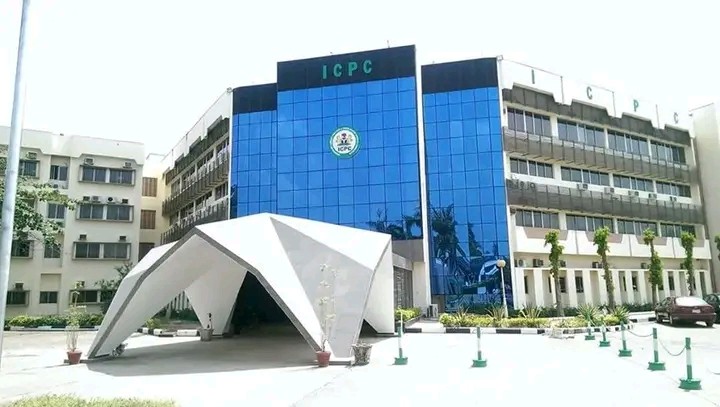
The ICPC chief explained that the anti-graft agency devoted an entire year to conducting an exhaustive investigation into public payroll infrastructure to understand the technical methods deployed by fraudsters.
Investigators discovered a recurring tactic where fraudulent entries matched official names and email addresses on payroll documents, but diverted the actual salary payments directly into bank accounts owned by the corrupt syndicates.
Aliyu pointed out that the financial damage caused by ghost workers extends far beyond monthly salary disbursements.
He noted that once a fictitious identity is created within the public service framework, it creates secondary financial drainages across other social benefit schemes, including ghost pensions, ghost health insurance, ghost housing funds, and ghost mortgage contributions.
To combat the illicit network, the ICPC has published the identities of approximately 900 suspected ghost workers in national newspapers, issuing a public challenge for the listed individuals to present verifiable proof of their legitimate employment.
Aliyu highlighted that these targeted interventions have yielded significant financial recoveries, noting that the commission successfully recovered over N24 billion in fraudulent ghost pension disbursements during the 2024 fiscal year alone.
The ICPC Chairman emphasized that while criminal prosecutions remain part of the agency’s constitutional mandate, the commission is increasingly prioritizing proactive preventive measures, inter-agency collaboration, and data-driven oversight.
He argued that preventing financial leakages before public funds are dispersed provides a more effective mechanism for protecting national wealth and ensuring that public expenditure directly benefits Nigerian citizens.
Earlier at the event, the Chief Executive Officer of IMPR, Yusha’u Shuaib, stated that the annual lecture series was instituted to foster transparent governance, promote institutional accountability, and enhance strategic public communication across government institutions.
FURTHER READING