
- Amupitan emphasized that each election provides lessons for future contests, including the upcoming governorship polls in Ekiti
- he urged RECs to conduct post-election reviews and internal audits to enhance the Commission’s credibility
- He encouraged RECs to return to their states with renewed commitment, urging staff to pursue excellence in all operations
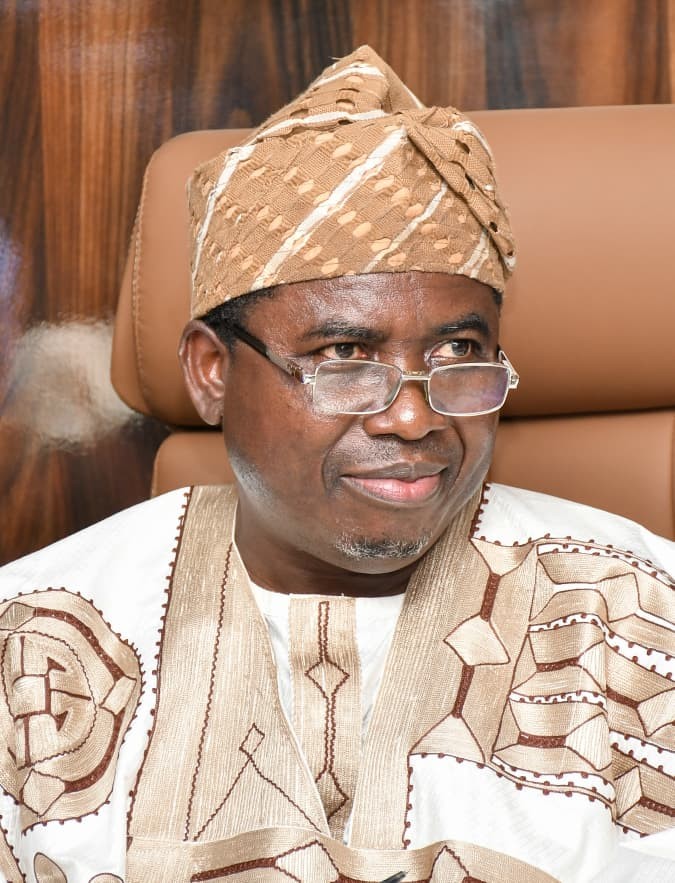
The Chairman of the Independent National Electoral Commission (INEC), Prof. Joash Amupitan (SAN), has instructed Resident Electoral Commissioners (RECs) nationwide to intensify voter education and public awareness, stressing that even the best electoral policies are ineffective if citizens lack understanding of the voting process.
Eko Hot Blog gathered that Amupitan issued the directive during a meeting with RECs in Abuja on Wednesday. The session followed the recent FCT Area Council election, by-elections in Kano and Rivers states, and the formal swearing-in of Abia State’s new REC, Dr. Chukwu Chukwu-Emeka Joseph.
EDITOR’S PICK
- Grand Wedding Reception: Halimot, Saheed Mark Their Union
- Ikosi-Ejinrin LCDA Celebrates Former Chairman, Hon. Segun Adetola, on Birthday
- Sanwo-Olu Flags Off Free Eye Screening for 1,000 Lagos Police Officers
While noting slight improvements in voter participation during the FCT election, the INEC chairman highlighted ongoing voter apathy as a significant challenge.
“Voter turnout has modestly improved—from 9.4% in 2022 to around 15% in this election, with over 239,000 ballots cast compared to 148,685 in 2022. Yet, there remains substantial work to strengthen engagement and public confidence,” he said.
Amupitan emphasized that each election provides lessons for future contests, including the upcoming governorship polls in Ekiti and Osun states, as well as the 2027 General Election.
“Policies may be sound, intentions may be noble, but if citizens do not understand the process, our objectives are only partially achieved,” he stated.
He directed RECs to implement continuous voter education programs in their states. “Awareness campaigns must be ongoing, not episodic.
Citizens should be encouraged to confirm their polling unit details in advance using tools such as the Commission’s online Polling Unit Locator, and where necessary, to visit their polling stations ahead of Election Day,” Amupitan said.
The INEC chairman also warned against staff absenteeism and misconduct, stressing that sanctions would be applied to any officer who fails to perform duties, arrives late without justification, or undermines the electoral process.
Looking ahead, he urged RECs to conduct post-election reviews and internal audits to enhance the Commission’s credibility. “Every polling unit that opens late diminishes public trust. Conversely, timely operations, accurate uploads to IReV, and satisfied voters strengthen democracy,” he said.
Amupitan revealed that following the new Electoral Act 2026, INEC will issue a revised timetable for the 2027 General Election and undertake a thorough cleaning of the voters’ register.
He encouraged RECs to return to their states with renewed commitment, urging staff to pursue excellence in all operations.
He expressed concern over logistics during the FCT elections, noting that only 45% of polling units were operational by 8:30 a.m., although 100% were open by 10:00 a.m.
“This delay is unacceptable, undermines public confidence, and will not be tolerated,” he said. Queries have already been issued to staff in Kuje Area Council and Kabusa Ward, and a transporter in Kwali Area Council has been blacklisted due to delays.
While commending security agencies for maintaining peace during voting, Amupitan highlighted incidents, such as the invasion of the Kuje Central Collation Centre, emphasizing that election security must be deliberately planned and coordinated.
On safeguarding against result manipulation, the INEC chairman noted that the Commission has reinforced its result management systems. Presiding Officers are now required to upload Form EC8A to the INEC Result Viewing Portal and enter results directly into BVAS, which validates data automatically and flags any over-voting attempts.
Amupitan stressed that Nigerians are closely monitoring the Commission’s performance, leaving no room for errors in these critical processes.
Meanwhile, the Forum of State Independent Electoral Commissions of Nigeria called for closer collaboration with INEC to enhance local government election standards.
Its Chairman, Mamman Nda Eri, emphasized the importance of joint training, knowledge sharing, and professionalism to strengthen electoral processes nationwide.
FURTHER READING