- Loud explosions were reported across Tehran early Friday morning, according to AFP journalists in the city
- Residents speaking anonymously described worsening conditions as airstrikes continue
- Iran has also launched waves of drones and missiles toward neighbouring countries that host US military facilities
Fresh attacks shook Iran and parts of the Gulf region on Friday as the conflict between Iran and Israel intensified, raising fears of a broader Middle East war and serious damage to the global economy.
Eko Hot Blog gathered that the fighting began on February 28 after joint US–Israeli strikes targeted sites inside Iran.
EDITOR’S PICK
- “Pay Her Transport Fare Too”, Pete Edochie Stirs Debate on Dating Expenses
- Epe Students Parliament Declares Executive Seats Vacant Over Inauguration Dispute
- Osimhen Warns Galatasaray Ahead of Liverpool Match
Since then, the conflict has rapidly spread across the region, pulling in international powers and triggering sharp increases in global oil prices.
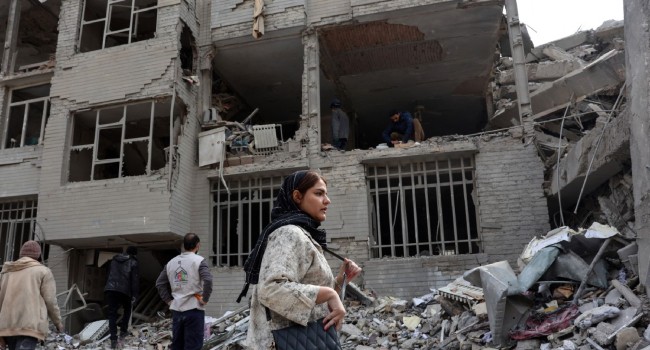
Loud explosions were reported across Tehran early Friday morning, according to AFP journalists in the city. Israel’s military later announced that it had carried out strikes on more than 200 targets in western and central Iran over the previous 24 hours.
The blasts were strong enough to shake buildings several kilometres apart in both northern and central Tehran, while thick black smoke rose above parts of the capital.
Residents speaking anonymously described worsening conditions as airstrikes continue.
Many said daily life has become increasingly difficult, with damaged infrastructure and growing economic uncertainty.
A 30-year-old woman in the western city of Kermanshah said people were rushing to withdraw money from banks because confidence in the financial system had collapsed.
“Bread is now being rationed, and people are extremely anxious and angry,” she said.
According to estimates from the United Nations refugee agency, as many as 3.2 million people have been forced to flee their homes inside Iran since the conflict began.
Iran’s health ministry reported on March 8 that the war had killed more than 1,200 people, although AFP said it had not independently confirmed the figure.
Despite the turmoil, large crowds gathered in Tehran and other major cities for Quds Day, the final Friday of Ramadan, an event traditionally used to express support for Palestinians. Demonstrators waved Iranian flags and held signs with anti-US and anti-Israel slogans.
Meanwhile, Iran’s Revolutionary Guards warned that any renewed anti-government protests would face a harsher crackdown than the demonstrations earlier this year, when thousands were reportedly killed.
Regional attacks spread
Iran has also launched waves of drones and missiles toward neighbouring countries that host US military facilities.
Saudi Arabia’s defence ministry said its forces intercepted dozens of incoming drones, including one that appeared to target the diplomatic district of Riyadh.
In the United Arab Emirates, black smoke could be seen over Dubai after a drone strike hit an area of the city, once viewed as one of the safest locations in the region.
Elsewhere, two people were killed in Oman when debris from a downed drone fell to the ground, according to local state media.
Sirens also sounded at Turkey’s Incirlik airbase, a major NATO installation used by US forces.
French President Emmanuel Macron confirmed that a French soldier was killed in northern Iraq, marking France’s first military casualty since the conflict began.
The soldier died in the Erbil region after drones struck a base where French troops were conducting counter-terrorism training with Iraqi forces.
Earlier warnings had been issued by the pro-Iranian Iraqi militia Ashab al-Kahf, which said French interests in the region could become targets following the deployment of a French aircraft carrier. However, no group has officially claimed responsibility for the attack.
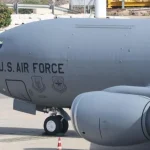
In another incident in Iraq, a US military refuelling aircraft crashed. American officials said the crash was not caused by hostile action, but Iran’s military claimed an allied militia had shot it down with a missile, killing everyone on board.
Israel also reported casualties. A missile strike on the town of Zarzir injured around 60 people, according to police. Images from the scene showed burned vehicles and large impact craters.
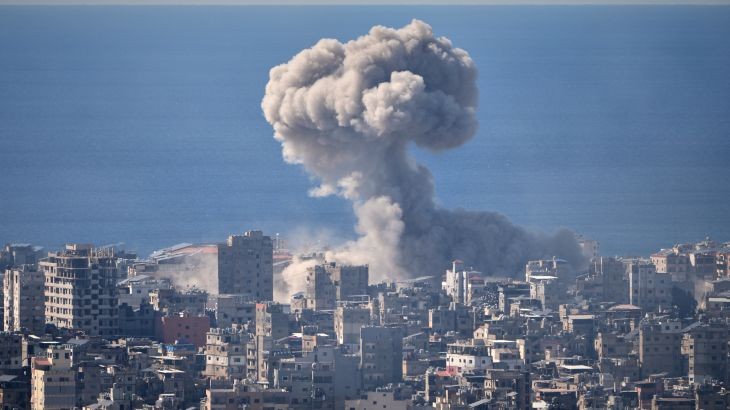
Lebanon has also suffered heavy losses during the conflict. Authorities say 687 people have been killed by Israeli strikes, including at least 12 who died in an attack Thursday along Beirut’s waterfront, where many displaced families have set up temporary shelters.
One resident, Dalal al-Sayed, said her family fled southern Lebanon and now lives in a tent because they cannot afford rent.
“We will stay here even if it costs us our lives,” she said.
Photos from central Beirut show widespread destruction, with collapsed buildings, overturned vehicles and small fires still burning after recent strikes
Oil shock and economic fears
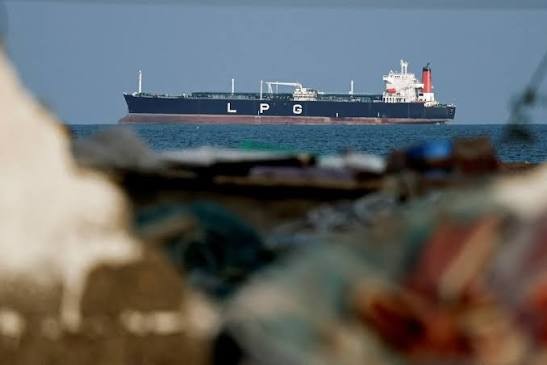
Global oil prices have remained above $100 per barrel after Iran’s leadership threatened to block the Strait of Hormuz, a vital shipping route through which much of the world’s oil supply passes.
Mojtaba Khamenei, reportedly injured in the attack that killed his father, has not appeared publicly since being nominated as Iran’s new leader.
A message attributed to him and read on state television called for revenge and suggested the country could use the “lever” of closing the strait.
The International Energy Agency warned that attacks on energy facilities across Gulf countries could create the largest supply disruption in the history of the global oil market.
As fuel costs rise worldwide, former US President Donald Trump announced a partial easing of oil sanctions on Russia, which has argued that global energy markets cannot remain stable without its exports.
Trump said the priority was preventing Iran from obtaining nuclear weapons and accused the country of threatening stability in the Middle East.
Financial markets have reacted negatively to the escalating conflict. Analysts say investors should prepare for prolonged economic strain.
Matt Weller, head of market research at City Index, said that as long as the Strait of Hormuz remains effectively closed, markets will likely face ongoing pressure.
“Oil prices will continue rising, stocks will struggle, and interest rates could move higher,” he said.
FURTHER READING