- He also downplayed the political influence of some contenders, limiting Obi’s strength to the South-East and Amaechi’s to the South-South
- Jonathan said leadership inevitably comes with errors, stressing that no one who has held office can claim to be without faults
- He added that efforts to enforce democratic standards within the bloc often clash with issues of national sovereignty
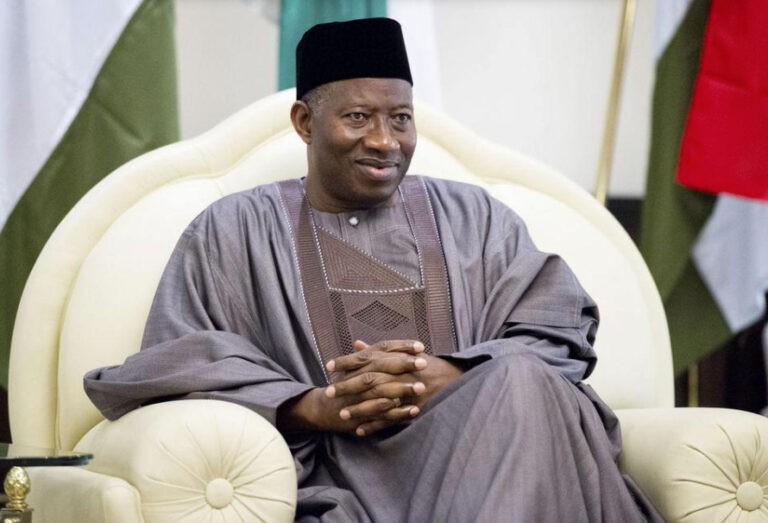
Former President Dr. Goodluck Jonathan has responded to recent criticism of his time in office, insisting that he gave his best while serving the country.
Eko Hot Blog reports that his remarks came after former Vice President Atiku Abubakar, speaking during an interview on Arise TV’s Prime Time programme, described Jonathan as inexperienced and suggested that this affected his ability to manage national challenges while in power.
EDITOR’S PICK
- Benue Mortician Arrested for Using Corpse Part as Walking Stick
- Baba Yusuf: Bandits May Reach National Assembly
- PDP Asks INEC To Withdraw Recognition Of Anyanwu As National Secretary
Atiku, who is seeking the presidential ticket of the African Democratic Congress, is contesting alongside Peter Obi, Rotimi Amaechi, and Rabiu Kwankwaso.
In the interview, he also downplayed the political influence of some contenders, limiting Obi’s strength to the South-East and Amaechi’s to the South-South, while expressing dissatisfaction with the current administration.
Reacting at the 2025 awards ceremony of the Association of Retired Career Ambassadors of Nigeria in Abuja, Jonathan said leadership inevitably comes with errors, stressing that no one who has held office can claim to be without faults.
He questioned the notion that his age at the time made him unfit, noting that he assumed office in 2010 at 53 and left in 2015 at 58. According to him, mistakes are part of human nature and not unique to any leader.
Despite acknowledging that errors may have occurred, Jonathan maintained that he acted in the best interest of the country.
He pointed to Nigeria’s diplomatic successes during his tenure, including its election to the United Nations Security Council, as evidence of effective leadership.
Speaking more broadly, Jonathan highlighted the importance of political stability across West Africa, warning that economic growth in the region would remain limited without strong and stable governance systems.
He noted that although ECOWAS was founded with a vision of economic cooperation, persistent political instability in member states continues to undermine progress.
He added that efforts to enforce democratic standards within the bloc often clash with issues of national sovereignty, making consensus among leaders difficult.
Nonetheless, he urged West African heads of state to work together more closely to ensure lasting stability in the sub-region.
Jonathan also encouraged Nigerian diplomats to properly document the country’s foreign policy experiences, saying this would help guide future leaders in making informed international decisions.
During the event, former Head of State Yakubu Gowon reflected on the creation of ECOWAS in 1975, describing it as a collective effort driven by regional cooperation following Nigeria’s post-war diplomatic engagements.
He emphasised that the initiative was not the work of one individual but a product of collaboration among government institutions and officials.
The ceremony, organised by the Association of Retired Career Ambassadors of Nigeria, also featured tributes from various dignitaries who highlighted the importance of diplomacy, regional unity, and visionary leadership in addressing contemporary challenges across Africa.
FURTHER READING